Pearl Harbor, shortly after 8 a.m., December 7, 1941. Somewhere above Battleship Row, a Japanese airman photographed the water below him. The Americans captured the film later, and the print sits in the U.S. National Archives today, which is how anyone can now look at the opening minutes of the Pacific war from the attacker’s seat.
What followed ran for nearly four years across a third of the earth’s surface. Carrier battles decided by captains who never laid eyes on the ships they were sinking. Coral atolls a few feet above sea level, where close to a thousand Marines died in three days. Jungle in New Guinea and the Solomons, frozen ridgelines in the Aleutians, and by the last spring, Japanese cities burned out in a single night.
Most of it was photographed by men under orders. Navy photographer’s mates, Marine combat correspondents, Army Signal Corps crews, Australian Department of Information staff, and the occasional Japanese naval aviator whose film was pulled from a wrecked aircraft or a captured headquarters. Because that work was done by government employees on government time, it belongs to everyone now.
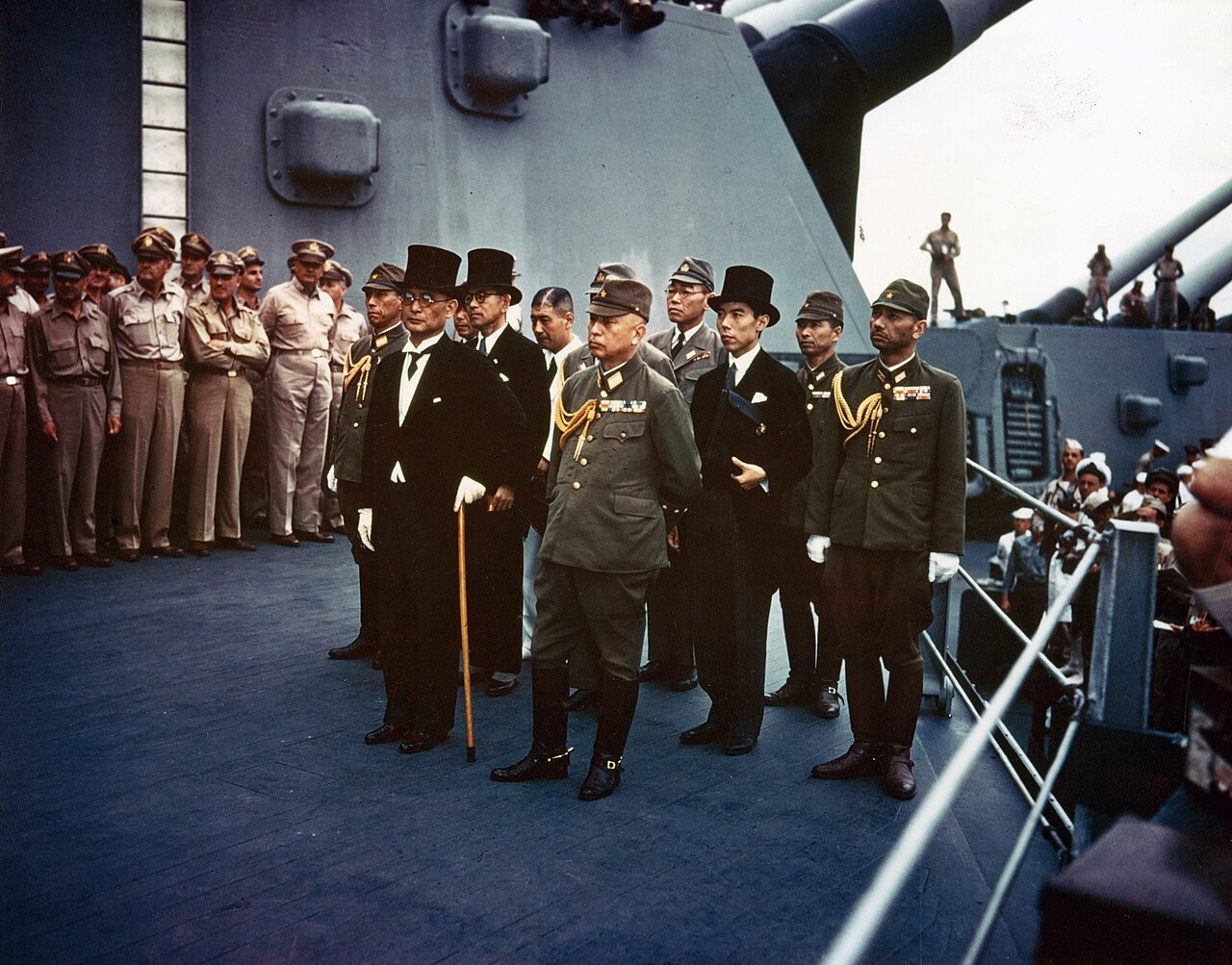
The fifty pictures below run in rough chronological order, from the smoke over Ford Island to the surrender deck of the USS Missouri in Tokyo Bay. A few are among the most reproduced images of the century. Others sat in archive boxes for sixty years. Several were taken by the people the Americans were shooting at.
Together they are about as close as anyone gets to what those years looked like.
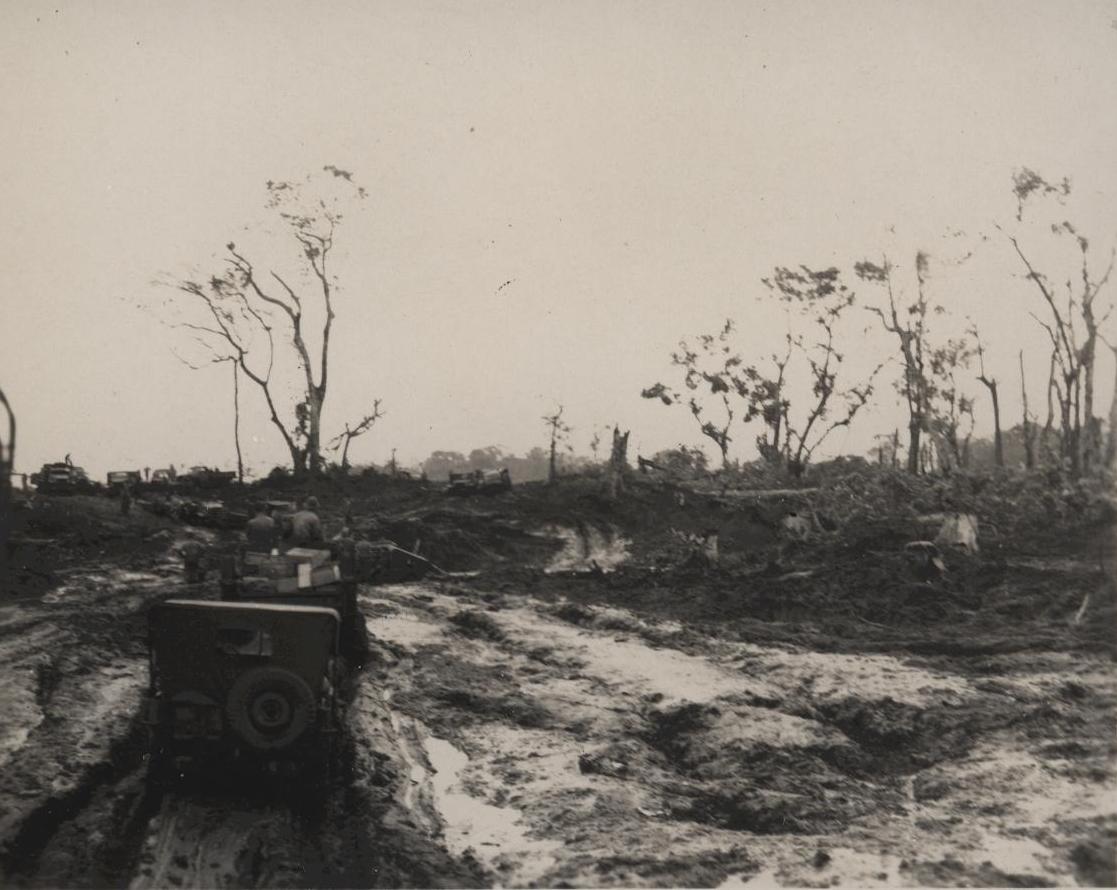
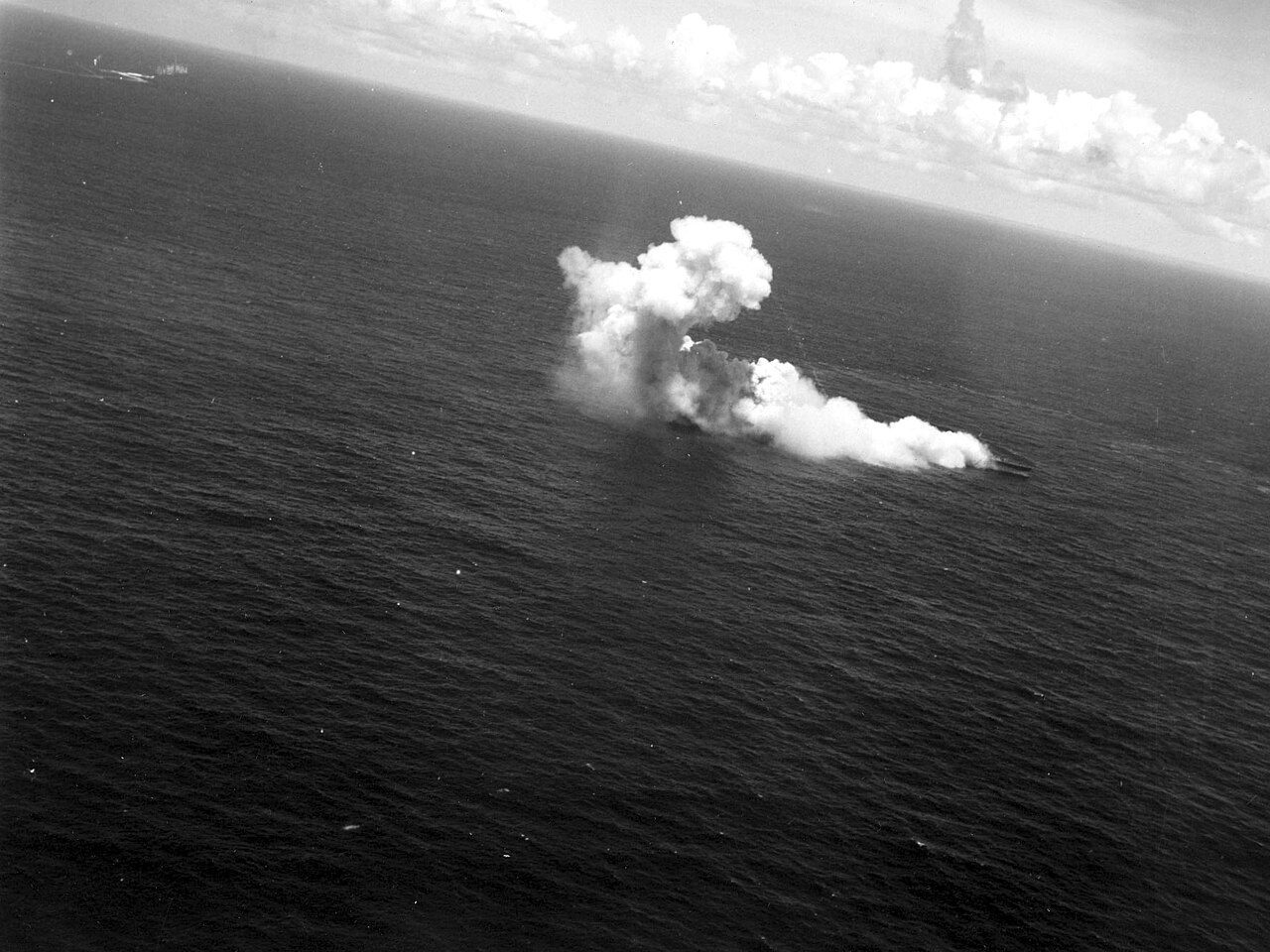
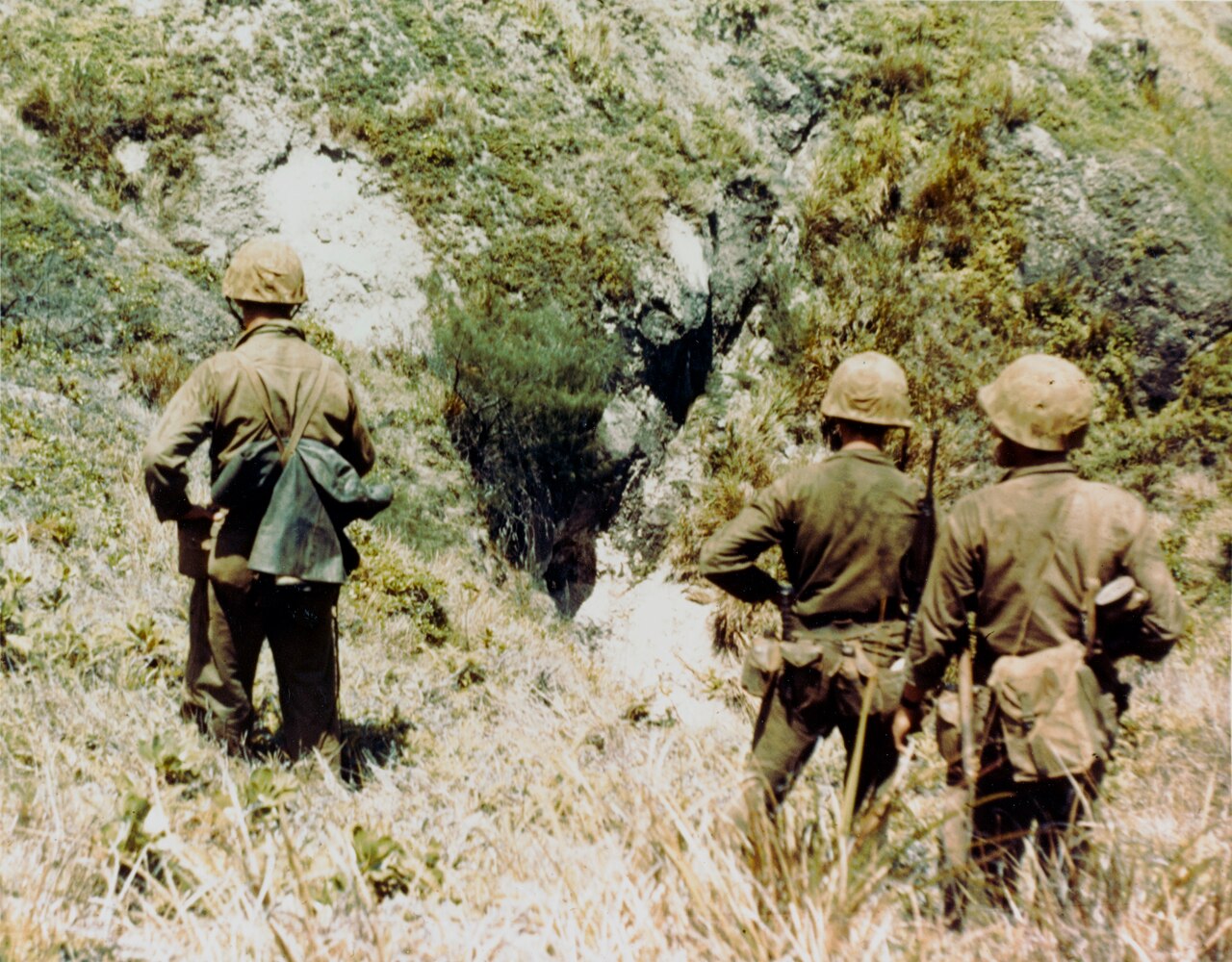
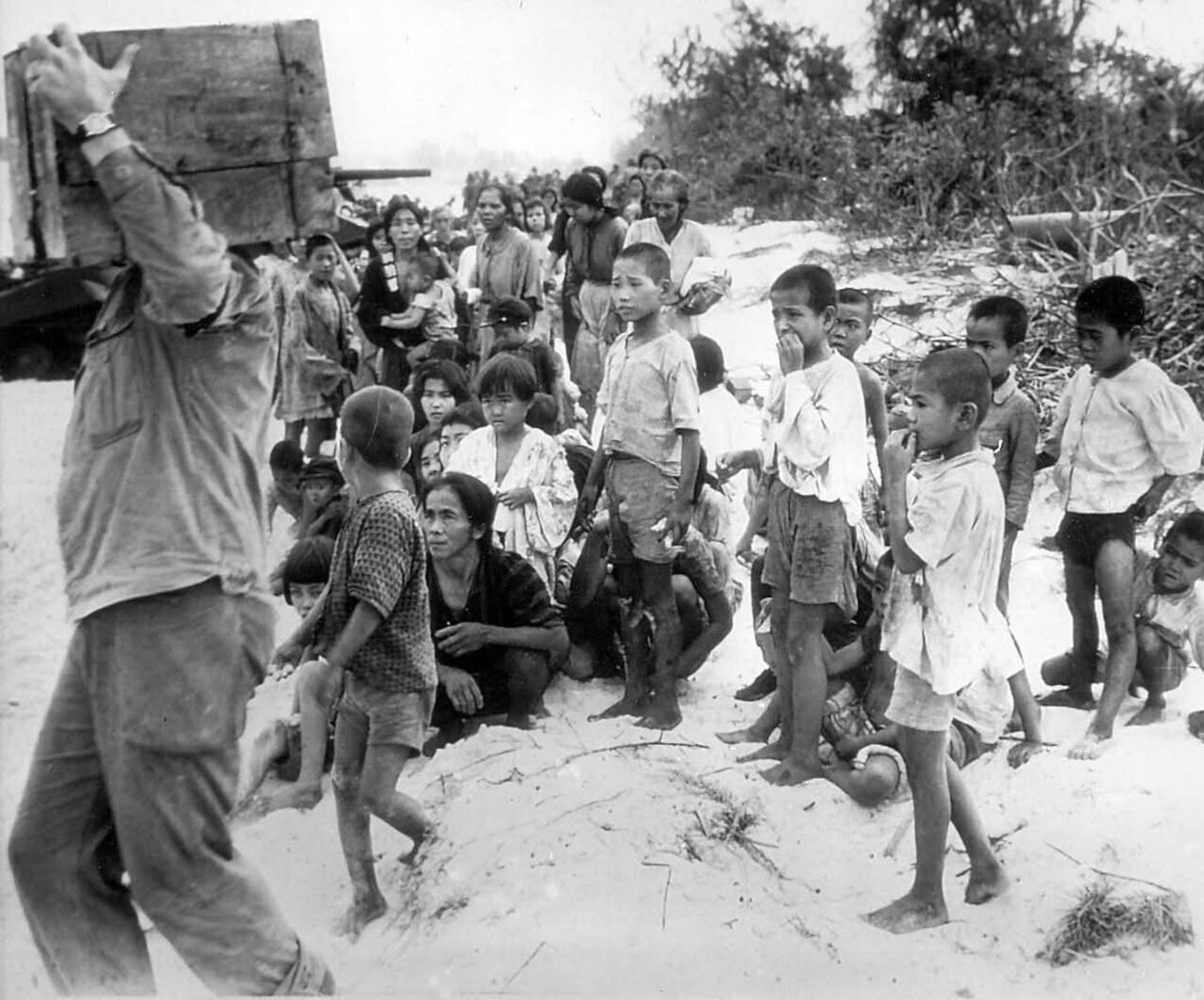
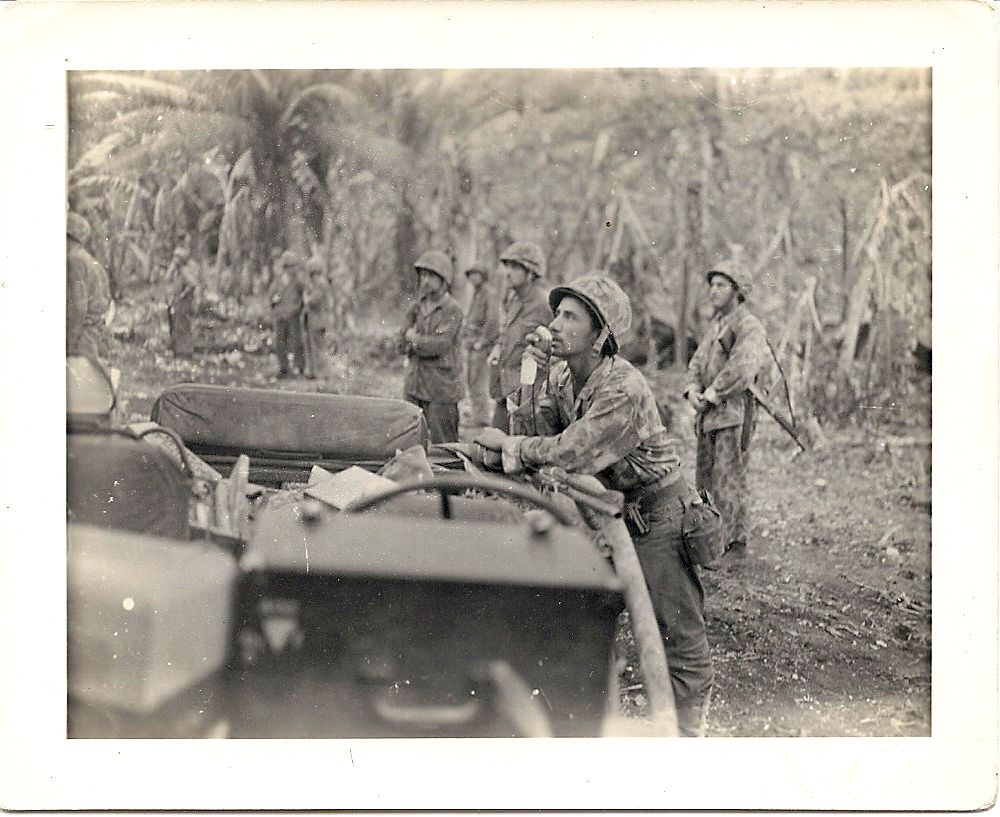
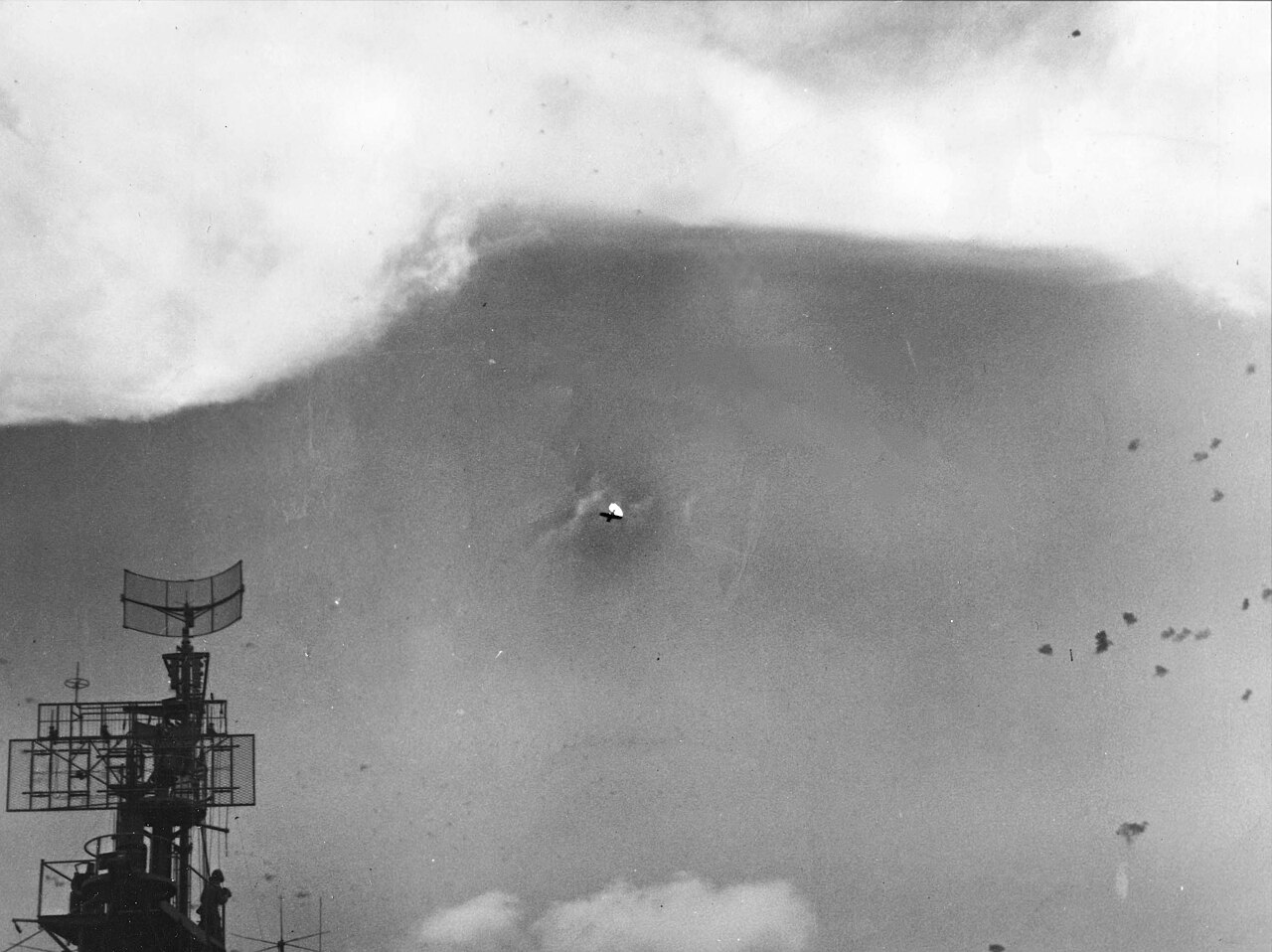
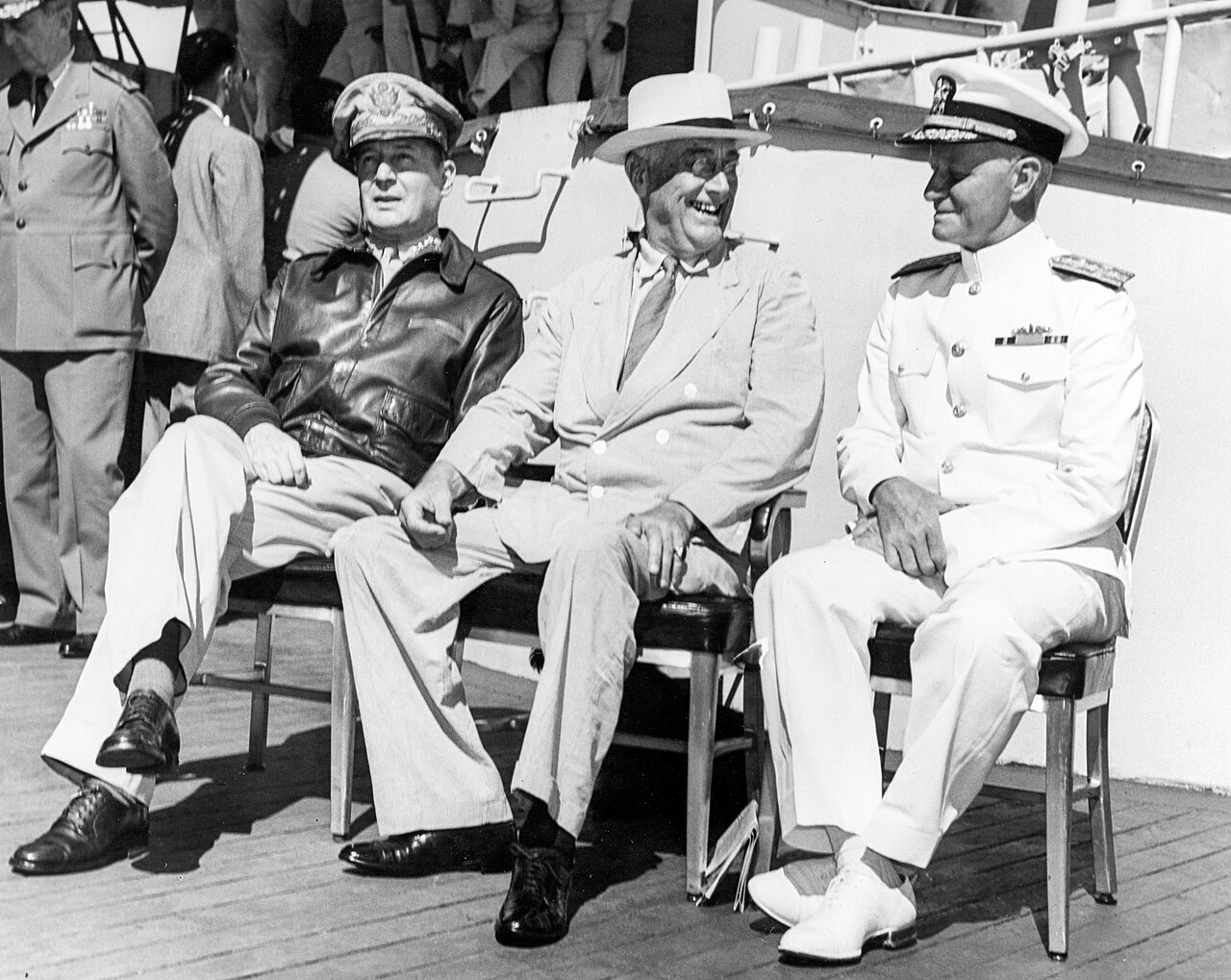
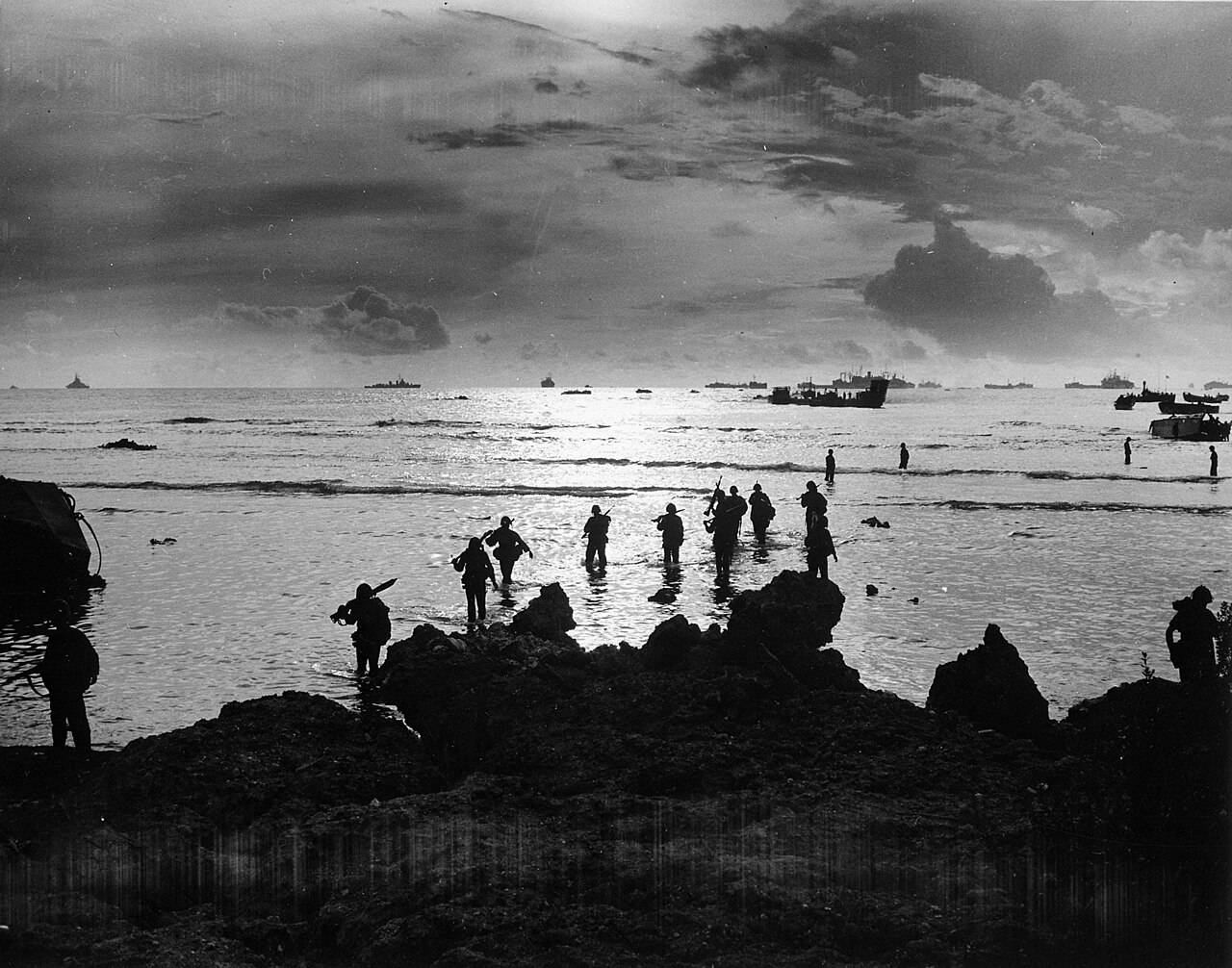
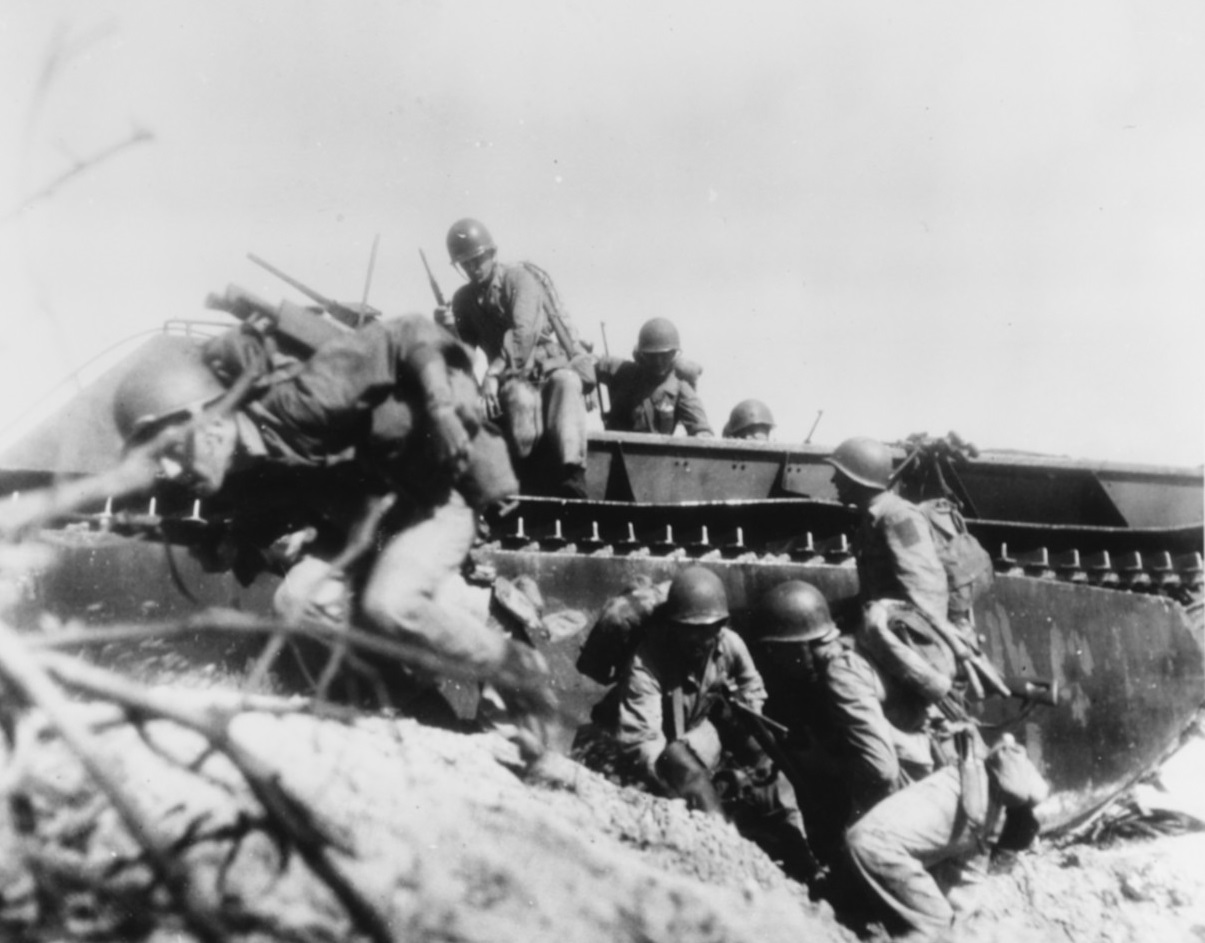
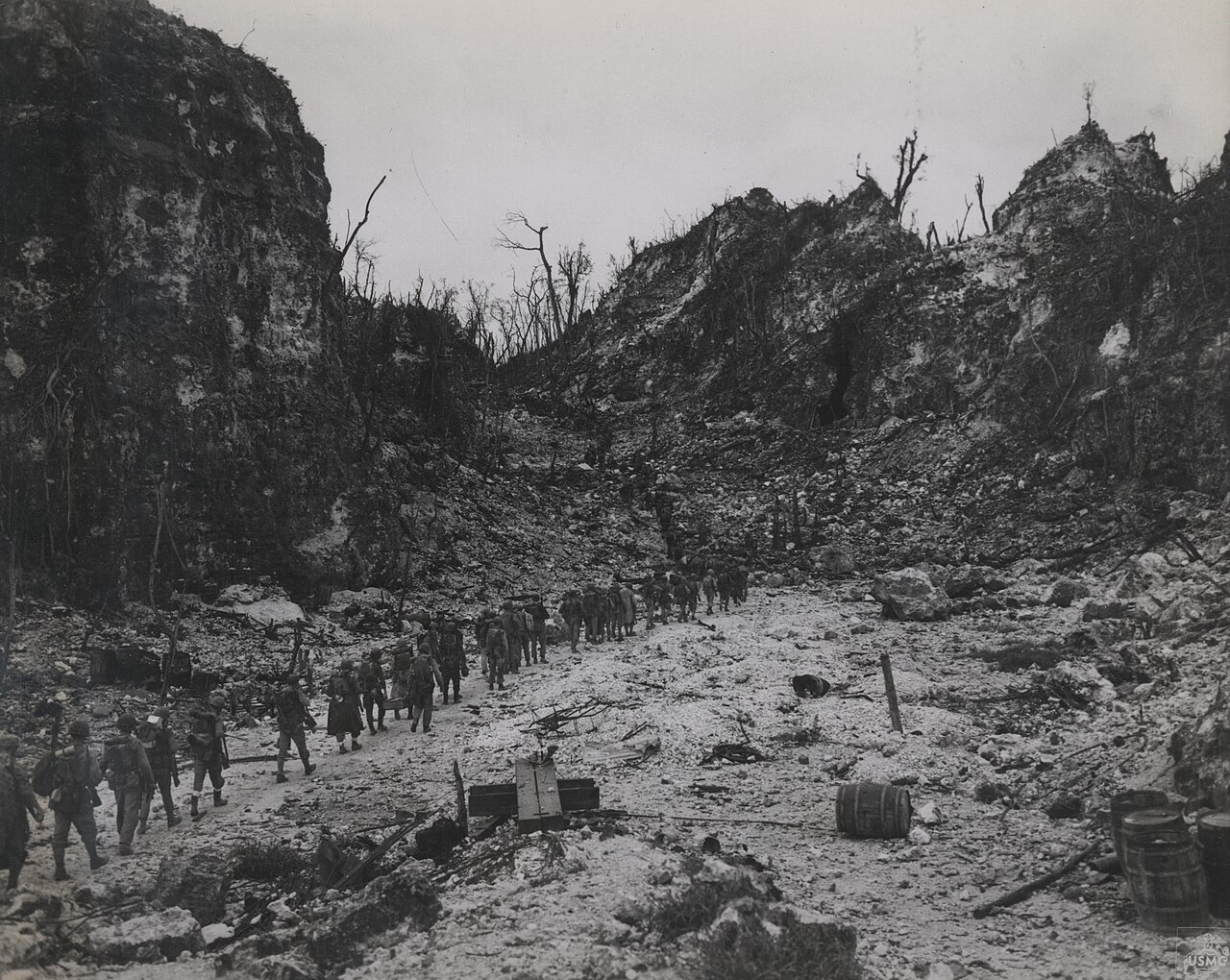
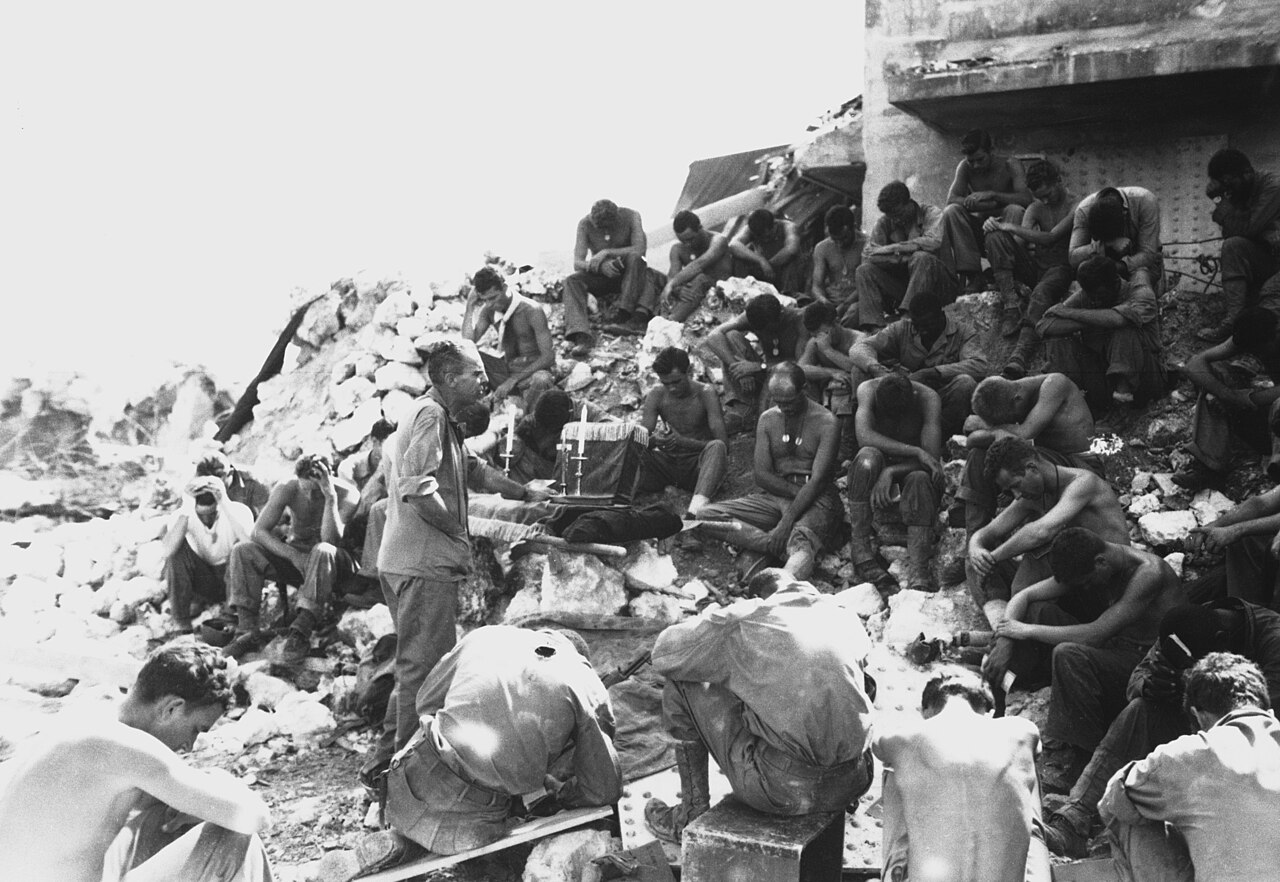
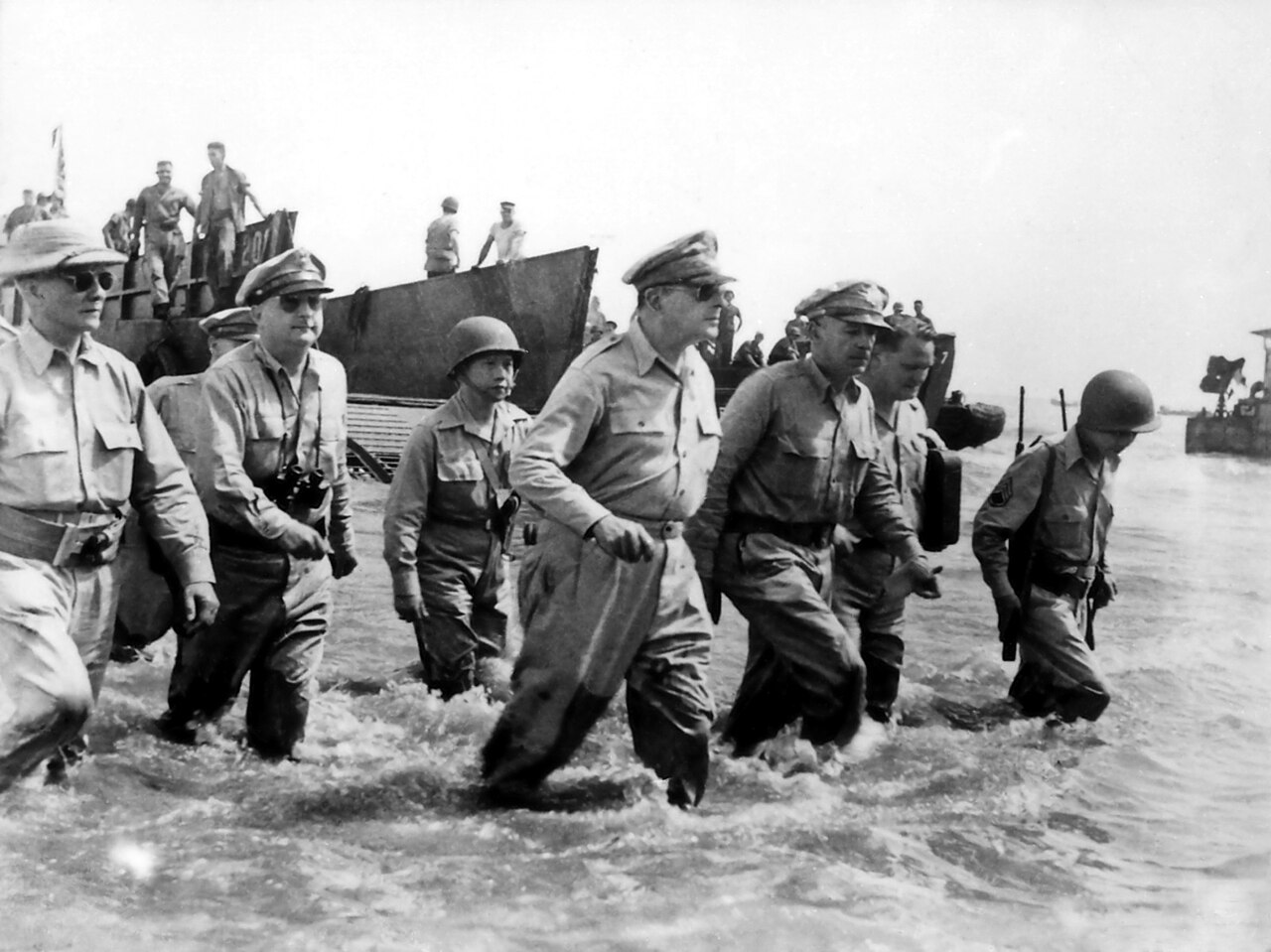
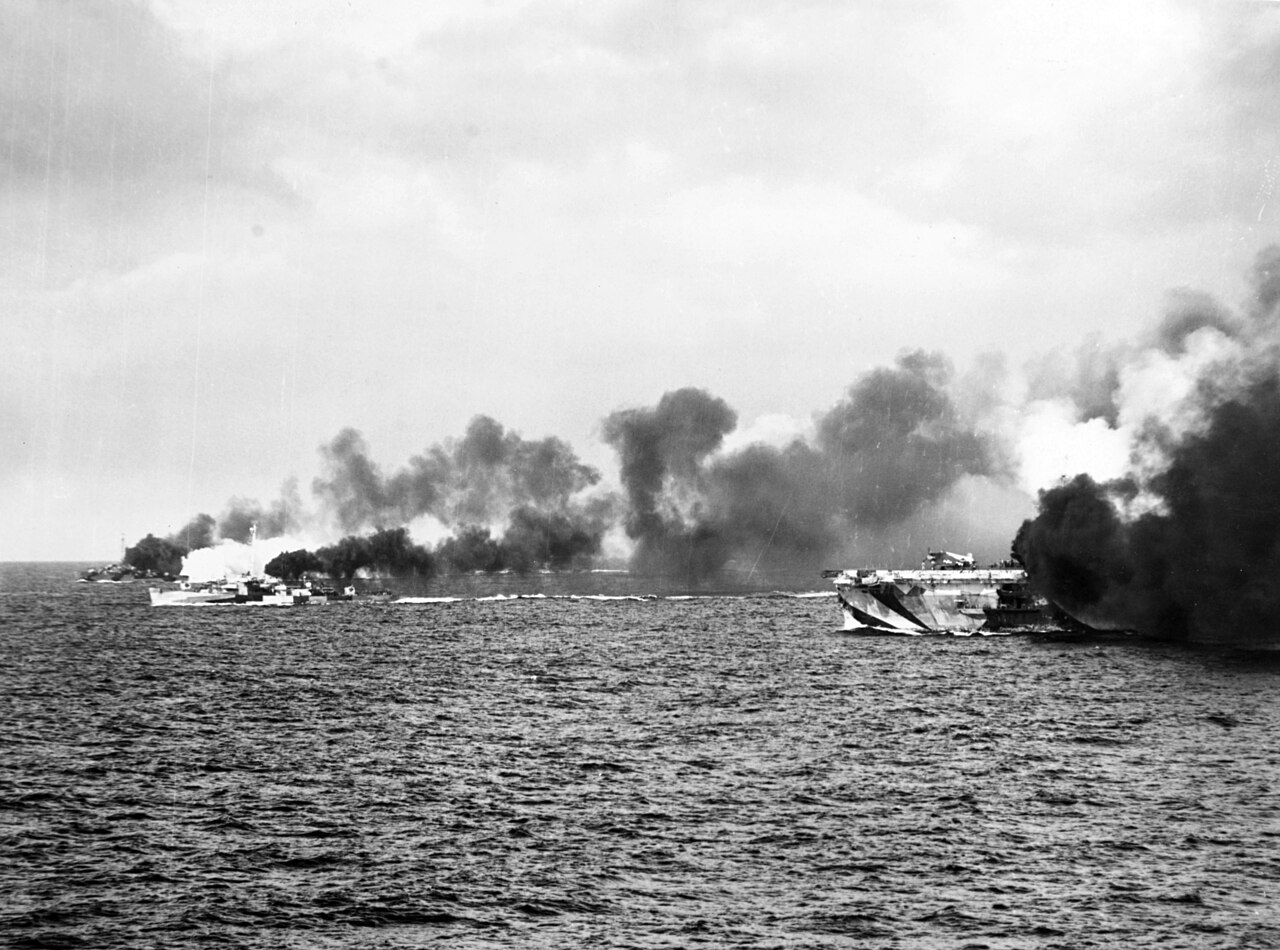
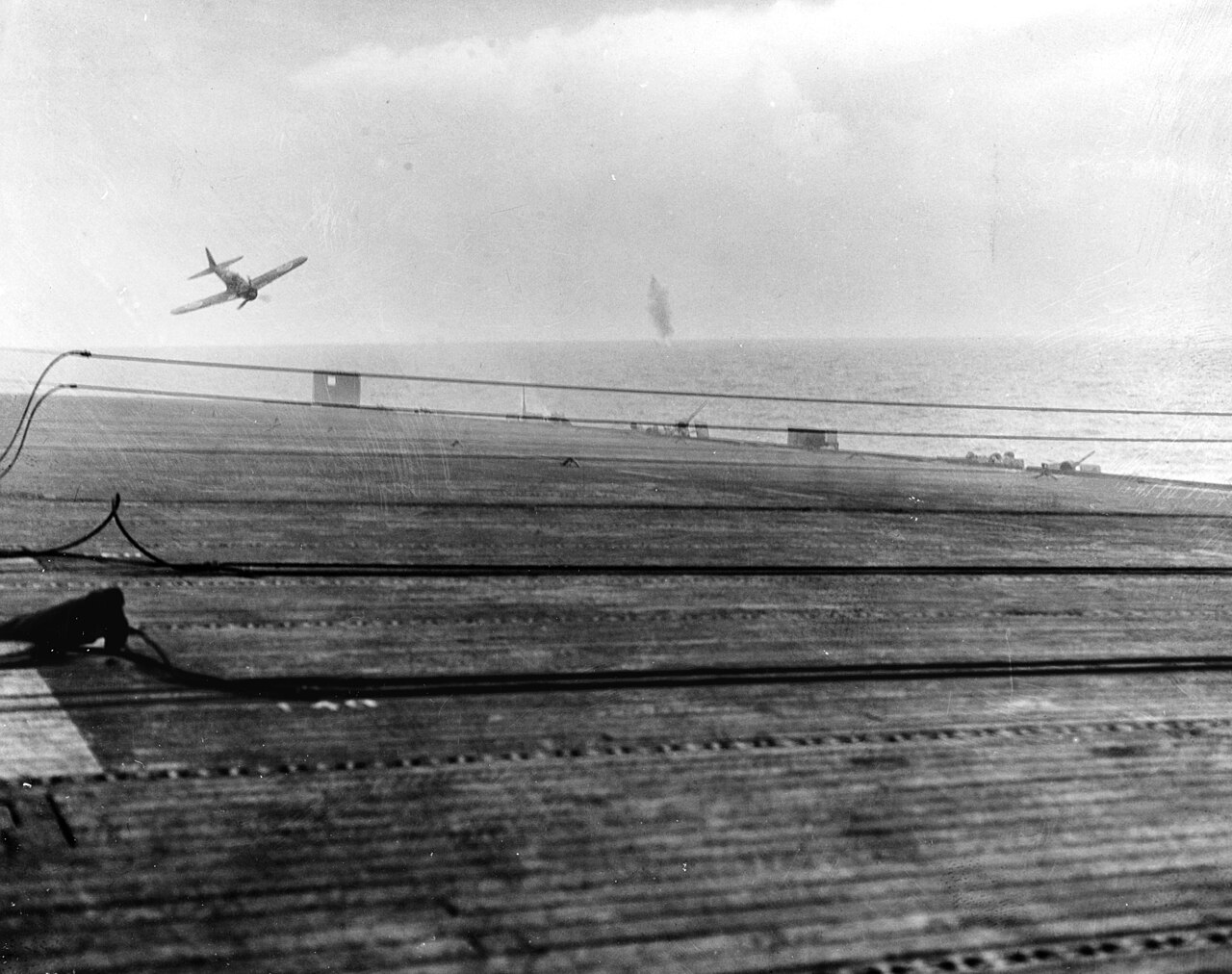
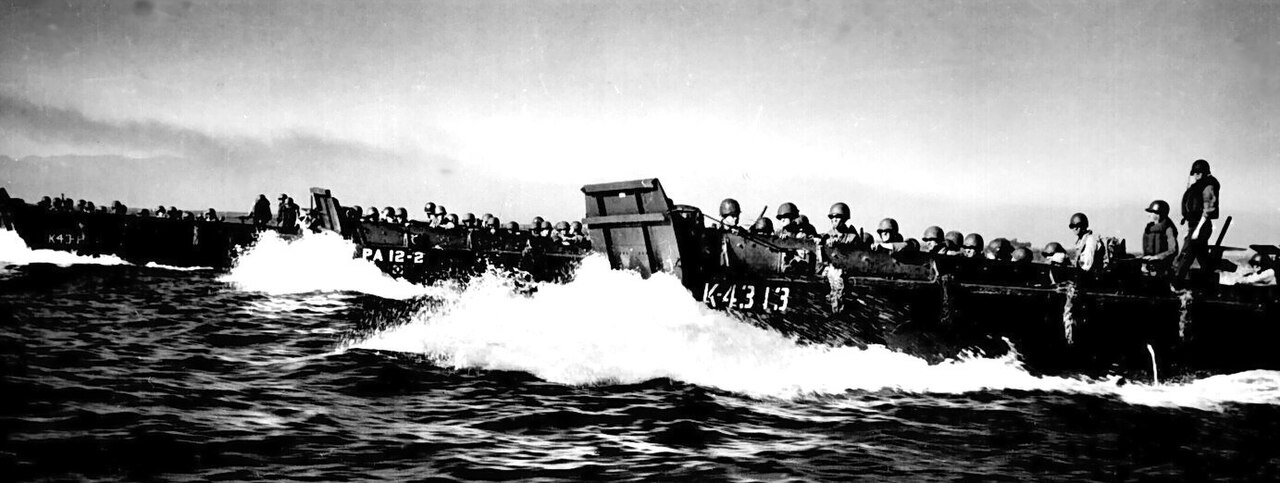
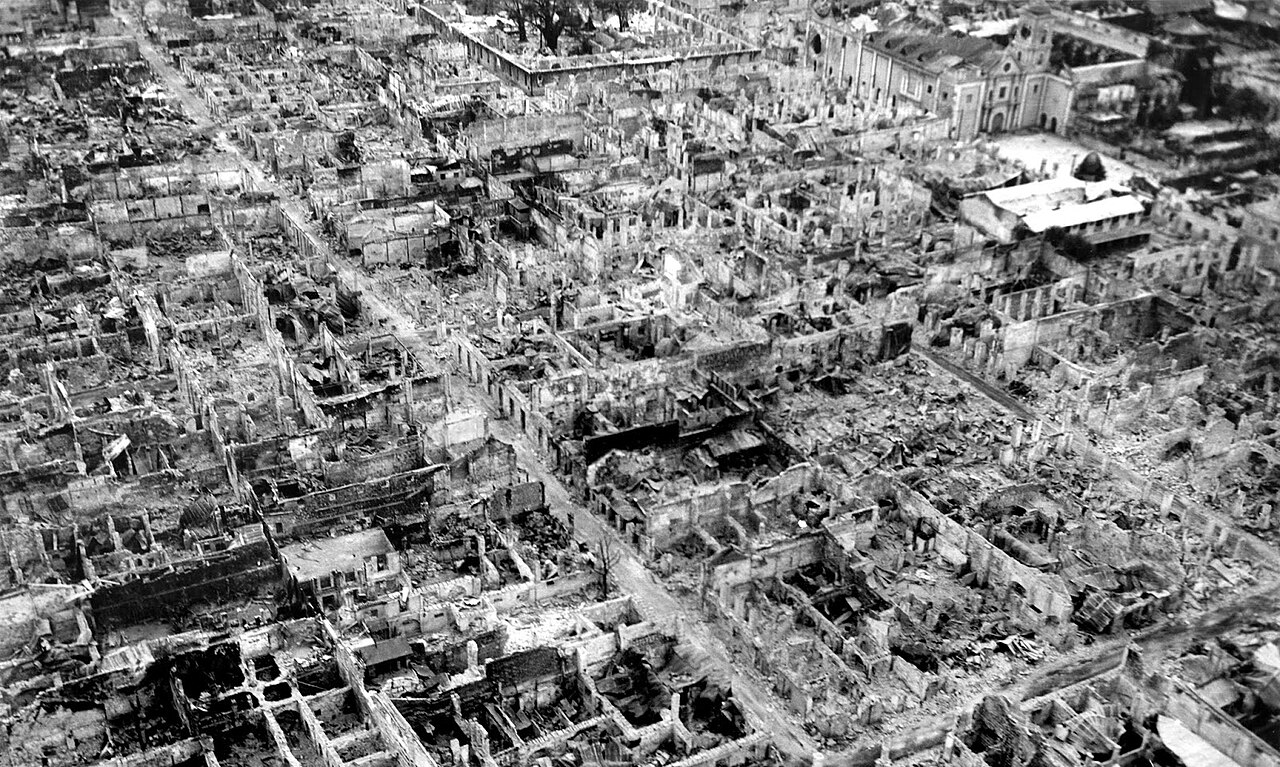
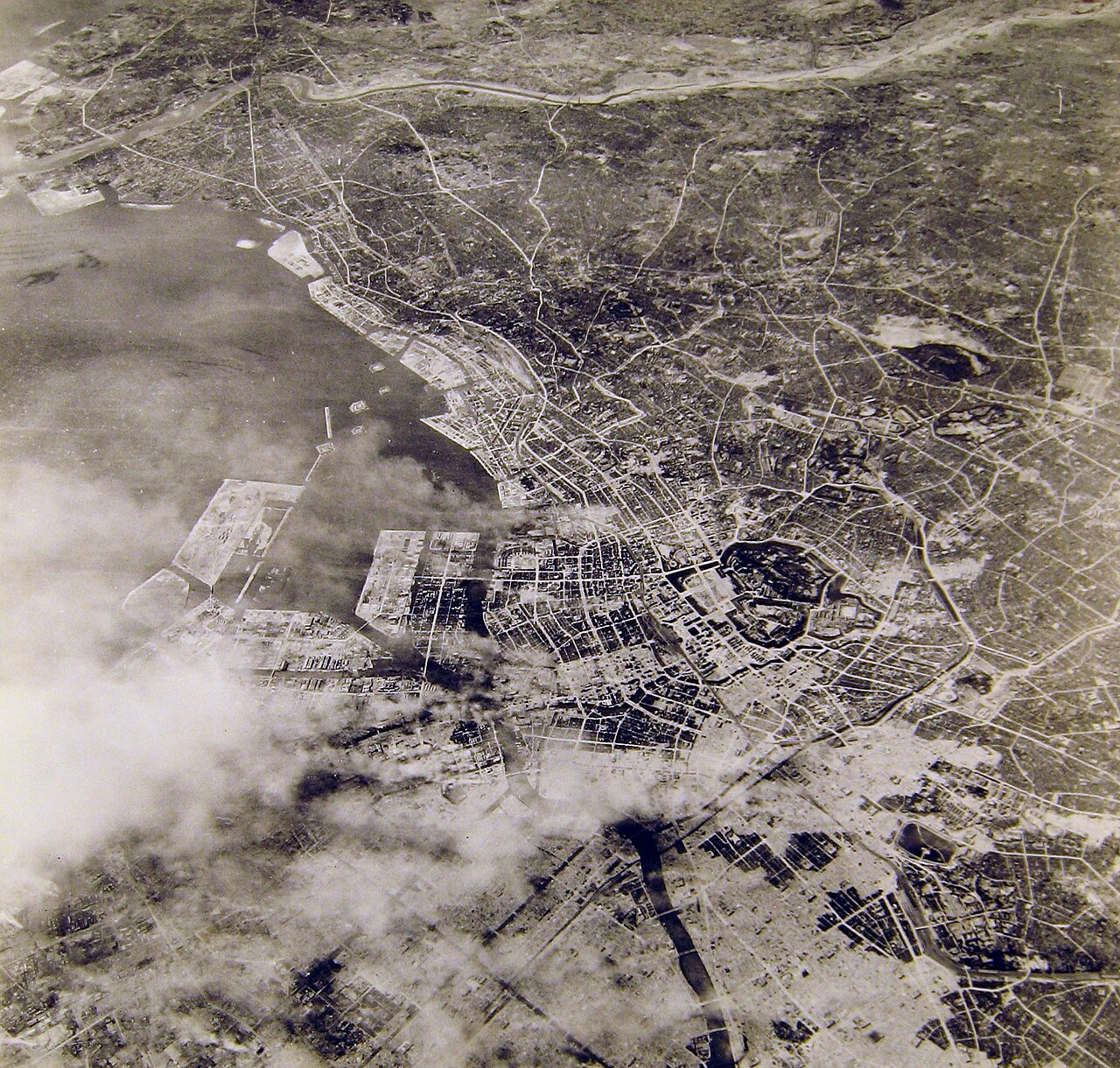
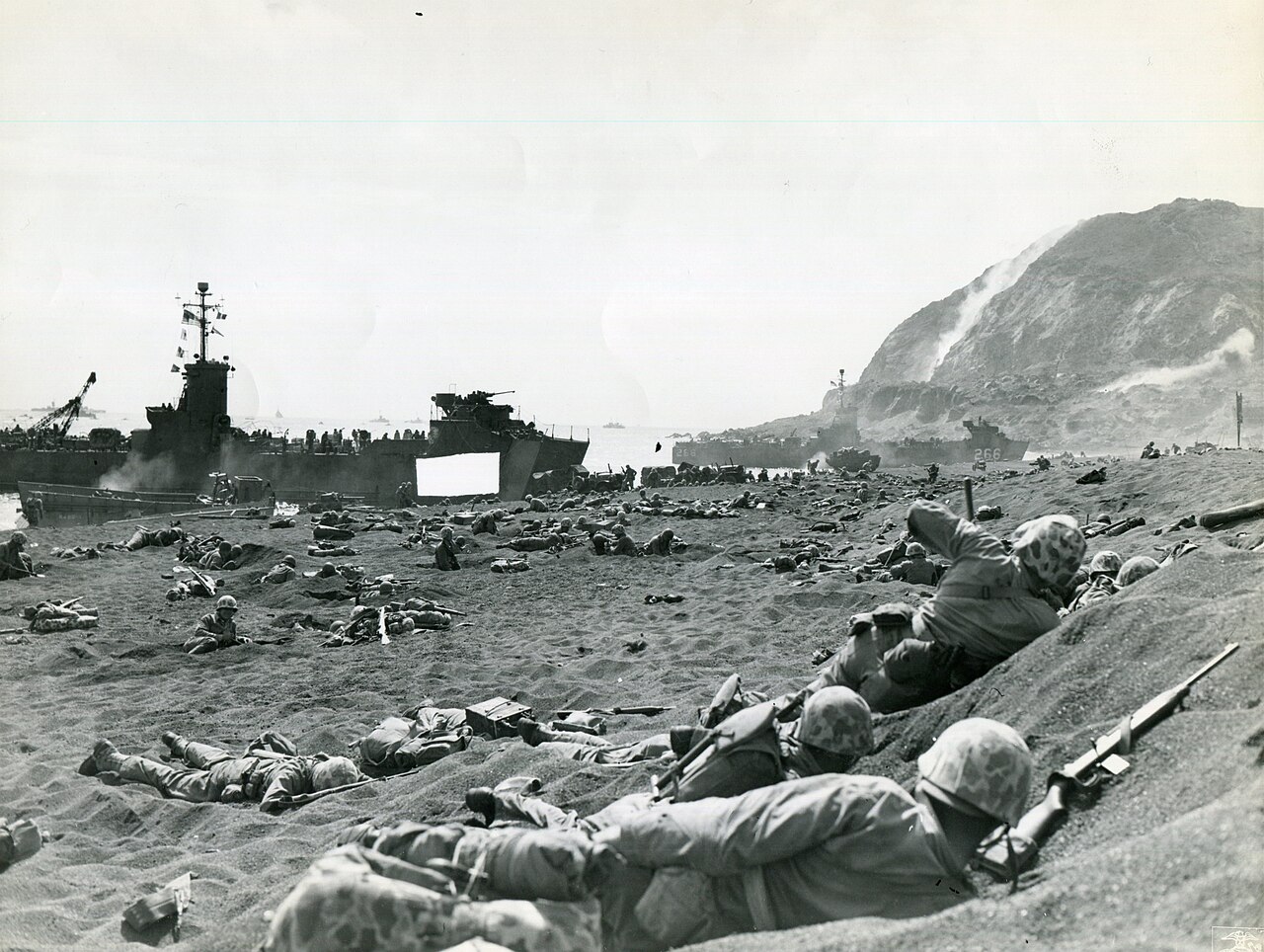
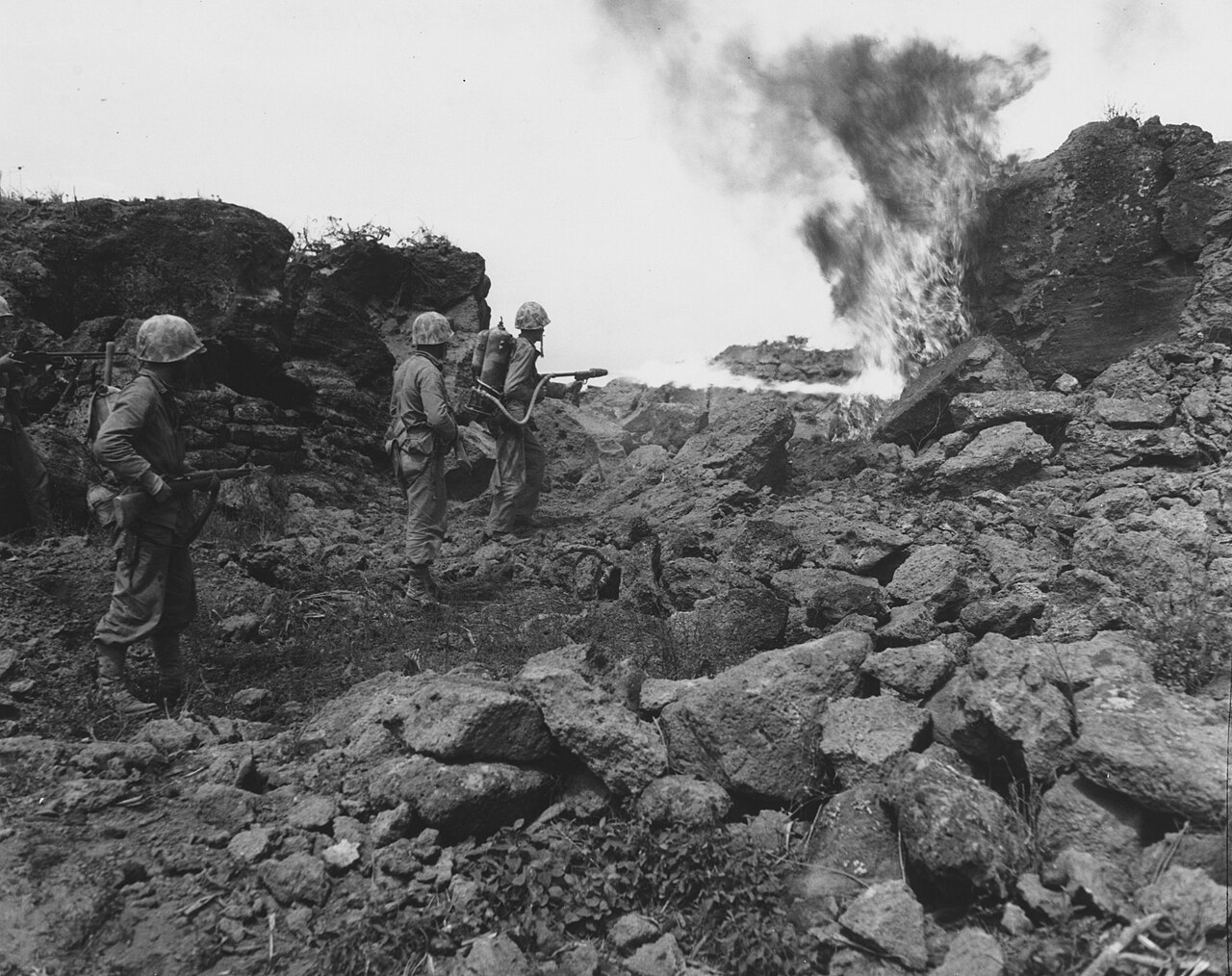
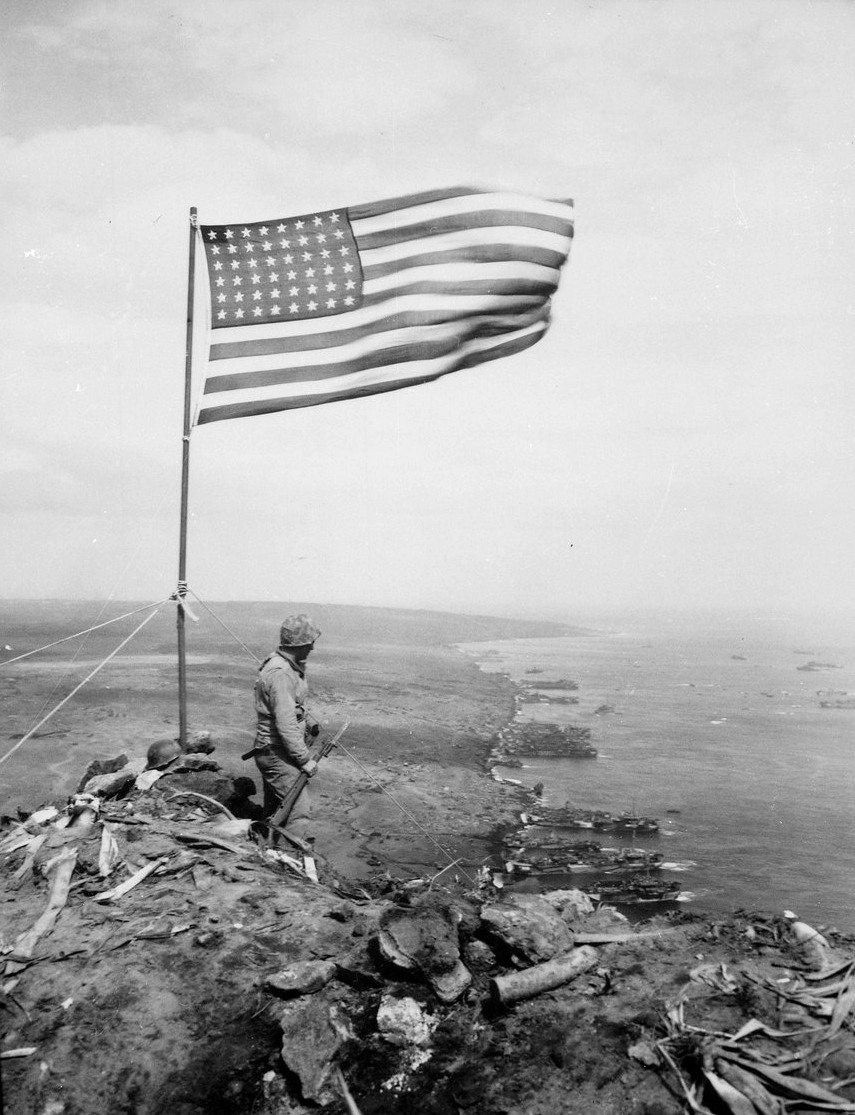
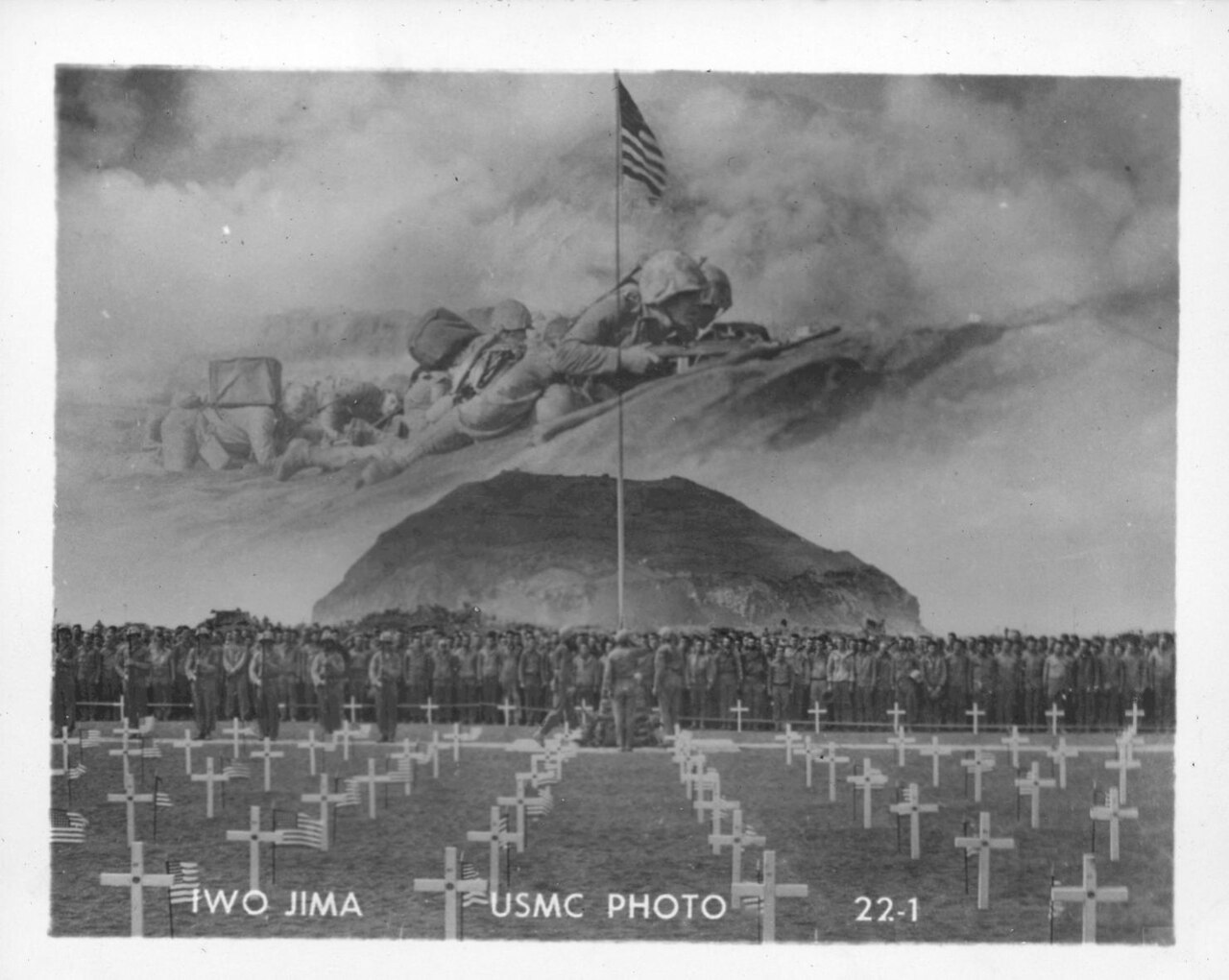
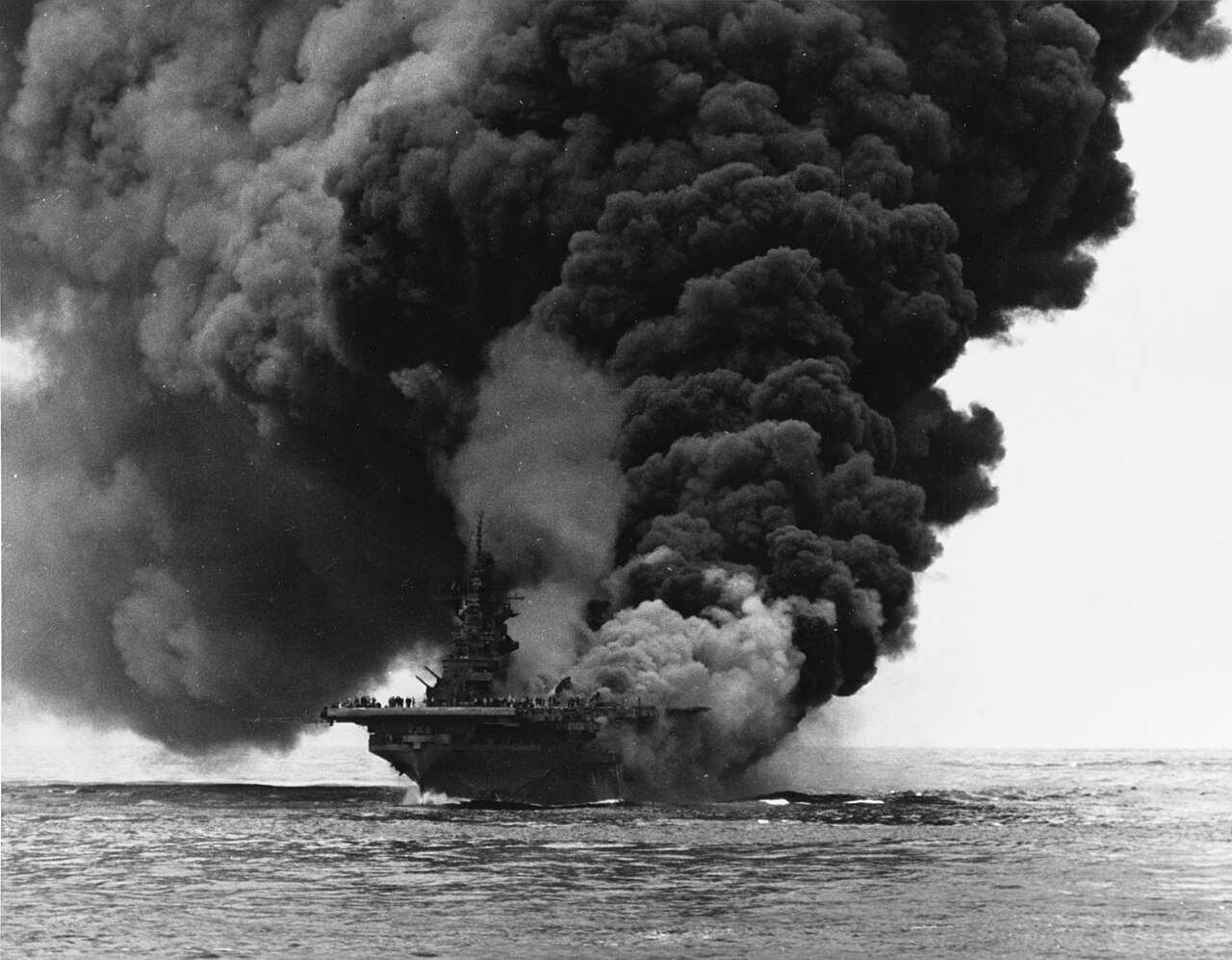
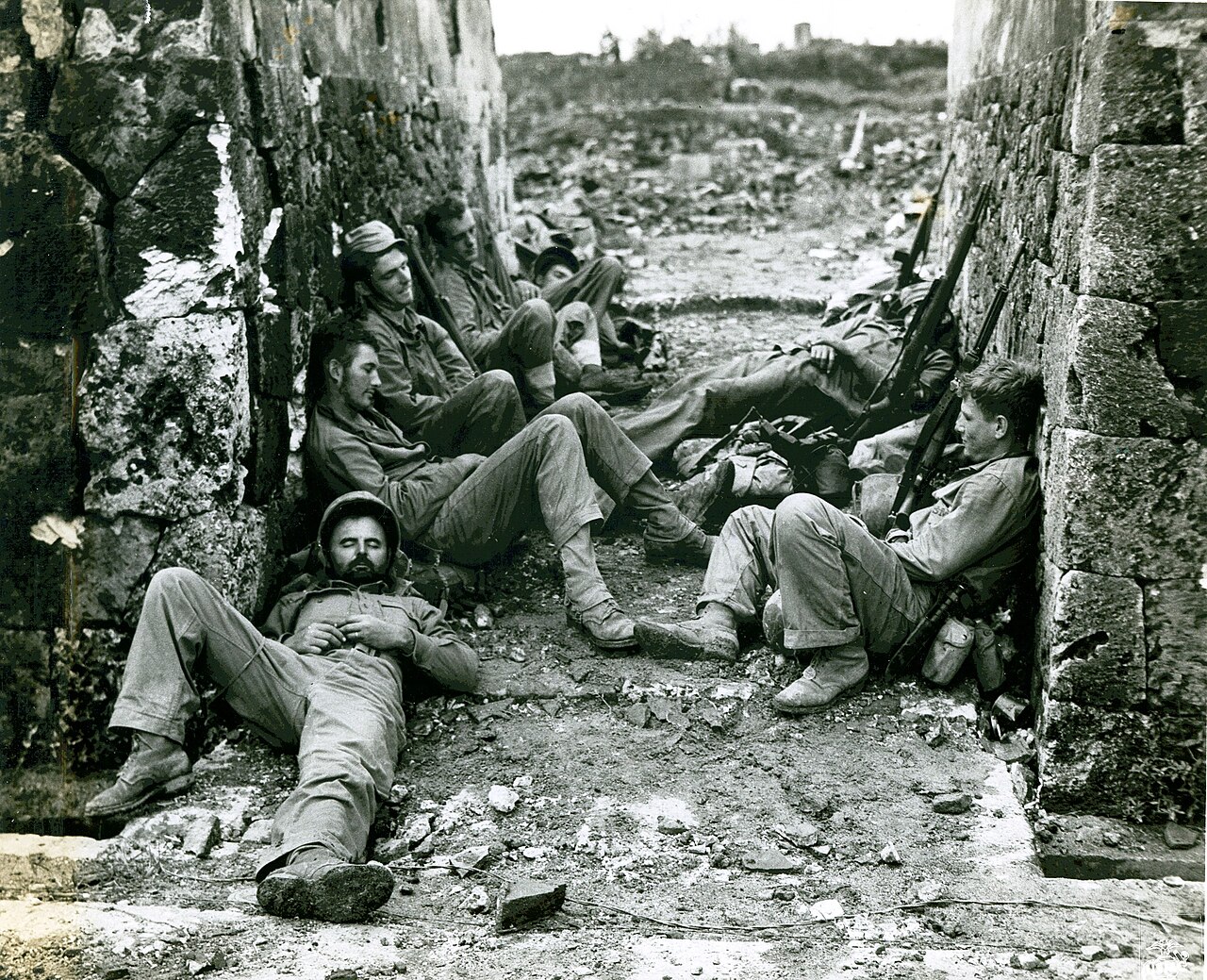
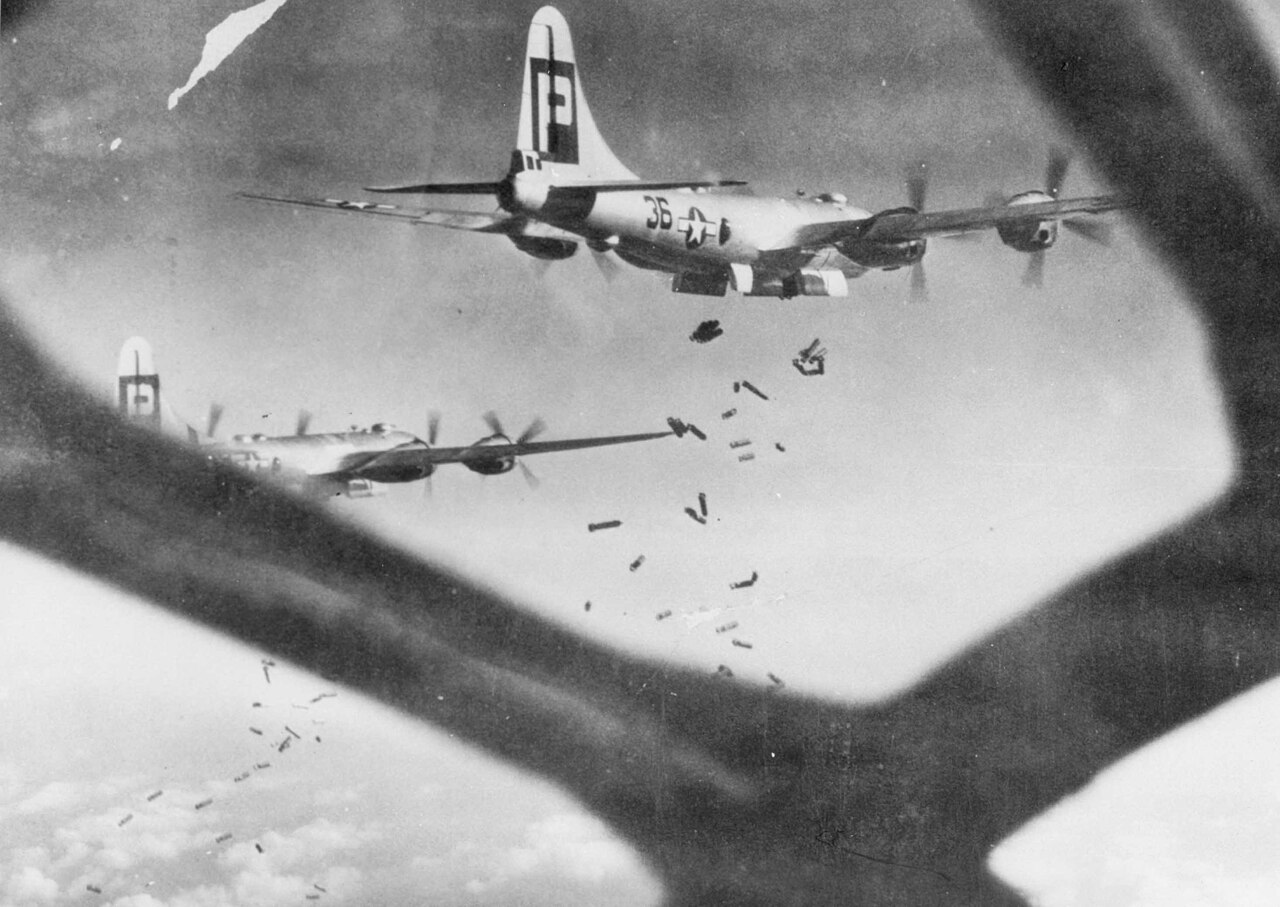
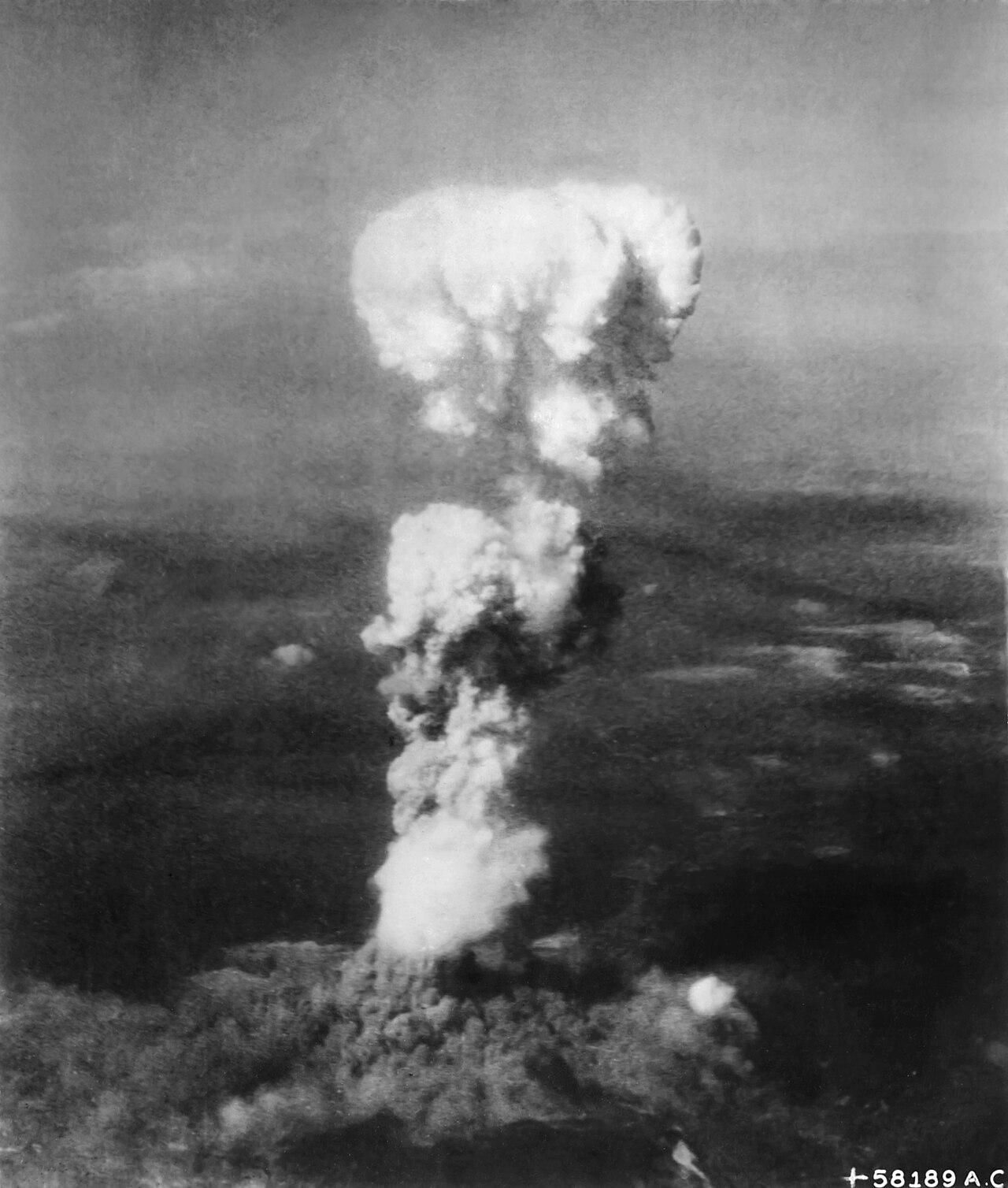
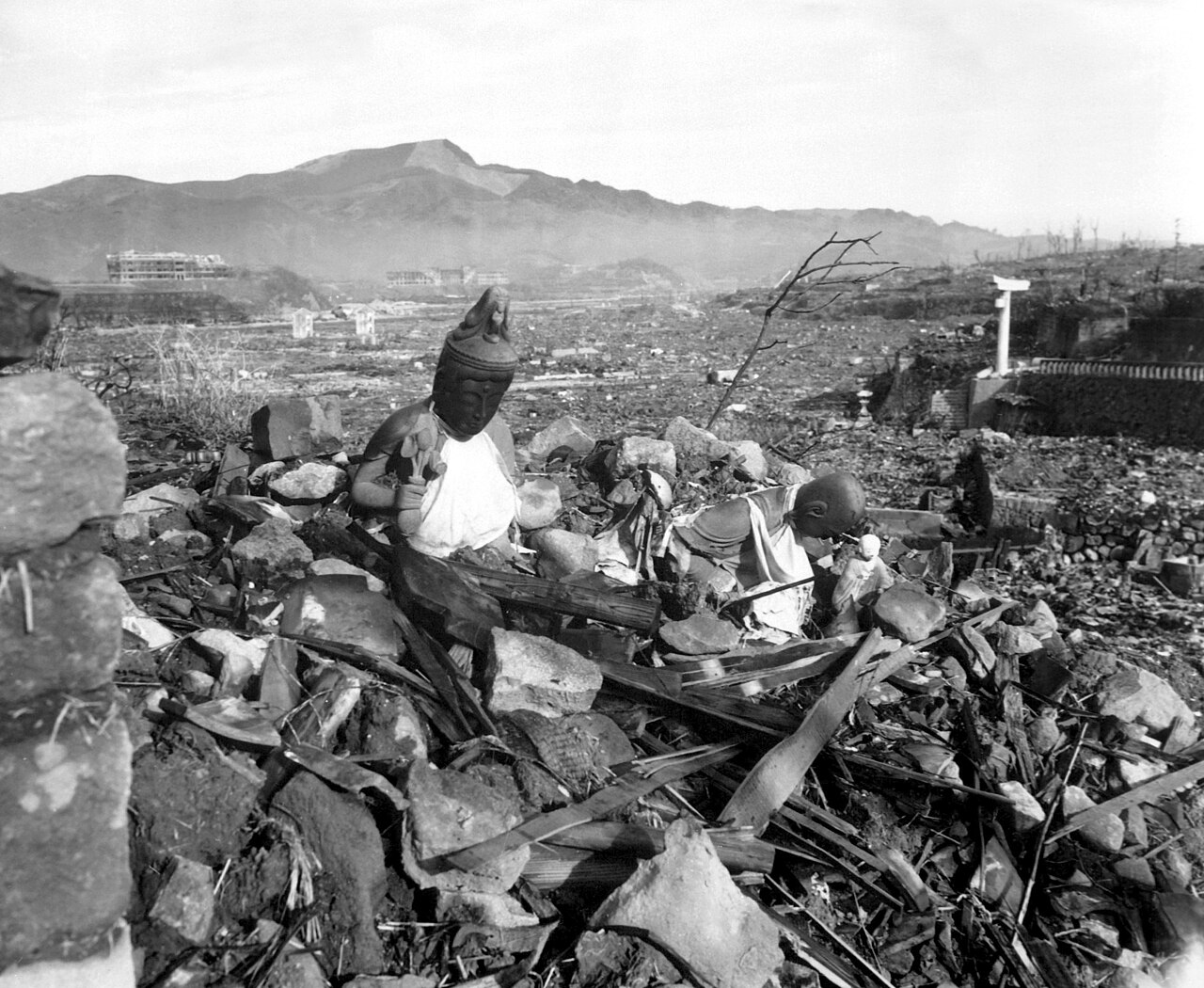
Battleship Row beside Ford Island, photographed from a Japanese aircraft during the horizontal bombing attack, December 7, 1941. Photo: U.S. Navy, captured Japanese photograph.USS Arizona sunk and burning after her forward magazines exploded, Pearl Harbor, December 7, 1941. Photo: U.S. Navy.The forward magazine of the destroyer USS Shaw detonates in the floating drydock at Pearl Harbor, about 9:30 a.m., December 7, 1941. Photo: U.S. Navy. USS Nevada beached and burning at Hospital Point after she got under way and was hit again, 9:25 a.m., December 7, 1941. Photo: U.S. Navy. Japanese naval aircraft prepare to take off from a carrier, reported to be Shokaku, on the morning of the Pearl Harbor attack. Photo: Unknown Japanese photographer, captured photograph. Surrender negotiations between Lieutenant General Jonathan M. Wainwright IV and Japanese officers in the Philippines, 1942. A captured Japanese photograph. Photo: Unknown Imperial Japanese Army photographer. American prisoners use improvised litters to carry men who collapsed on the march out of Bataan, 1942. Captured from the Japanese. Photo: U.S. Marine Corps. American troops surrender at Corregidor, Philippine Islands, May 1942. Photo: U.S. National Archives. A B-25B Mitchell leaves the deck of USS Hornet for the raid on Japan, April 18, 1942. Photo: U.S. Navy. The first 29 Navajo Marine Corps code talker recruits are sworn in at Fort Wingate, New Mexico, 1942. Photo: U.S. Marine Corps. USS Lexington under air attack in the Coral Sea, May 8, 1942, photographed from a Japanese plane. Photo: Unknown Japanese photographer, via U.S. Naval History and Heritage Command. Black smoke pours from USS Yorktown after three Japanese bomb hits at Midway, about 2 p.m., June 4, 1942. Photo: U.S. Navy. SBD-3 Dauntless dive bombers from USS Hornet over the burning Japanese heavy cruiser Mikuma, June 6, 1942. Photo: U.S. Navy, Scouting Squadron 8.First Division Marines come ashore on Guadalcanal, August 7, 1942. Photo: U.S. Marine Corps. USS Quincy caught in Japanese searchlights during the Battle of Savo Island, August 9, 1942, photographed from the cruiser Chokai. Photo: Imperial Japanese Navy, via U.S. Naval History and Heritage Command.Henderson Field, Guadalcanal, photographed from a carrier plane in late August 1942, soon after American aircraft began using it. Photo: U.S. Navy. The Japanese transports Hirokawa Maru and Kinugawa Maru beached and burning on Guadalcanal after a failed resupply run, November 15, 1942. Photo: U.S. Navy. Men of the 2/12th Infantry Battalion advance behind Stuart tanks at Giropa Point, Papua, January 7, 1943. Photo: George Silk, Australian War Memorial.American soldiers fire a trench mortar over a ridge into Japanese positions on Attu, Aleutian Islands, 1943. Photo: U.S. Navy. Japanese warships refueling in Simpson Harbor, Rabaul, get under way as a U.S. Navy air attack begins, 1943. Photo: Paul T. Barnett, U.S. Navy.Betio Island, Tarawa Atoll, photographed from a carrier aircraft at 500 feet on November 24, 1943. Photo: U.S. Navy. A regimental aid station during the battle for Tarawa, November 1943. Photo: National Museum of Health and Medicine.Marines of 3rd Battalion, 3rd Marines work along the muddy Numa Numa Trail on Bougainville, November 1943. Photo: Cpl. C. Dave Ohman, U.S. Marine Corps. Jeeps bogged in the mud at Cape Gloucester, New Britain, December 1943. Pre-invasion intelligence had described the ground as damp flats. Photo: USMC Archives.The Japanese light cruiser Katori burning off Truk Lagoon, seen from an Avenger off USS Intrepid, February 1944. Photo: PhoM1c Edward F. Dolezal, U.S. Navy. Marines advance across the broken limestone of the Saipan front line, June 1944. Photo: Sgt. John Fabian, U.S. Marine Corps. Civilians on a beach in Saipan, 1944. Photo: Unknown U.S. military photographer. Robert Sheeks broadcasts surrender appeals through jeep-mounted speakers on Saipan, 1944. Marines nearby shouldered or grounded their rifles to reassure anyone considering it. Photo: U.S. government photographer. A Japanese plane goes down over Task Force 58 during the Battle of the Philippine Sea, June 19, 1944, photographed from USS Cabot. Photo: U.S. Navy. Douglas MacArthur, Franklin D. Roosevelt and Chester Nimitz aboard USS Baltimore at Pearl Harbor, July 26, 1944. Photo: U.S. Navy. American troops wade ashore from Coast Guard-manned landing craft on Tinian, July 1944. Photo: U.S. Marine Corps. Marines dismount from an LVT and take cover on the Guam invasion beaches on W-Day, July 21, 1944. Photo: U.S. Navy. A column of Marines moves up to the front lines through the rocky ground of Peleliu, September 1944. Photo: USMC ArchivesChaplain Rufus W. Oakley holds a service on Peleliu, within a few hundred yards of Japanese positions, 1944. Photo: McElroy, U.S. Marine Corps.Douglas MacArthur wades ashore at Leyte with Philippine President Sergio Osmena and Lieutenant General George Kenney, October 20, 1944. Photo: Gaetano Faillace, U.S. Army Signal Corps. USS Gambier Bay and her escorts make smoke during the Battle off Samar, October 25, 1944. Photo: U.S. Navy. A Zero in its final dive on the escort carrier USS White Plains, October 25, 1944. Photo: U.S. Navy. Coast Guard landing barges sweep through Lingayen Gulf toward the Luzon beaches, January 1945. Photo: U.S. Coast Guard. The Intramuros district of Manila after the battle for the city, May 1945. Photo: Unknown U.S. military photographer. Tokyo photographed from a U.S. Army Air Forces aircraft after the firebombing raid of March 9 and 10, 1945. Photo: U.S. Army Air Forces. Marines burrow into the volcanic sand on the Iwo Jima beachhead as supplies come ashore under fire, February 1945. Photo: USMC ArchivesA Marine flamethrower operator at work on Iwo Jima, 1945. Photo: U.S. Army Signal Corps Archive. The Stars and Stripes on the crest of Mount Suribachi, Iwo Jima, February 1945. This is a U.S. Coast Guard frame, not Joe Rosenthal’s Associated Press photograph. Photo: U.S. Coast Guard, photo 26-G-4140.The Marine cemetery on Iwo Jima, 1945. Photo: Ralph J. Vaccaro Collection, USMC ArchivesUSS Bunker Hill afire after two kamikaze hits off Okinawa, May 11, 1945. Three hundred and seventy-two of her crew were killed. Photo: U.S. Navy, photographed from USS Bataan. A Sixth Division mortar crew sleeps after a night of fighting for Naha, Okinawa, May 29, 1945. Photo: USMC ArchivesB-29s of the 39th Bomb Group out of North Field on a mission to Hiratsuka, Japan, July 16, 1945. Photo: U.S. Army Air Forces. Smoke rises 20,000 feet above Hiroshima, August 6, 1945, photographed from an accompanying B-29. Photo: George R. Caron. Damaged religious figures stand above the ruins of Nagasaki, September 24, 1945, six weeks after the bombing. Photo: Cpl. Lynn P. Walker Jr., U.S. Marine Corps. Representatives of the Empire of Japan stand on the deck of USS Missouri during the surrender ceremony, Tokyo Bay, September 2, 1945. Photo: U.S. Army Signal Corps.