
Andersonville Prison (also known as Camp Sumter) was a military prison established by the Confederates during the Civil War. Built in 1864 in Sumter County, Georgia, it remained in service for around 14 months. Within that short time, it became one of the largest (and deadliest) POW facilities in North America.
At the height of its residency, more than 32,000 inmates inhabited the prison concurrently. Of the 45,000 that eventually passed through its doors, as many as 13,000 died there (which is approximately 29% of all prisoners).
The reasons for this high level of mortality varied, from food and medical shortages to troubles with staffing and leadership.
In the final years of the Civil War, these challenges compounded, and historians tend to divide the causes among the overall scarcity faced by the Confederates and a lackluster administration. Let’s look deeper at the horrors of Andersonville Prison and why those events arose in the first place.
Andersonville in the Civil War
The prison at Andersonville came to exist because the Civil War’s prisoner exchange system had begun to break down around 1863. Formerly, captured soldiers were paroled or exchanged on a regular basis, in part thanks to agreements such as the Dix-Hill Cartel of 1862.
These arrangements minimized the need for both sides to maintain prison structures that could hold individuals for extended periods of time.
However, that system was already failing by 1863. The Union government demanded that all soldiers be guaranteed equal treatment, but the Confederates refused to recognize Black Union soldiers as legitimate parts of the forces.
At the same time, the Union was advancing on Georgia and Virginia, which meant that Confederate supply lines and infrastructure were increasingly in peril.
In particular, agriculture became a problem. Because most of the output was diverted to armies, basic goods shortages arose, especially in places such as urban centers with higher populations.
Because prisoner exchanges were already slowing, Confederate authorities needed to manage a higher population than ever, feeding them on diminishing resources.
So why didn’t the Confederates simply reallocate prisoners to spread the burden? They also maintained facilities in key locations such as Richmond, but as this was a city in Virginia, where they were losing ground, access to the prison was compromised.
Thus, prisoners were routed to Georgia, as far from the active fronts as possible. Prisoner exchange remained a nebulous concept and never recovered to its early-war structure.
Camp Sumter: An Administration and Infrastructure Catastrophe
Camp Sumter began operation in February of 1864, when the situation with prisoners had already grown dire. Its isolation made it a favorable location, and its suggested occupancy of 10,000 prisoners would quickly be tested to its limit thanks to this appealing geography.
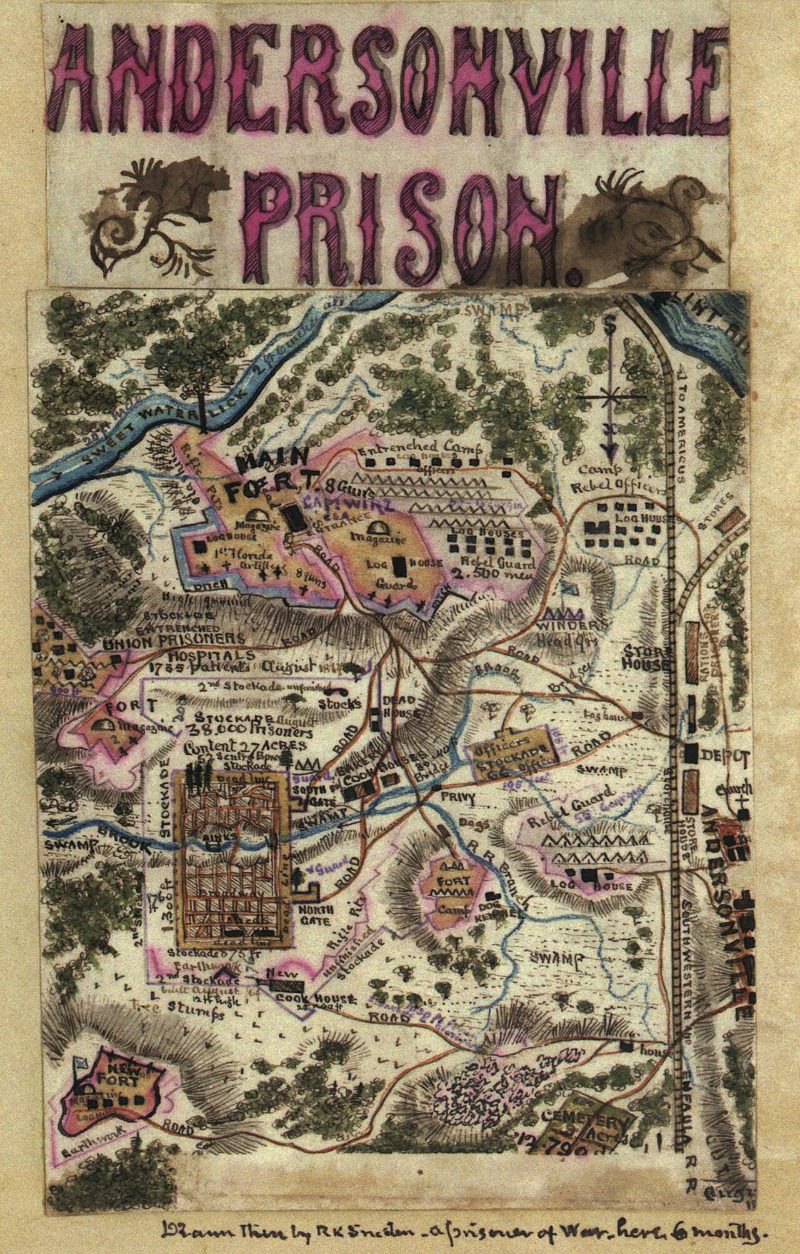
Of note, Sumter was known for its “deadline.” This secondary inner perimeter was located approximately 19 feet inside the wall, and any prisoner who crossed into it could be shot on sight.
This rule was intended to prevent escape attempts and to stop prisoners from attempting physical contact with guards. Such stringent policies reflected a broader symptom of Sumter’s flaws: a failing administrative structure.
Already low on resources, Camp Sumter’s manpower was no different. Initial oversight was granted to a Confederate captain named W. Sidney Winder, who chose the site, and his cousin Richard B. Winder took over shortly after as quartermaster.
In the spring of 1864, command of the inner stockade transferred to Captain Henry Wirz, a Swiss-born Confederate and the man whose name is bound to Sumter’s notorious history. Wirz ran the stockade but not the post around it, which was commanded first by Colonel Alexander Persons and then by Brigadier General John H. Winder, Sidney’s father; the guards and the supplies answered to them.
However, Wirz was limited in his ability to function as a leader by the prevailing logistical issues of the time. He did repeatedly request additional resources, such as food and medical supplies, but these requests were, at best, fulfilled only partially.
Systemic shortages stymied any substantial infrastructure progress. Thus, overcrowding and supply issues compounded.
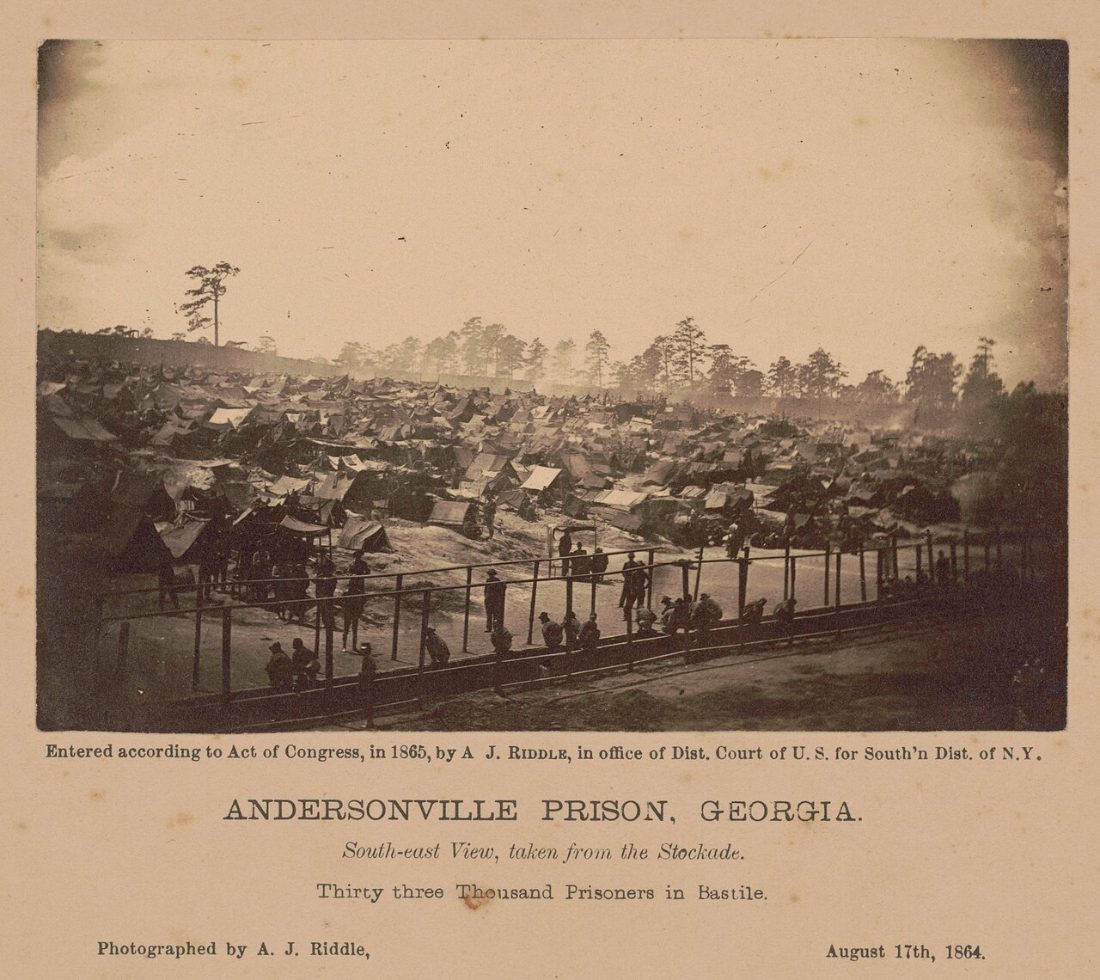
At the peak of its holding capacity, more than 32,000 prisoners resided in Andersonville Prison. The enclosure in which they stayed had no roof, so prisoners had no choice but to endure the heat of Georgia’s summer (packed in with the body heat of tens of thousands of others), heavy rains, and the cold of winter.
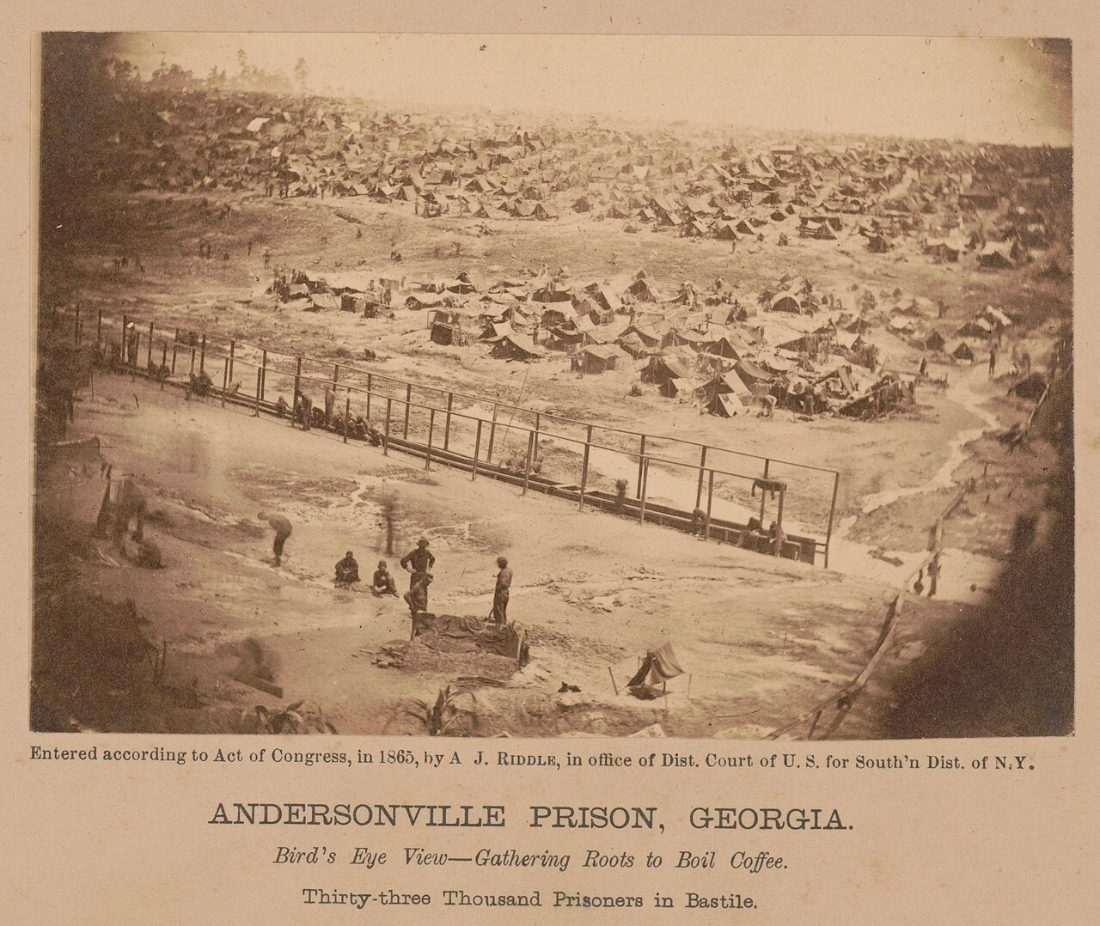
Where possible, prisoners created “shebangs,” improvised shelters made of scrap clothing, chunks of wood, and anything else they could find. However, most did not have access to enough such materials to serve as sufficient shelter.
Water was a consistent challenge. The primary water source feeding into the prison was nothing more than a stream, which ran through the occupied, unroofed holding space.
The upstream portion was the best location to retrieve drinking water, and in the absence of proper latrines, inmates used the downstream section for waste. However, this divide was not sufficient, and water contamination remained a consistent problem.
To help avoid this, latrines were dug within the enclosure itself, but it was impossible to place or maintain them in a manner that made them effective. Essentially no waste management systems existed, so disease proliferated freely.
As for food, quantities were limited by unreliable supply chains and diversion of crops and resources to the army. Cornmeal rations made up the bulk of the diet, with meat extremely rarely included. All of these factors combined led to a high mortality rate within Sumter. Disease was the primary cause, arising from overcrowding, poor sanitation, and the nutritional deficiencies that came with food shortages.
The most common illnesses included dysentery, scurvy (due to a lack of vitamin C from poor food rations), typhoid fever, and gangrene, as well as fatal dehydration from diarrhea. The prison did maintain some medical facilities, such as a small hospital outside the stockade where the prisoners lived, but as with the rest of the supplies, medical resources were scarce. Even basic medications and surgical equipment were rarely available.
It may come as no surprise, then, that close to 13,000 people perished while living in Sumter. The summer months saw the highest mortality due to intense heat and dehydration. After death, people were laid to rest in mass graves as the best option at the time.
Society Inside the Prison
As far as daily life was concerned, survival became the primary objective each day. The morning began with roll calls conducted by the guards standing along the stockade perimeter. Many were located on elevated platforms called sentry boxes, providing them with an unobstructed view for utilizing lethal force if necessary. Commonly, prisoners were organized into groups based on categorization, such as their state affiliations or military units, but these groupings were largely informal.
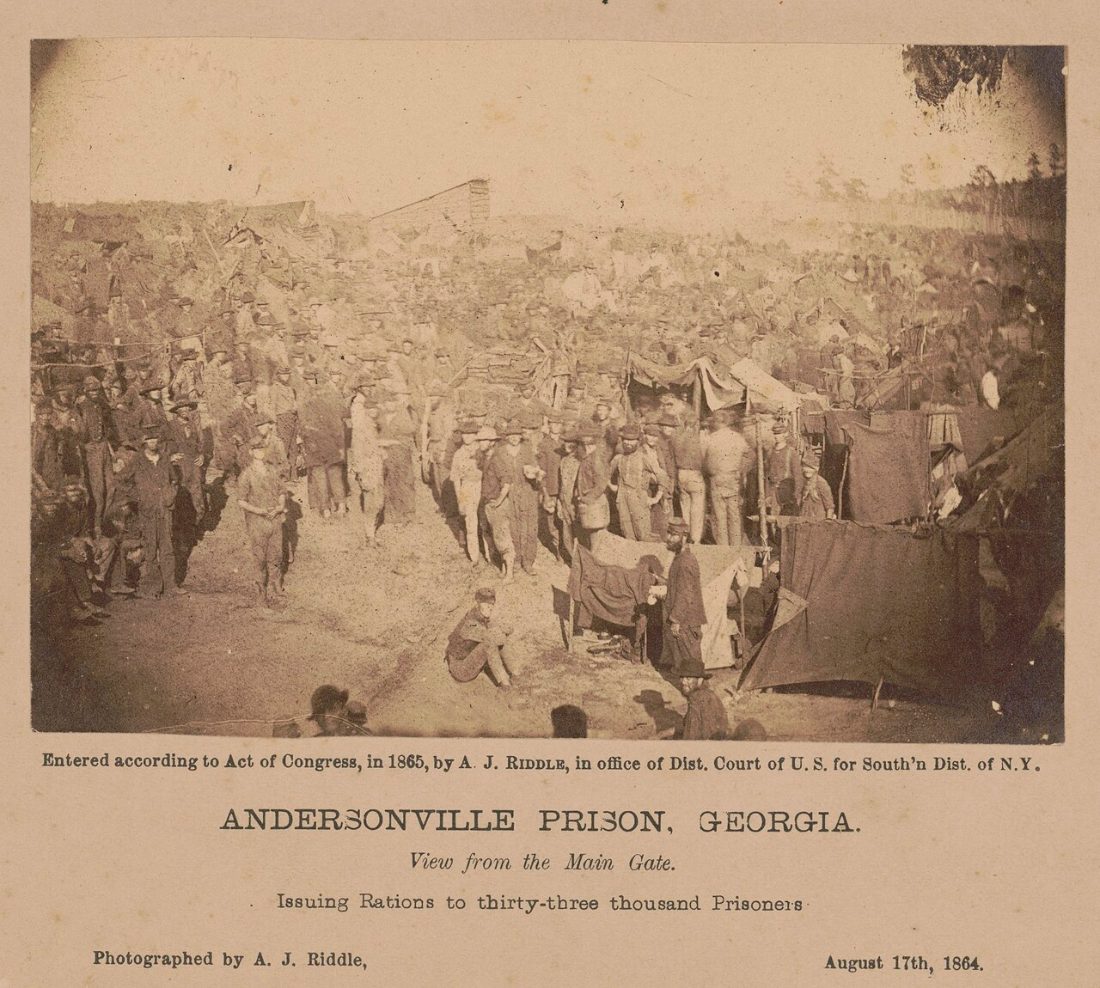
Food distribution came once a day, or twice when rations permitted. If cooking needed to be done, it was done individually or in small groups, not by the administration. However, shortages of burnable materials were common, so cooking was not always an option. Consuming partially cooked food or raw ingredients further contributed to nutritional deficiencies among the population.
Clothing deteriorated quickly in the conditions of the stockade, so most people walked barefoot the majority of the time. When possible, they used blankets and discarded materials to make more clothes, but this choice was further influenced by the weather, which was a factor in determining whether blankets should be used for shelter or warmth.
Morale declined steadily, as prisoners were never especially clear on when (or if) they might be released or exchanged. They were provided little to no communication with their families, leading to isolation that further fueled their struggles.
Given the overall lack of management of the prison conditions, prisoners were largely left to create their own societal order. Because they lived in tight quarters in one single location, social strata developed, with unique roles for certain groups of people.
They created a basic, informal government, electing representatives and committees who made decisions on maintaining order and distributing their limited resources.
However, even these microcosms of leadership could not completely stifle internal conflict. Not everyone was happy with the existing system. “Regulators,” or those whose chosen job was to maintain order within the group, consistently butted heads with “Raiders,” or those who regularly attempted theft and violence against others.
However, the prisoners banded together in 1864 to suppress Raider activity and strengthen internal structures of discipline to more permanently end their influence. In July of that year they tried six Raiders in a court of their own making and hanged them inside the stockade, with Wirz’s permission and Wirz’s rope.
Instead of theft, prisoners switched to bartering. Food, personal items, clothing, and items from outside the prison became the gold standard of currency. However, acquiring such items could prove challenging.
The stockade walls and deadline system ensured people remained inside, and even without an attempted escape, a prisoner could be harmed or even killed by armed guards if they came into conflict.
Conditions deteriorated with each passing day, and by early 1865, outside forces got involved. The Union government initiated relief efforts, such as the delivery of aid packages. However, the administration failed to distribute these items within the camp consistently.
The Confederate government was buckling by this point, and maintaining the supply chains needed to acquire these relief packages proved a challenge.
The Aftermath of Andersonville
As Sherman closed on Atlanta in September 1864, most of the prisoners were shipped out to camps in South Carolina and elsewhere, and the population fell from more than thirty thousand to a few thousand who stayed on through the winter.
Camp Sumter then reached its final days at the same time that the Confederate forces collapsed across the South. In April 1865, it was evacuated, with the remaining prisoners either transferred to other prisons or released because Union forces were advancing too fast into Georgia.
The Union arrival happened quickly, which gave them a first-hand look into the conditions at Andersonville. They recorded severe physical deterioration among the prisoners who survived, and they immediately acted to provide food, medication, and even transportation to areas controlled by the Union so they could recover. However, for many, that recovery took months or years.
Captain Henry Wirz, who had been in charge of the prison during its peak and into its fall, did not escape from his actions unscathed. Following the end of the war, he was arrested and charged with crimes related to his governance of Andersonville Prison. A military commission in Washington, D.C. tried him the same year (1865), and he was convicted.
Charges included specific acts of cruelty and conspiracy to impair the health and lives of prisoners. Prisoner testimony was essential for his conviction, but Union commissioners were also able to develop a case based on the administrative records that survived.
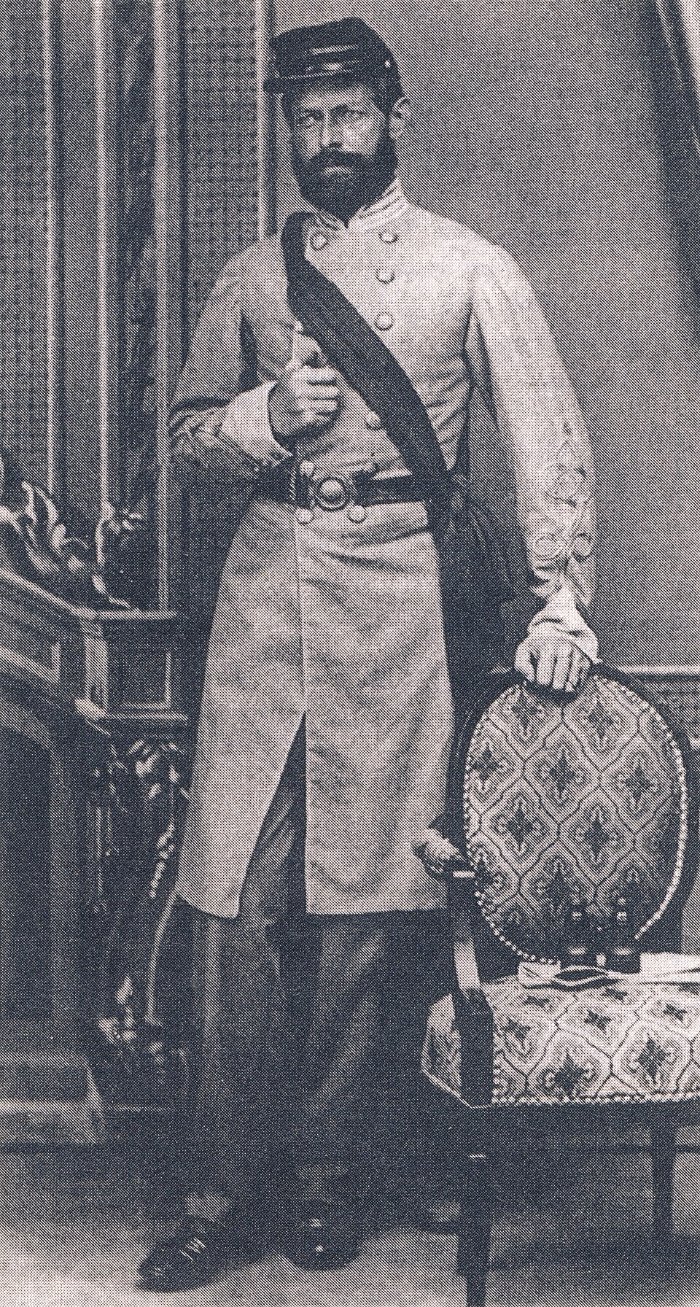
In November of 1865, Wirz was executed for his crimes, the only Confederate officer put to death over the wartime treatment of prisoners.
The trial itself has not worn well: hearsay was admitted, several witnesses proved unreliable, and the conspiracy charge named Confederate leaders who were never brought to trial themselves. Historians still do not agree on the extent to which Wirz was responsible for the state of the prison versus the systemic shortages the Confederates faced that were out of his control.
The stories told of Camp Sumter after its downfall greatly depended on which side was sharing the narrative. Union veterans recounted the severity of the conditions, while Confederates emphasized the hardships of war and the frequent scarcity of resources.
Modern scholarship notes that both Union and Confederate prisons were subject to high mortality rates. No camp came close to Andersonville’s absolute death toll, but by rate the Union camp at Elmira, New York was in the same territory, killing roughly a quarter of the men held there.
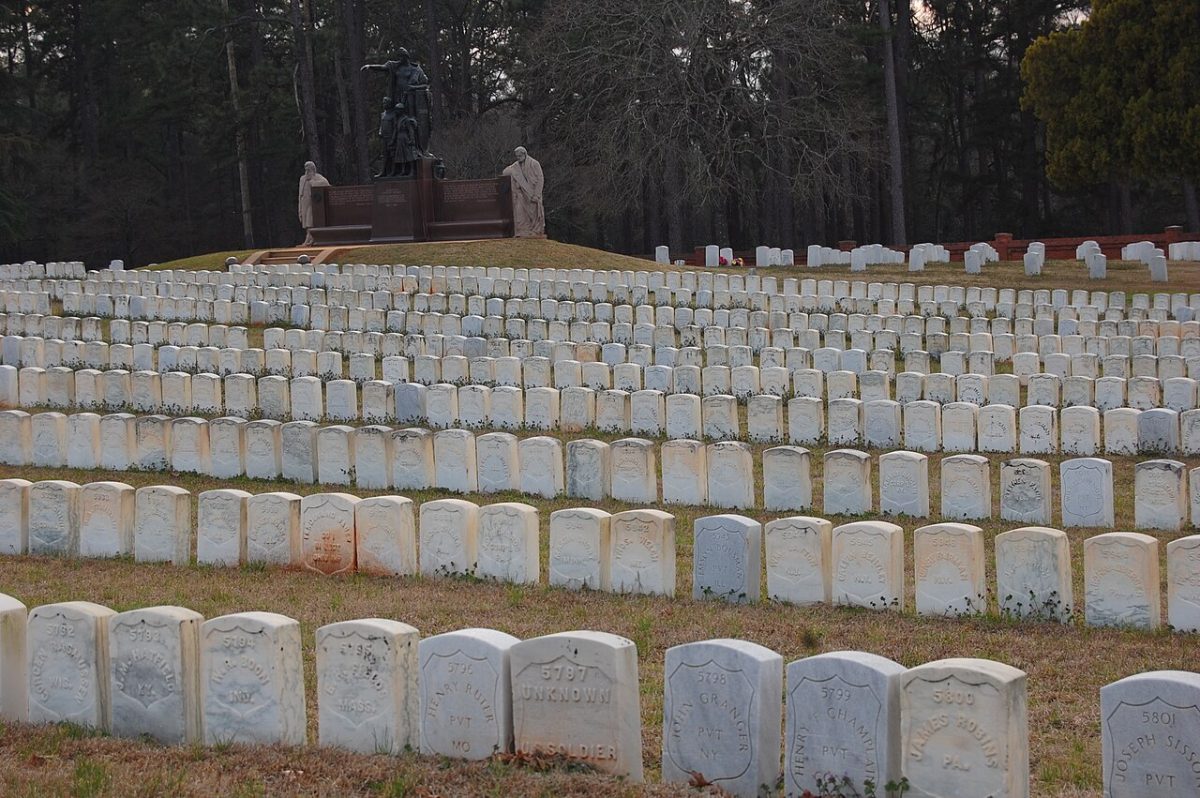
The site was preserved as a historic landmark: the prison grounds and the burial ground together are now the Andersonville National Historic Site, and the graves themselves are Andersonville National Cemetery.
This cemetery was established by Union medical personnel and civilian workers, who identified individuals in the rows of mass graves and marked thousands of new graves using records from the prison.
Clara Barton and former prisoner Dorence Atwater were among the most notable individuals in this effort. In the decades following the end of the war, veterans and memorial groups continued to gather at the site of Andersonville Prison, through which it attained its current role as a notable monument of US history.
Although Andersonville Prison operated during the final phase of the Civil War, its death toll exceeds many of the most notable battlefields. T
he high mortality cannot be traced to a single factor, with many in disagreement about the driving influence that led to so many deaths. Was it Wirz? The scarcity of the war? Prisoner populations outside anyone’s control? There will likely never be a consensus. But what remains true is that this historical event should be a lesson in not allowing history to repeat itself.