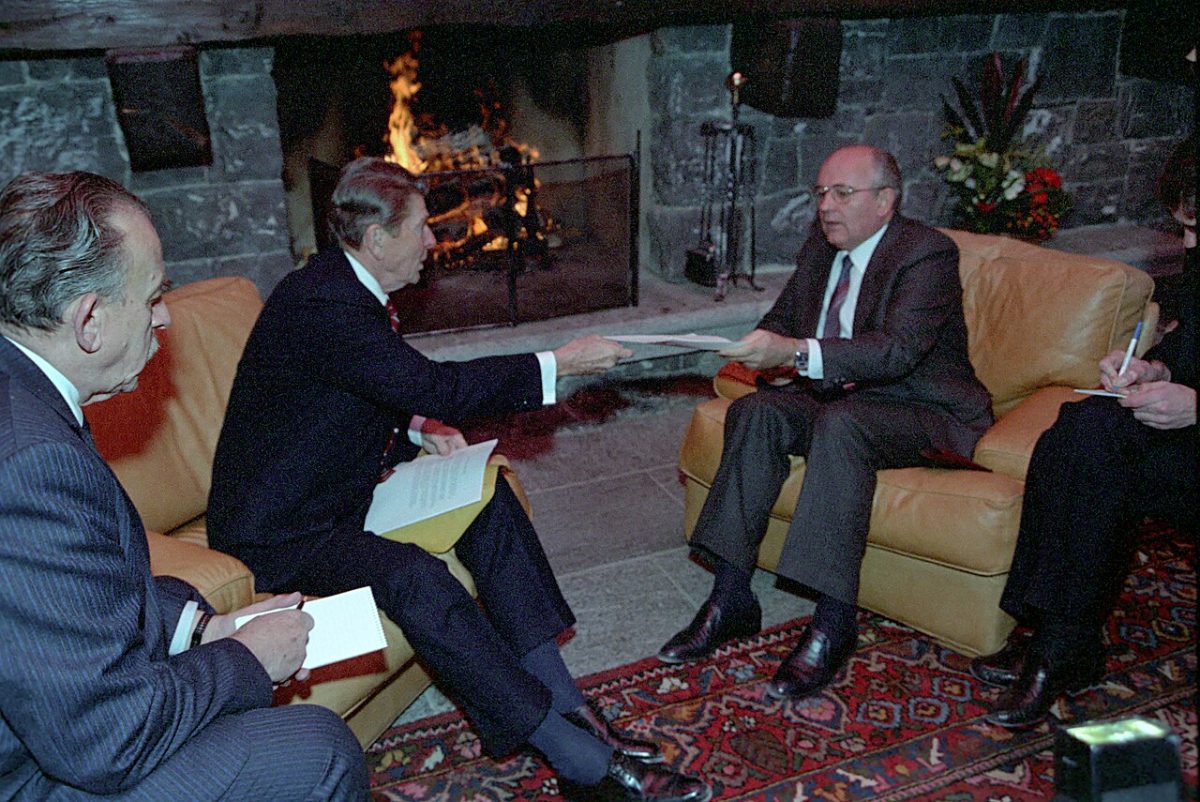
The story goes that in a private conversation, US President Ronald Reagan and Soviet leader Mikhail Gorbachev agreed that the two countries would unite should the Earth ever be invaded by aliens.
This claim is one of the most famous stories from Reagan’s presidency, and it has led to conjecture about global politics as a whole. Did the two reach a secret understanding? Did Reagan know more about aliens than he ever admitted publicly?
While it is impossible to know exactly what agreements might have been traded between the two, historians can confidently trace why this quirky conversation happened in the first place, as well as what it says about the geopolitical climate at the time.
Understanding Reagan and Gorbachev in a Cold War Context
When Reagan entered office in 1981, the US relationship with the Soviet Union was strained due to the Soviet invasion of Afghanistan, the deployment of missiles in Europe, and increasing nuclear tensions. The two had not seen such mistrust since the Cuban Missile Crisis. This was further complicated by Reagan’s directly confrontational rhetoric regarding the Soviets (e.g., his 1983 description of the Soviet Union as an “evil empire”).
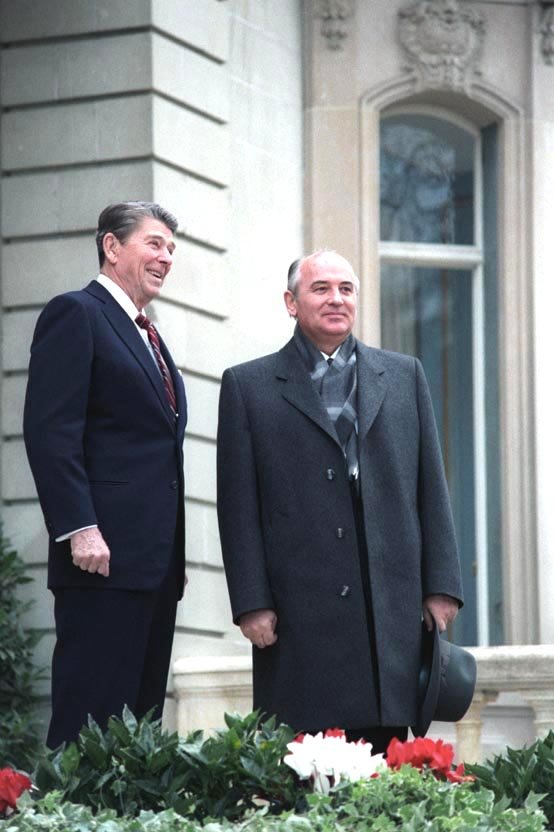
However, despite his reputation as a hardline anti-Soviet, Reagan also held the view that nuclear war must never be considered. Thus, he sought opportunities throughout his presidency to reduce the risk posed by Moscow.
This goal was facilitated by the rise of Mikhail Gorbachev, who became the General Secretary of the Soviet Communist Party at a younger age than most. His reforms toward openness (glasnost) and restructuring (perestroika) aimed to reduce aggression with the West and mitigate the arms race.
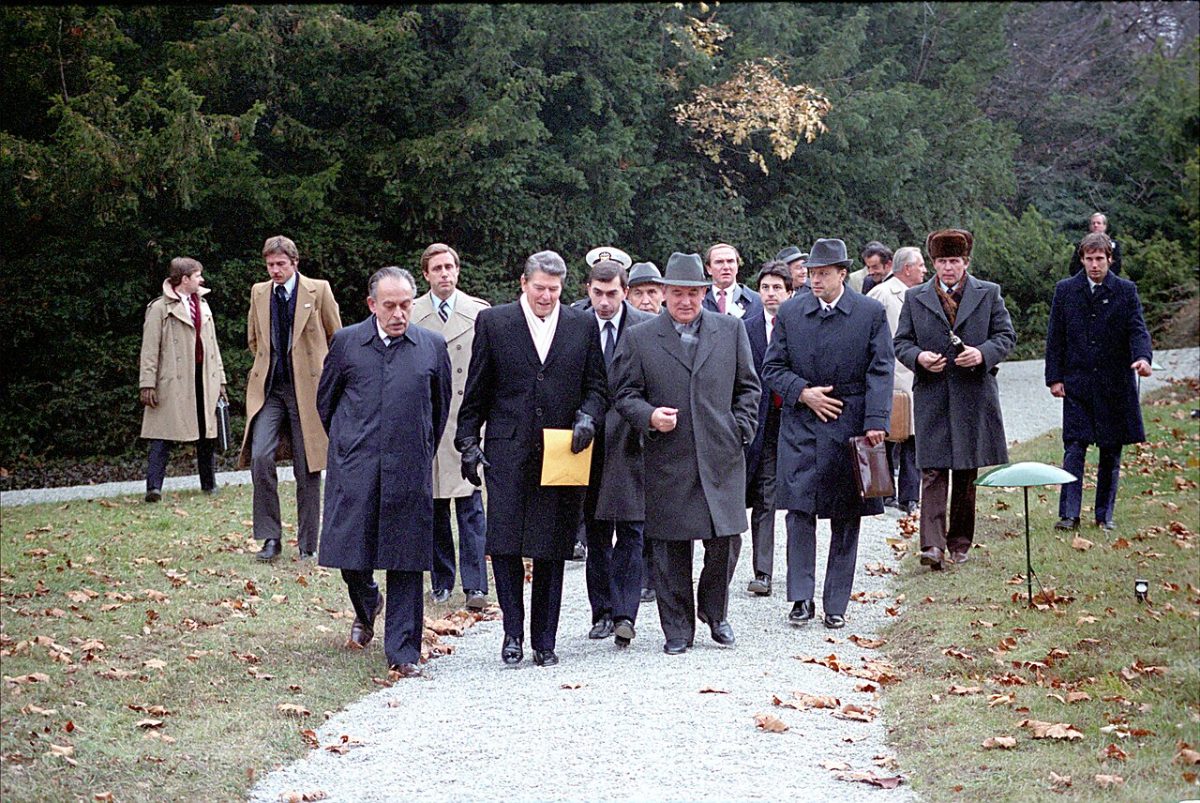
Despite their major disagreements, Reagan and Gorbachev had numerous fairly successful conversations, first at Geneva in 1985 and then through the Reykjavik Summit and onward. As the Cold War tensions began to ease, Reagan’s attention turned toward conceptualizing humanity-wide threats instead of his narrowed focus on the Soviets.
Why Did Reagan Bring Up Aliens?
It is within this Cold War context that Reagan brought up extraterrestrial life. Or rather, he posed an important hypothetical at the United Nations General Assembly in 1987: “I occasionally think how quickly our differences worldwide would vanish if we were facing an alien threat from outside this world.”
If people faced a threat from outside the world (i.e., aliens), would humanity’s differences quickly disappear? Would international cooperation coalesce in the face of such an event?
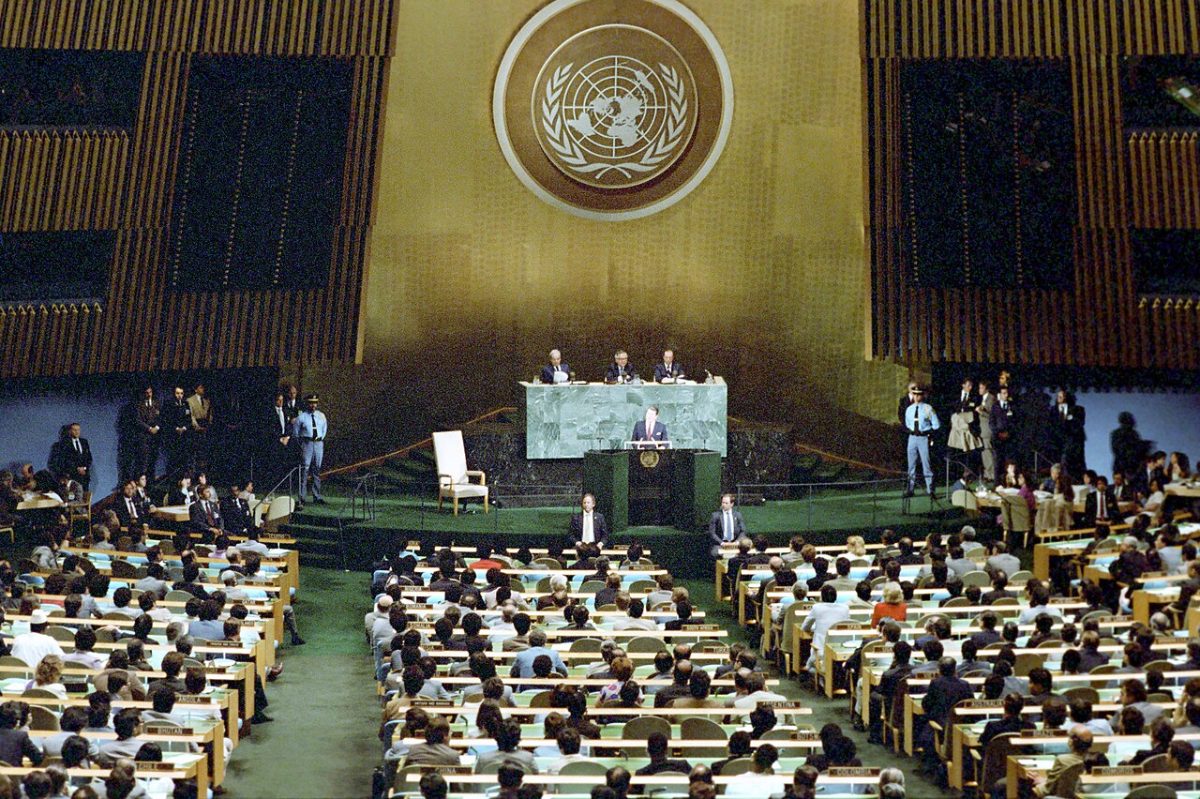
This statement gained attention immediately for its oddity, especially from a sitting US president. But Reagan’s point stood: he hoped that the nations of Earth had more in common than they tended to believe, and they could act on it. If they would do so in the case of aliens, why not now?
Although Reagan’s speech did not suggest that Reagan believed aliens were visiting Earth, or that governments were withholding sensitive information about extraterrestrials, the rumors started anyway.
People’s willingness to latch onto the idea was not unfounded; Reagan referred to aliens on multiple other occasions, including to a group of students at Fallston High School in Maryland in December 1985, weeks after he returned from Geneva. He frequently returned to such analogies because he sought memorable images that were easy for people to identify with.
At the same time, science fiction was everywhere in American popular culture, from Star Wars and Close Encounters of the Third Kind to E.T. and the television series V.
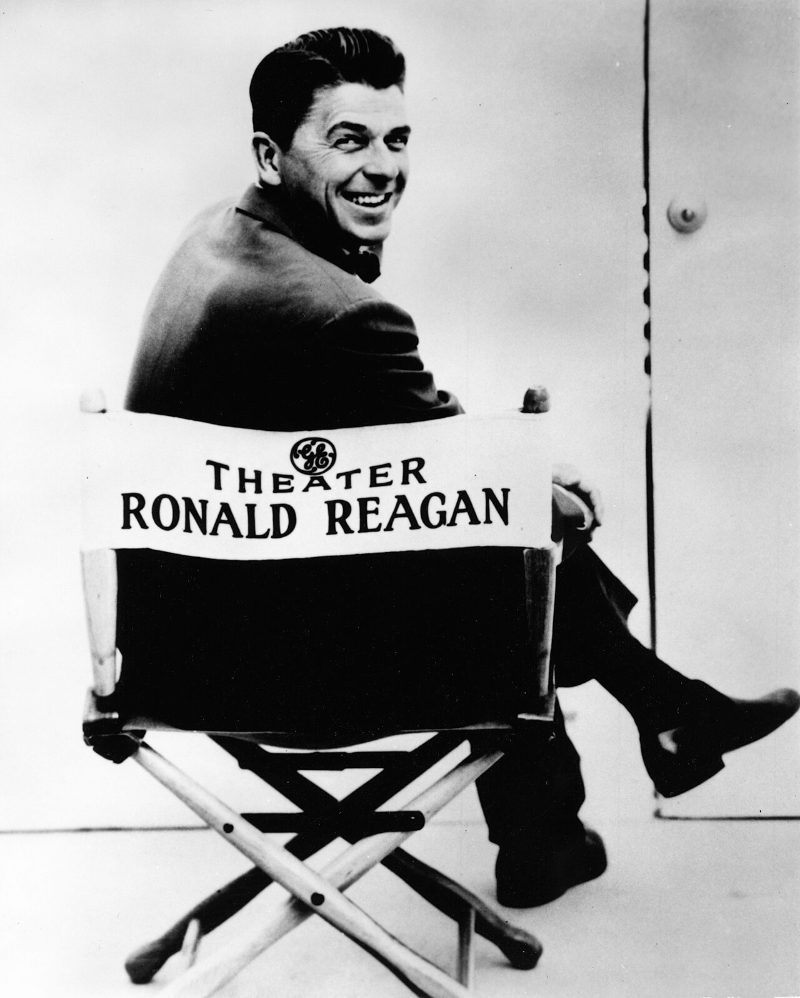
Reagan himself was a former actor who spent years in Hollywood, and the alien-invasion pictures of his own studio era — The Day the Earth Stood Still, War of the Worlds — were the ones he would have known first-hand.
Whether intentionally or only subconsciously, his rhetoric may have been reflecting themes that audiences were currently actively engaging with.
Thus, it may come as less of a surprise that Reagan had allegedly raised the same hypothetical scenario (what would Earth do if aliens invaded?) to Gorbachev in private discussions years earlier (in Geneva in 1985).
According to Gorbachev’s recollections, Reagan had asked whether the United States and the Soviet Union would cooperate against an alien threat, should such an event come to pass. Secondhand accounts from the time say that Gorbachev was taken aback and quickly changed the subject.
Gorbachev himself, recalling the conversation publicly decades later, said that he had replied, “No doubt about it.” That remembered line is what drives the narrative that Reagan and Gorbachev developed an agreement to stand together against aliens.
What Historians Know (and What They Don’t)
The alien exchange between these world leaders has captivated the imagination ever since, but it is impossible to know exactly what was said. Historians encourage interested parties to remember that Reagan and Gorbachev were in the middle of a private discussion.
This was not a negotiation, diplomatic agreement, or strategy meeting. It was simply a brief, hypothetical discussion, as is common during summit meetings to build rapport and familiarity.
Instead, historians trace the way Reagan’s remarks impacted the public. Because interest in UFOs and extraterrestrial life was expanding during the late 20th century, private speculation quickly arose that he knew more than he let on, since he continued to mention aliens.
In a game of telephone, the context regarding Reagan’s speech on international cooperation was lost, leaving only the tale of a US president asking for help from the Soviets against an alien threat.
Conspiracy theorists flourished in this environment. Suggestions included that Reagan had been briefed (or was doing the briefing) on government programs involving aliens, or that his remarks were encoded with a meaning only others “in the know” would understand and act upon.
Given the information available, historians can only say a few things with relative confidence. Reagan repeatedly used the idea of an alien invasion in his speeches, making it a recurring theme. Gorbachev later confirmed that Reagan made his alien remarks during at least one of their conversations.
There is no evidence that the United States and the Soviet Union came to any formal agreement regarding extraterrestrial threats, nor is there evidence that Reagan’s comments were based on any code or clandestine knowledge.
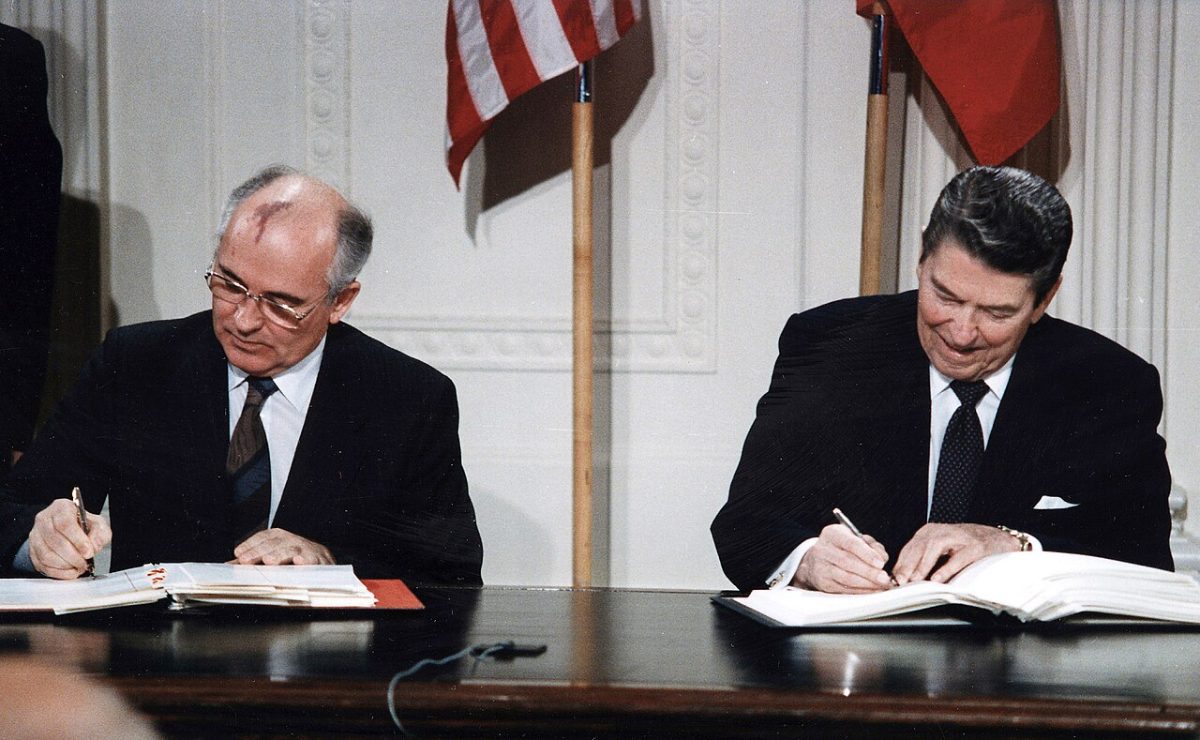
While some people were disappointed to learn that interplanetary diplomacy was not truly up for debate in the General Assembly, the story has much to say about international contexts at the end of the Cold War. Informally, Reagan and Gorbachev did talk about aliens.
Whether they reached anything resembling an agreement, and whether it would have held in the event of real extraterrestrial activity, can never be known.