In the 1700s, a man named Leendert Hasenbosch embarked on what he believed would be a simple journey home. Aboard a ship commanded by the Dutch East India Company, he sought to return to Holland and live out the rest of his life in peace, possibly as a writer. However, shipboard judicial sentiments soon saw him cast off and marooned on a deserted island. There, he wrote a diary that outlasted him and grew to influence the public long after his death.
Leendert’s story reveals a number of facets of life in 1700s Europe. From how naval culture operated to the Puritanical revisionism that seeded itself into his writings, understanding his experience can provide a window into practices and sentiments that have long since shifted. While some of Hasenbosch’s life remains a mystery, his harrowing experience trapped alone on an island in the middle of the Atlantic has continued to spark fear and awe even hundreds of years later.
Leendert Hasenbosch and the Dutch East India Company
While minimal records exist about Leendert’s early life, some sources do exist to provide insight into the moments that led to his connection to the Dutch East India Company. It is believed that he was born in approximately 1695 in Holland, and his father became a widower soon after. When Leendert was barely a teen, his father departed alongside his three sisters to Batavia (now Jakarta in Indonesia), leaving him behind.
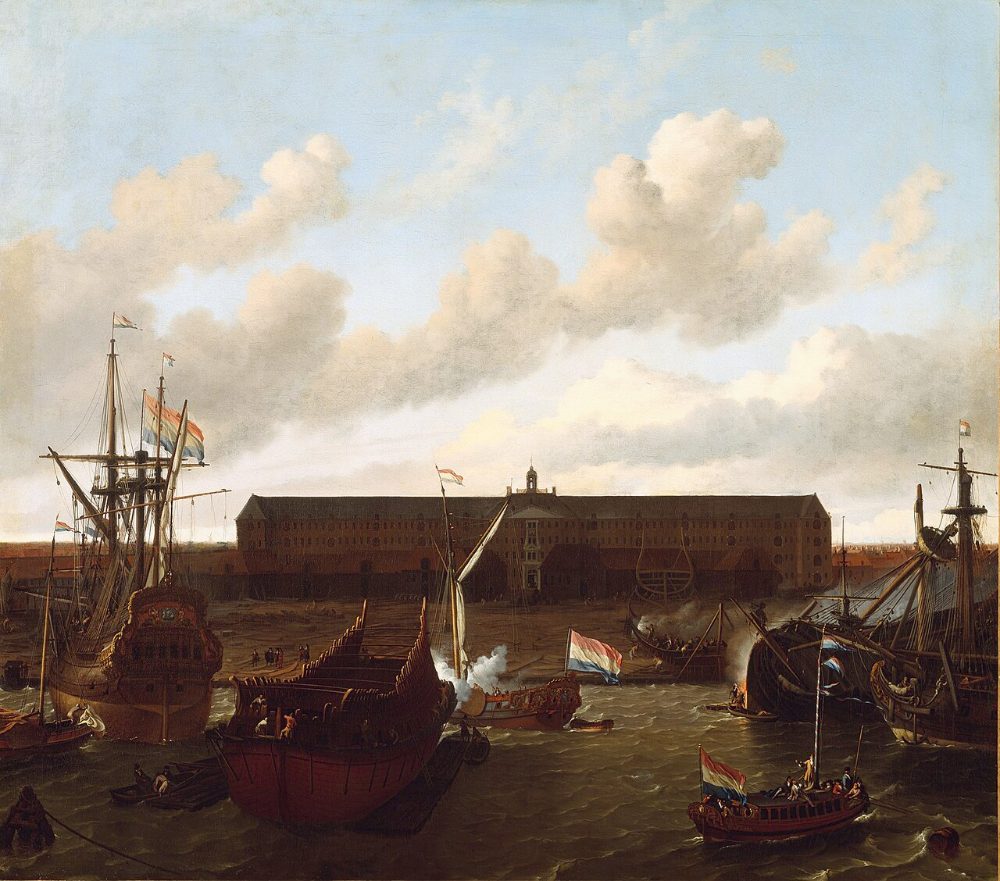
As a young man with no gainful employment, Leendert needed to secure a source of income. Evidence suggests that he joined the Dutch East India Company (hereafter referred to as the VOC for its Dutch name, Vereenigde Oostindische Compagnie). The VOC was a state-chartered trade group that worked primarily in spices, dominating trade routes for nearly two centuries in the areas surrounding Asia. Many historians recognize the VOC as the first true multinational corporation, and it was the first to offer public stock.
Needless to say, the VOC held significant sway in Leendert’s area, and he used that to his advantage to secure a job within the ever expanding powerhouse. Early on, he likely joined in a military or quasi-military capacity, such as the Dutch garrison forces. However, his journal proves that he possessed functional literacy, so he may also have begun with administrative roles.
No matter where Leendert started, he joined the VOC in the same way many did at the time: by signing a contract for several years of service. It is widely believed that he participated in menial or minor roles for years, gradually working his way up in position until he became one of the company’s regular bookkeepers. It was in this capacity that he set sail on the fated journey that would change his life.
Leendert’s Final Day at Sea
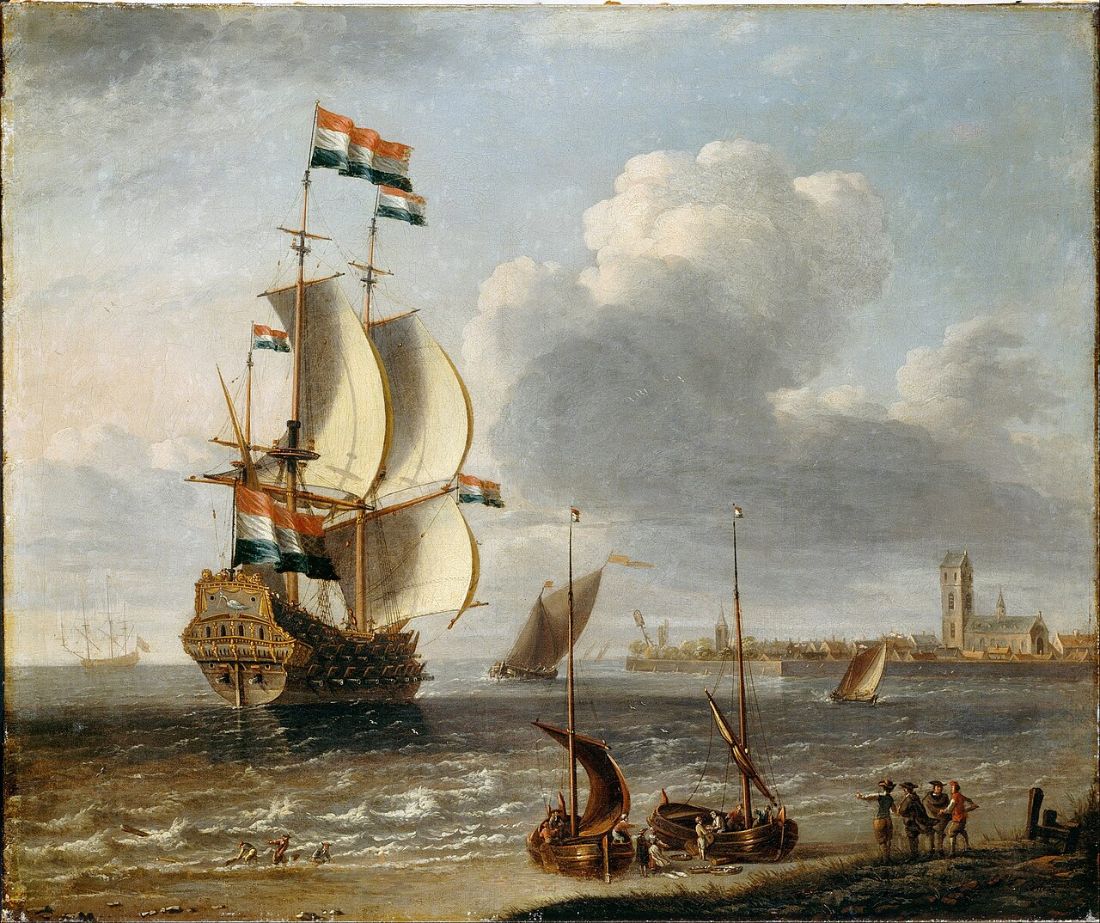
While Leendert’s role was among the non-seamanship positions onboard the VOC vessels on which he sailed, he was still subject to the rules that bound all crew. Life aboard VOC ships was highly regulated, a mixture of cultural influence, religious beliefs, and the necessity of the VOC to run a tight organization to maintain their near-monopoly on the Asian spice trade. As a result, crew were subjected to a strict hierarchy of power. Authority was concentrated in the captain and, of nearly equal consequence, the senior officers (e.g., the first mate). Both civil and military elements influenced maritime law during this period, and Hasenbosch would soon run afoul of this system.
At the time, the Dutch Reformed Church held notable sway. This branch of Christianity, called Calvinism, became the state-sanctioned religion, and thus, some level of Christian influence impacted laws both at sea and ashore. This is important, because Leendert was allegedly seen engaging in intimate relations with a male member of the crew. Due to the biblical influences on maritime law, sodomy (named for the biblical city of Sodom) was heavily punishable.
Leendert faced a challenge. Interpersonal relationships were closely monitored aboard because conditions on ships were typically harsh. Overcrowding, limited provisions, and weeks or even months at sea contributed to both physical and psychological strain that could compromise the working relationships and even safety among crewmembers. Thus, Leendert was already under a level of scrutiny that, by many other standards, could have been considered unfair. Some believe that, had conditions not called for such careful watching, he may not have been accused at all.
Perhaps the person who reported the incident was telling the truth. Perhaps, as a result of the intense scrutiny to which everyone was subjected, Leendert was caught in a situation that was easily misconstrued. No matter the reality, Dutch law treated the allegation with particular severity.
The crewmember’s accusation began a formal inquiry, which the ship’s officers were required to address. In addition, because no one had been able to demonstrate the claim with certainty (and both Leendert and the ship’s boy denied it), the on-board judicial committee pushed harder for a confession. They feared that keeping such sinners on the vessel would call the wrath of God down upon the ship.
The interrogation that followed brought Leendert close to death. First, the officers bound candle wicks between his fingers and lit them. As they burned down, they scorched his fingers, and the crew hoped that the intense pain would be enough to prompt him to confess. It was not.
Then, the captain and his mates tied Leendert to a mast. Wrapping canvas (the material used for sails) around his head, they created a funnel into which they poured seawater. As the water approached Leendert’s nose, he came ever closer to drowning. His only option was to drink as much as possible to keep the water level below his nostrils. He drank until his stomach was distended and he lost consciousness, nearly succumbing to toxicity from having too much water in his blood.
When he woke up, he finally agreed to tell the captain what he wanted to hear. Leendert was convicted of the crime of sodomy (as was the ship’s boy). While it was common to simply cast someone off the ship or execute them onboard in such situations, the captain showed some leniency to Leendert. Whether this was some mark of compassion or a nod to his higher-ranking position as a bookkeeper, it is impossible to know.

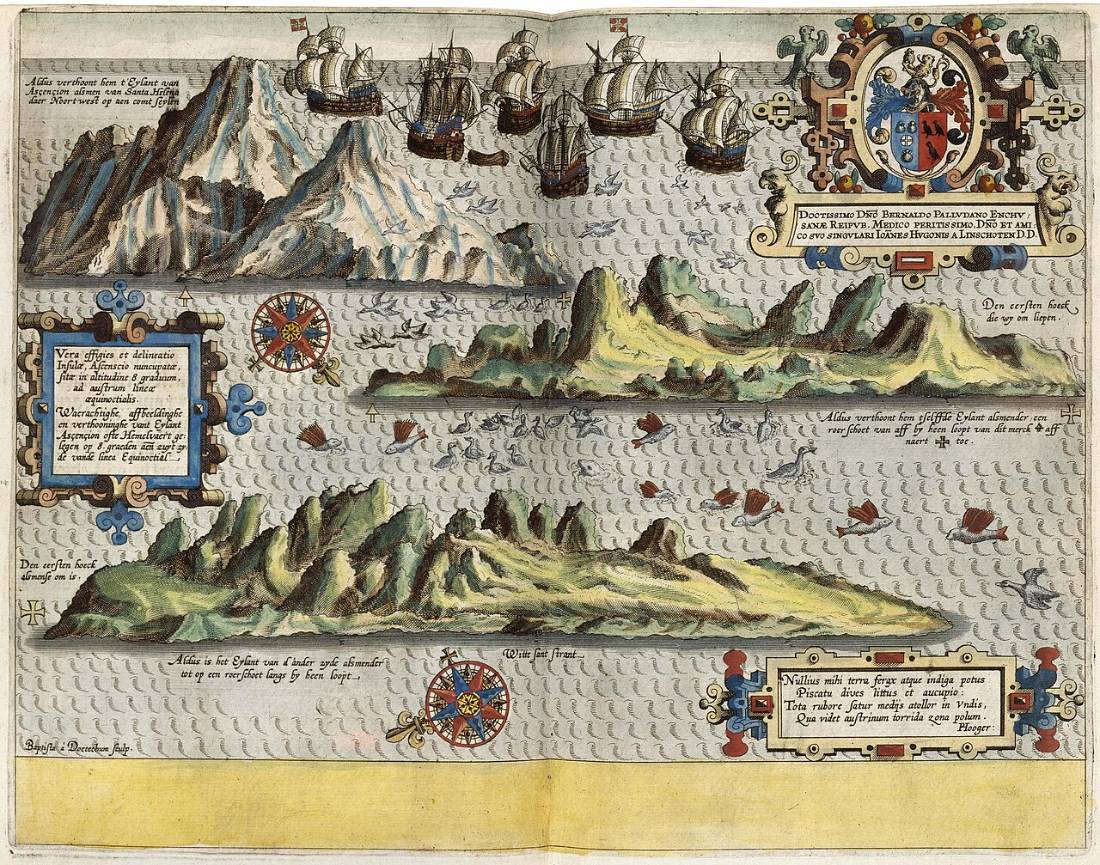
The ship was passing by an island isolated in the middle of the Atlantic called Ascension Island. The captain chose to maroon Leendert on that island. Completely uninhabited, the spit of land contained little in the way of resources. However, the captain did send Hasenbosch off with a limited set of supplies, including a barrel of water, some basic food items, writing materials (which is where he acquired the journal he would write), and the materials for a shelter.
Leendert watched the ship vanish into the sea, alone on Ascension Island with supplies that would likely last him a few weeks at best. He needed to decide what to do quickly.
Survival on Ascension Island

According to the entries Leendert began to make in his journal daily, his first priority was to set up a shelter. He may have been provided with a tent or only a piece of spare sailcloth. Ascension Island was supremely inhospitable, the exposed summit of a volcano that has not erupted in recorded history. Because of its volcanic composition and residual lava flows, the terrain was rough, rocky, and unsuitable for vegetation. Leendert’s shelter protected him from the sun, but that did little to address his needs in such a rugged environment.
At first, Leendert rationed his supplies, especially water. While he still had the energy, he climbed the tallest point he could find to survey the land and hopefully spot a source of water, but he found none. He approached his need for water systematically, going inland each day to find shaded areas in hopes that moisture would collect there.

Edible items were equally sparse. However, he did succeed in learning how to capture the seabirds that nested on the island. Because they had no history of human predation, they were easily caught, and he consumed both them and their eggs. When turtles came on shore to lay their eggs, he would claim the turtles, too, and resorted to drinking their blood as a source of hydration. When these opportunities ran out, the only thing left was to drink his own urine, which he turned into tea to make the taste more palatable. However, this only caused intense gastrointestinal upset that likely dehydrated him further.

Each day during this time, Leendert would write in his journal and detail his activities. As his situation worsened, he took on small projects to keep him occupied. He gathered curious bits and bobs, hopeful that if anyone ever found the island, they would take his collection to the mainland and create a display of curiosities.
Unfortunately, Leendert’s narrative breaks down as the days progress. As his body began to blister and his impressive six months of survival strategies started to fail, his entries became more erratic. He began to speak of having no friends, but he hoped that death could be a friend. He wished that an accident would occur to end his suffering, but what truly happened is unknown. His journal entries simply stopped one day, no indication given about whether he planned to look for water or try any other activities. His bones have never been found.
The New Life of the Hasenbosch Journal

Although Leendert’s story ended with the final page of his writing, his journal continued to have a life of its own for some time. Not long after he perished, sailors came upon the island and found his belongings, as well as his diary (written in Dutch). In 1726, the diary was printed (or, rather, summarized) in a version called Sodomy Punish’d. Presented as a translation from Leendert’s Dutch writings, it claimed to be faithful to the original. However, Leendert’s name was written incorrectly, and the narrative framework contained significant moralization likely tied to the profoundly Puritanical influence at the time. It is suggested that this version deviated from the original, which was not in circulation.
Then, in 1728, the narrative was published again as An Authentick Relation. Leendert’s name is not even mentioned this time, and even in this short span, the details had degraded further. When it was published yet again in 1730 (as The Just Vengeance of Heaven Exemplify’d), the moral commentary of the tale had overtaken almost all of Leendert’s survivalist details. Anti-sodomy verbiage was common, with Leendert even writing of his deep contrition for his acts and his hope to beg God for forgiveness.
Supernatural elements were also added, with the text alleging that demons and apparitions appeared to Leendert, and potentially even an angel. Prayers and religious content, which the publishers claimed was directly from Hasenbosch’s hand, marked a heavy editorial intervention of the text that shifted it toward a moralization rather than a non-fiction account.
The original manuscript has been lost to time, so all known versions have arisen out of these various printed compilations. As a result, it is impossible to know just how much (if at all) the above publications changed Leendert’s original words. But because they differ so greatly even from each other, historians suspect that they resemble his journal very little. In fact, some details that were blatant lies, such as that the journal was recovered from Leendert’s bones (which were verifiably never found), further corroborate the tampering.
While we can never know exactly what happened to Leendert Hasenbosch, the historical evidence that remains shows the story of a man who suffered, and died, at the hands of his culture’s religious and moral beliefs. The resulting modification of his journal demonstrates how even historical records can misconstrue the reality of events, reminding us that anything we consume must be done with care and attention to the environment in which it was made. Perhaps someday, Leendert’s bones will be found, and historians will learn more about what truly happened to him, regardless of what any modified publications may say.