In the 1970s and ‘80s, few figures in martial arts circles drew as much attention (and controversy) as Frank Dux. Although many people had not heard of him prior to the release of the 1988 film Bloodsport, his story was gaining traction long before that adaptation.
Dux’s account of his life was a sort of modern myth; he alleged that he participated in a secret, full-contact martial arts tournament known as the Kumite.
However, his claims, which range from underground tournaments to military engagements, have fallen under scrutiny. Now, Dux sports a blended reputation, with some people engaging with his words authentically and others seeking to debunk his claims.
To understand why, it is helpful to get the full picture of what Dux has claimed, what it is possible to know for certain, and what remains unclear to this day.
What We Know (and What We Don’t) About Frank Dux
Much of Dux’s early life comes solely from his own accounts, but there are some things we can know for sure. He was born in 1956 in Toronto, Canada, and moved to the United States sometime later. He was raised in California. Aside from those details, Dux himself is the source of much of the rest of his story.
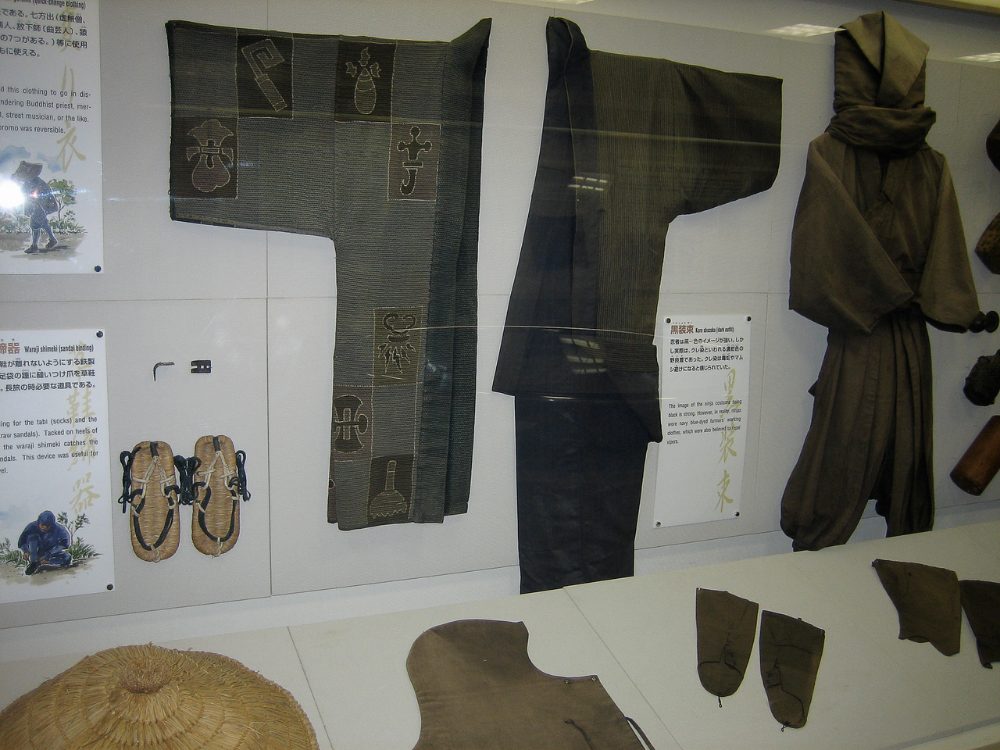
One of the most notable elements of his stories of his youth is his martial arts training. Dux claims that he trained under a Japanese martial arts master named Senzo Tanaka.
He alleges that Tanaka was one of the world’s most skillful practitioners of ninjutsu, and they trained together in preparation for Dux’s participation in the Kumite. Dux credits Tanaka with shaping both his technical abilities and his philosophical sensibilities, which would serve his approach to combat.
Historians interested in Tanaka’s life have, so far, been unable to locate him. No corroborating witnesses or documentation have definitively confirmed any person as claiming Tanaka’s identity or role.
Some of Dux’s fans claim that this is only further proof of Tanaka’s discretion and the ultimate secrecy of the Kumite. Dux’s training under Tanaka would have represented the next step in more than 40 generations of warriors within the same line of practice, he says.
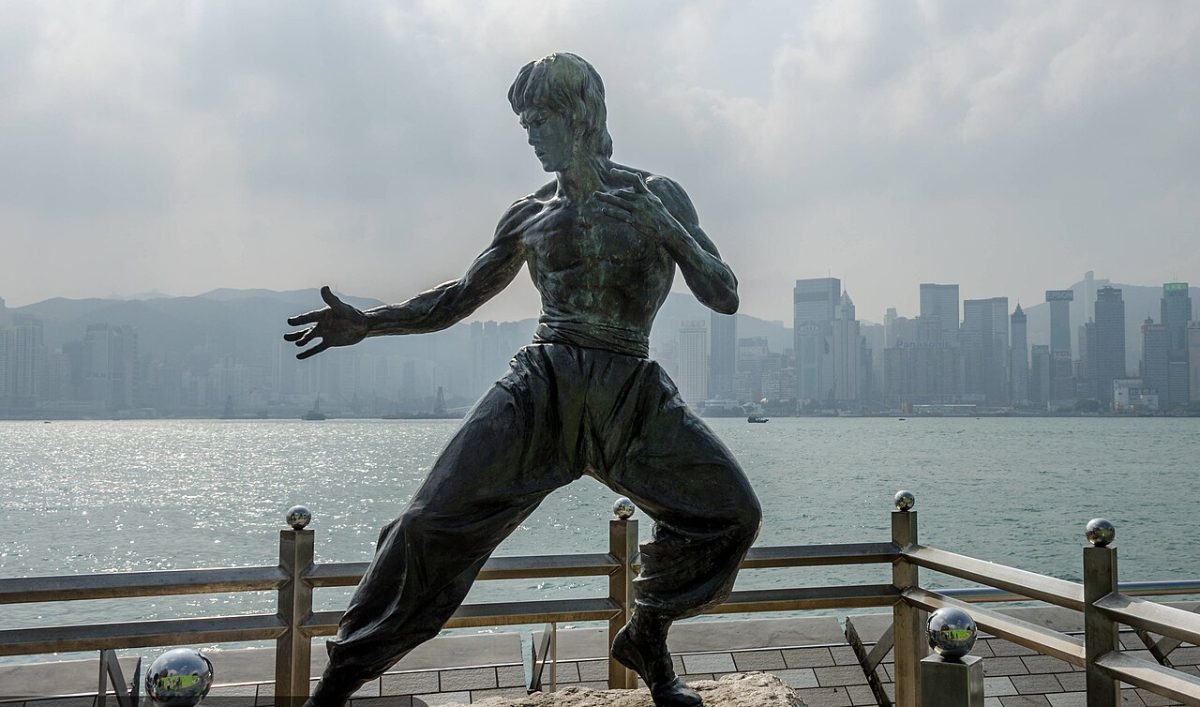
At the time (the 1970s), Hong Kong in particular was a major martial arts hub. This includes not just the film industry’s presence, but also numerous kung fu schools and publicized organized competitions.
Bruce Lee played a significant role in the popularization of martial arts and fight choreography culture. At the same time, mail-order training was becoming popular alongside the rise of other at-home physical engagements, such as workout videos.

Working the American end of that boom was one of Dux’s contemporaries, Ashida Kim, whose books began appearing in the early 1980s. Unlike Dux, who made regular public commentary and appearances on his experience, Kim focused on publications.
He wrote books such as Ninja Mind Control and Secrets of the Ninja as part of his focus on ninjutsu. These texts describe ninjas with a sort of mysticism, sharing techniques for invisibility, psychological warfare concepts, and even methods of assassination.
Like Dux, Kim fell into controversy for his poorly proven connection to ninjutsu. No one could truly locate a direct tie between him and any recognized Japanese ninjutsu schools, and established practitioners did not corroborate his claims.
Absent any verifiable training in Japan, his situation split into ardent supporters and skeptics. But regardless of the overarching opinion of him as a person, his influence on martial arts culture cannot be denied. And in this ever-expanding environment, Dux was already primed to shine.
Dux’s participation in undocumented martial arts tournaments is not the only element of his comprehensive career in combat-oriented roles. He also claims that he was regularly involved in covert military operations, including with the Department of Defense and CIA.
Dux says that he was recruited for classified missions due to his skills as a martial artist, which he claims to have leveraged for engagements requiring stealth, high combat proficiency, and his unique, specialized training.
When efforts were made to verify these claims, including through official documentation within these government bodies, inconsistencies have arisen. Military procedures do not appear to coincide with his claims, and evidence does not appear to support his involvement.
The Kumite Narrative
The core of Frank Dux’s story is his participation in the Kumite. This extraordinarily secretive competition was allegedly organized by a group called the Black Dragon Fighting Society to welcome the world’s best fighters.
That American organization is not the Black Dragon Society of Japan, an ultranationalist body dissolved in 1946, though the similar names are often confused. Depending on which version of the story a person hears, this Kumite event would be held in Hong Kong, the Bahamas, or elsewhere.
Dux says the Kumite was invitation-only to ensure that only the best warriors were selected for participation. He described the matches as “full-contact,” which meant that there was no pulling punches; combatants would strike with full force and aim to win, regardless of the physical consequences to their opponent. This, Dux claimed, could even result in death.

When Dux spoke about his participation in the Kumite, he described his numerous standout achievements. These included his record for the most consecutive victories, as well as a record for the fastest knockout.
When questioned about proof of these accomplishments, Dux produced trophies, certificates, and even photographs in support of his claims. However, verifying the legitimacy of these proofs has been difficult.
So how did Frank Dux become such a prominent figure in the martial arts community if no one knew of his supposed participation in these events? While the Kumite itself was highly secretive, Dux had no qualms about speaking about it.
Media exposure, and especially martial arts magazines in the ‘70s and ‘80s, led to his rise to popularity. Black Belt Magazine (BBM) published a wide-reaching feature about him, and his reputation swelled from there.
Because BBM was a niche publication, investigative verification and rigor were minimal. Financial and logistical challenges prevented the publisher from verifying Dux’s claims, and magazines at the time would regularly publish content (not just from Dux) that was based heavily on interviews or self-reported stories. For many people, the very fact that Dux’s story of the Kumite appeared in a magazine was sufficient proof of his claims.
The Transition to Hollywood: Bloodsport the Movie
Once Dux’s story of a hidden martial arts society and secret tournament with some of the world’s best fighters entered the public consciousness, it wasn’t long before someone acted on it further. Martial arts cinema was exploding in popularity in Western markets, and film producers were primed to look out for compelling material for martial arts productions. Thanks to the publicity brought by BBM’s publication on Dux, movie producers quickly became aware of this intriguing narrative and pursued Dux for more information.

The 1988 film Bloodsport was soon to follow. In it, Jean-Claude Van Damme portrayed the fictionalized version of Frank Dux, showing his journey through the Kumite.
The film’s themes of perseverance, honor, and rigor reflect the philosophical training Dux explained that he acquired from his master, Tanaka, as part of his martial education. The Kumite itself was portrayed as a high-stakes tournament in which death was not an uncommon outcome.
The production company marketed Bloodsport as being based on a true story, and it did not articulate which elements it had dramatized, even compared to Dux’s original alleged narrative. While such changes are typical of adaptations to make stories more palatable for the film medium, they only served to muddy the truth further. Some critics compare Bloodsport to Enter the Dragon. While the former claimed to be based on a true story, Enter the Dragon’s tournament was plainly portrayed as fiction.
Still, Bloodsport was a marked success, produced for around $2 million and bringing in around $50 million worldwide. Jean-Claude Van Damme went on to fame, and regardless of the poor initial reception by critics, the average movie-goer’s response was positive, and the film went on to become a cult classic.
From there, the concept of the Kumite became a worldwide tidbit of knowledge. It embedded itself into popular culture, and a large swath of people who had no concept of the unverified nature of the film’s “true story” simply took the Kumite, and the concept of “blood sports” in general, as a fact. However, naysayers also grew in number (and loudness).
Dux’s Lawsuits and the Role of Debunking Enthusiasts
Perhaps failing to expect the level of attention that his story garnered, Dux was awash in new levels of scrutiny. Previously, he had responded to denials of his story with attempts at proof, such as trophies and photos. But a new wave was coming.
Starting in the late 1980s after the film’s release, journalists experienced a new surge of interest in the potential realities behind the hit movie. Some focused on verifying concrete documentation, but for most, the effort landed on identifying inconsistencies in Dux’s stories and the plausibility of his narrative.
Major newspapers such as the Los Angeles Times began to cast doubt on Dux’s Kumite story, as well as the claims he’d made regarding his military and government intelligence participation.
Reporters sought out prominent martial artists, promoters, and public offices in Hong Kong, but none could confirm the existence of the Kumite specifically, nor any related tournament that could have been construed as such.

Dux’s presented trophies and certificates proved ineffective at corroborating his story, too. None could be proven at the source, and more vocal critics argued that anyone could have a trophy made if they were willing to pay.
When more people began to share more discrepancies in the timelines and locations that Dux shared, he grew increasingly frustrated at media coverage focused on his experiences.
He received some level of support from the martial arts community, but stances were mixed. Some stood by him, citing the fact that if the Kumite truly was such a secret, it was reasonable that evidence would not be available. However, others balked at the claim, unable to take it at face value.
Being on the receiving end of such scathing detractors, Dux took action. He began to file lawsuits for defamation — a false statement of fact that damages someone’s reputation. Because Dux counted as a public figure, he would also have to show that a statement was made knowingly or recklessly, a bar most private plaintiffs never face.
His moves against the Los Angeles Times and other outlets brought the judicial system to bear in the years after Bloodsport premiered. Because the statements at issue were printed rather than spoken, these were libel suits rather than slander. Dux v. Soldier of Fortune Magazine in particular gained some notoriety, though published accounts of how that case ended differ from one another, and the outcome is not settled in the public record.
He also brought a suit against Jean-Claude Van Damme himself, the man who played the leading role in Bloodsport (representing Dux himself in the narrative). Dux claimed that a film they had written together, called The Quest, fell into breach of contract.
Their relationship soured, as Dux also suggested that Van Damme only came into fame as a result of Bloodsport and, by extension, Dux’s story. However, no evidence exists that Dux won this suit. They may have settled out of court, or the case might have been dropped entirely.
Whether or not any facets of truth exist within Dux’s story might be impossible to determine. Perhaps the Kumite continues to go on deep in the secretive societies in which Dux claims it exists. Or perhaps he fabricated a story that helped him rise to popularity that was sufficient to wrap his story into a film. Regardless of the answer, what is undeniably true is the impact Dux had on the martial arts scene in the 1970s and beyond.
Even today, ninjutsu and other types of East Asian martial arts remain popular, and this may be at least in part because of the influence of people like Dux and Ashida Kim.
Their names are still known, and Bloodsport remains a cult classic in many circles, unlikely to fade anytime soon. It could only be a short while before another Dux emerges and sweeps through the martial arts niche, and if that occurs, the scene is poised to change yet again.