In the middle of the third century, the Roman Empire was not the crown jewel it once was. Its instability left an opening for one Gothic leader, Cniva, to launch one of the most serious invasions the Roman Balkans had faced in generations.
Cniva appears briefly in the Roman historic record, but narratives of him are sparse and, notably, derive solely from Roman and Byzantine writers. Although he was integral to the Gothic invasion of the Balkan provinces, no contemporary Gothic account has survived the passage of time; thus, what we know about Cniva comes with the potential for bias.
By piecing together the minimal historical texts that exist (e.g., the historians Jordanes and Zosimus), it is possible to reconstruct the narrative of what occurred between the initial Gothic mobilization in 250 CE and the events following Rome’s defeat in 251.
Cniva’s role in the campaign culminating with Emperor Decius’ death at Abritus may not be the focus of a substantial portion of historical literature, but it nevertheless shaped the region and the people who lived there.
Cniva’s World
The Roman Empire, widely regarded as one of the most influential throughout history, began to experience both internal and external pressure by around 248 CE. Along the lower portion of the Danube (called the Danubian frontier), the imperial provinces abutted a complex web of trans-Danubian groups, including Gothic territories. South of the river, provinces such as Moesia and Thracia sprawled with military camps and trade routes.
Rome took the defense of these locations seriously. However, the manpower required to protect them was extensive; Roman emperors paid subsidies to Gothic leaders in exchange for peace, citing the tremendous cost of constant war as the alternative.
However, by the late 240s, internal revolts and unrest demanded that the empire dedicate its troops inward, away from the frontier. In addition, the mid-third-century empire faced population loss due to an outbreak of disease termed the Plague of Cyprian.
Due to the decrease in people, tax intake was lower, leaving some segments of Roman control without the funding and supplies needed to thrive. Combined with the effect of disease on military might, the empire was not as strong as it once was.
Sent by Philip the Arab to put down a revolt on the Danube, a senior senator named Decius was proclaimed emperor by his own troops in 249, and the civil conflict only worsened. The vacuum in frontier troops, who had returned to handle city-level discord, shifted the balance along the Danube.
If the Gothic cohort sensed Roman weakness, or if they did not receive the payments they had been promised, the incentive to break the peace increased substantially. In this fracturing order, Cniva appeared.
Cniva’s Rise to Leadership
How Cniva became a leader among the Goths is unclear due to the lack of robust historical documentation. All that is clear is that by 250 CE, he possessed the resources to organize a large, coordinated campaign. In the spring or early summer, he and his forces marched across the Danube into Roman territory.
However, this march provides valuable insight into Cniva. It suggests advance knowledge of Roman patrol patterns, as well as substantial preparation (e.g., boats, known locations of shallow water). It was not likely a random raid; instead, it reflects either an undermanned point of entry or Cniva’s ability to outmaneuver his opponents.
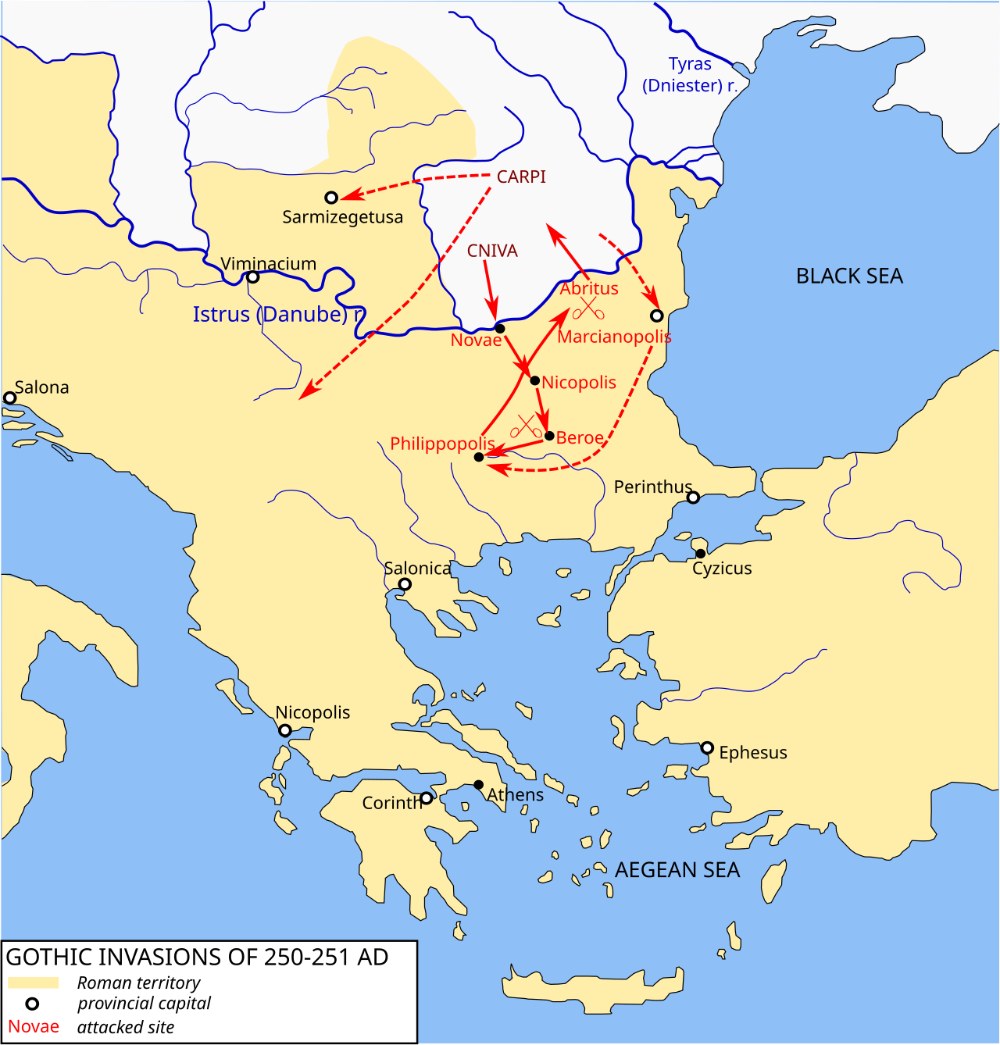
Once inside the territory, Cniva executed what some historians note as the linchpin of his plan. Instead of advancing a single, monolithic military mass, he divided his army into discrete columns. This crippled the Roman response, as each column could break off under its own self-sufficient organization should one group be stopped by Roman military units.
Additionally, news could take days or weeks to travel; if Cniva’s forces alerted the attention of numerous disparate locations at similar times, the empire may not have known where to respond, presenting Cniva with an opportunity to claim the advantage.
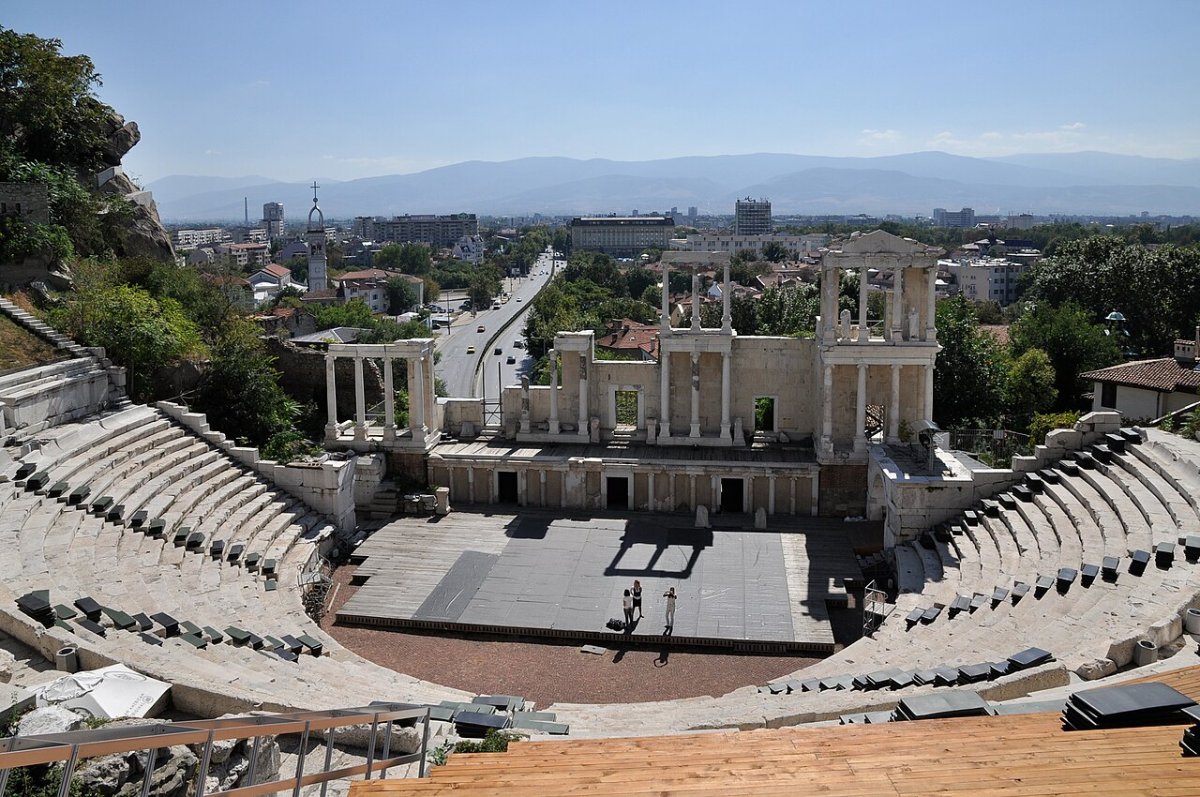
Historians infer an important point about Cniva based on his plan of attack. He sent one Gothic force toward Nicopolis ad Istrum, a crucial city in Moesia. However, his most significant target was Philippopolis. This was a campaign focused on major urban centers and disrupting wealth and symbolism, not just plunder.
Philippopolis itself was a key strategic location, both geographically and functionally, within the empire. Capturing it would mean profit, yes, but also a massive destabilizing force across Roman territory.
So, the Goths laid siege. Details of this stage are sparse, but Cniva is presumed to have taken a traditional approach: surrounding the city, cutting off supply routes, and engaging in activities that undermined local morale.
Priscus, the Roman commander in charge of the city, may have added a complicating factor. Some accounts suggest that he declared himself emperor while the siege was still under way, and that the city fell soon after he came to terms with the Goths.
While it is unclear how Philippopolis fell (whether by betrayal, successful assault, or otherwise), it did succumb to Gothic forces. Archeological evidence suggests that the collapse was sudden; coin hoards buried around the time of the siege were not recovered, indicating an unexpected and fast-moving crisis.
Cniva converted as much of his spoils to fodder for future campaigns as possible. He plundered the city, seizing coin, valuables, and supplies to fuel his army. Although many inhabitants were killed, many more were enslaved to be put to work or, where possible, ransomed or sold.
The news took leadership in Rome by surprise. The fall of Philippopolis marked a major Balkan city captured by an outside enemy, which was unusual. The transgression demanded the emperor’s response, and Decius would now have to don the robe of leadership he had claimed from Philip the Arab.
Decius’ Response
When Decius rose to power, it was on the promise of restoring Rome’s famous strength. Cniva presented him with an opportunity to do just that. With one major city fallen to siege and a large Gothic army encroaching still further, Decius regrouped the Roman forces and gathered reinforcements.
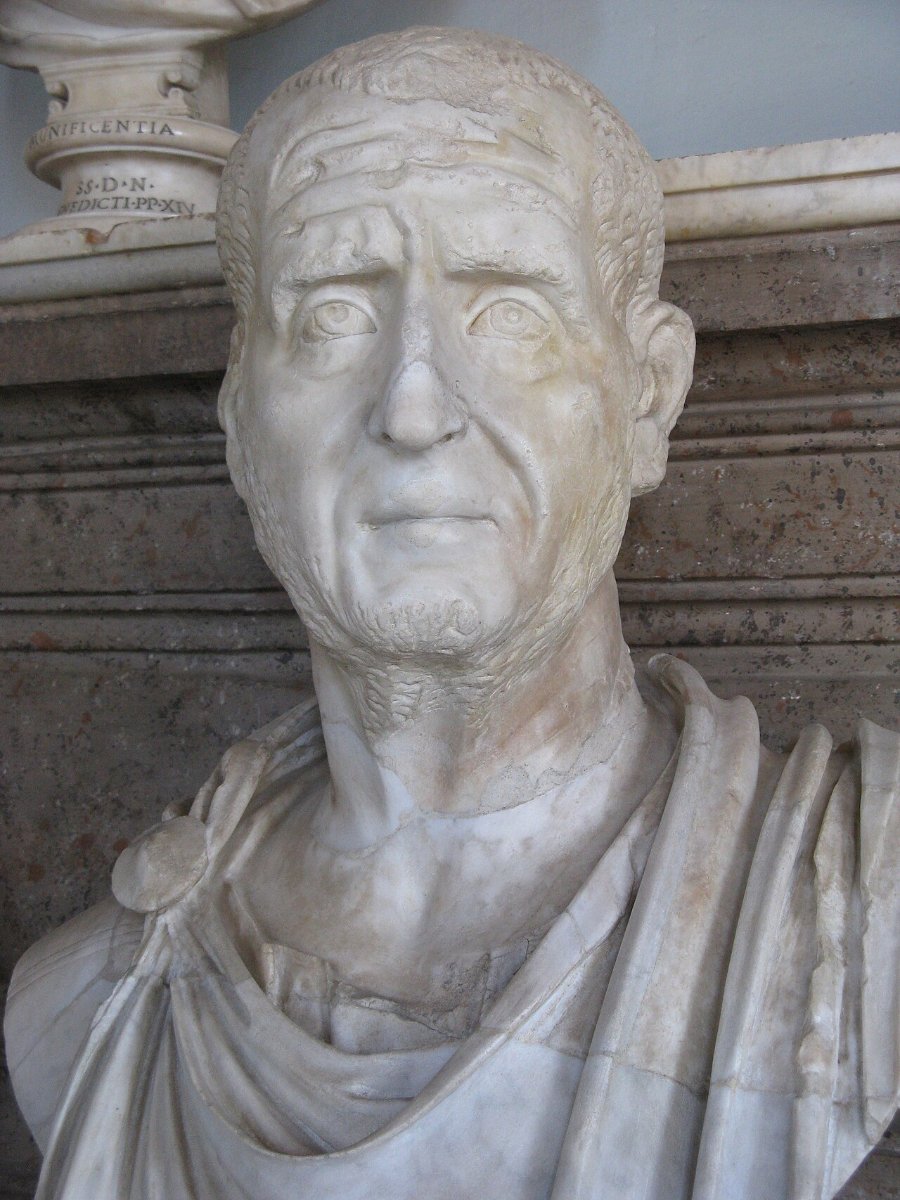
While Decius mustered his defense, Cniva faced his own set of challenges. His victory had come at a potential cost; the plunder and captives taken from Philippopolis slowed his army, making them easy to overtake and encircle. However, if he turned back, his exposed rear could fall. With winter approaching, the Goths sheltered. Decius got his army in order.
In the spring of 251, both parties were ready to act. Cniva pressed northward, heading for the most accessible crossing points on the Danube to return to Gothic territory.
Decius pursued, but historians have little information about the skirmishes and minor engagements that occurred during this time; what is known is only that Cniva avoided a decisive loss.
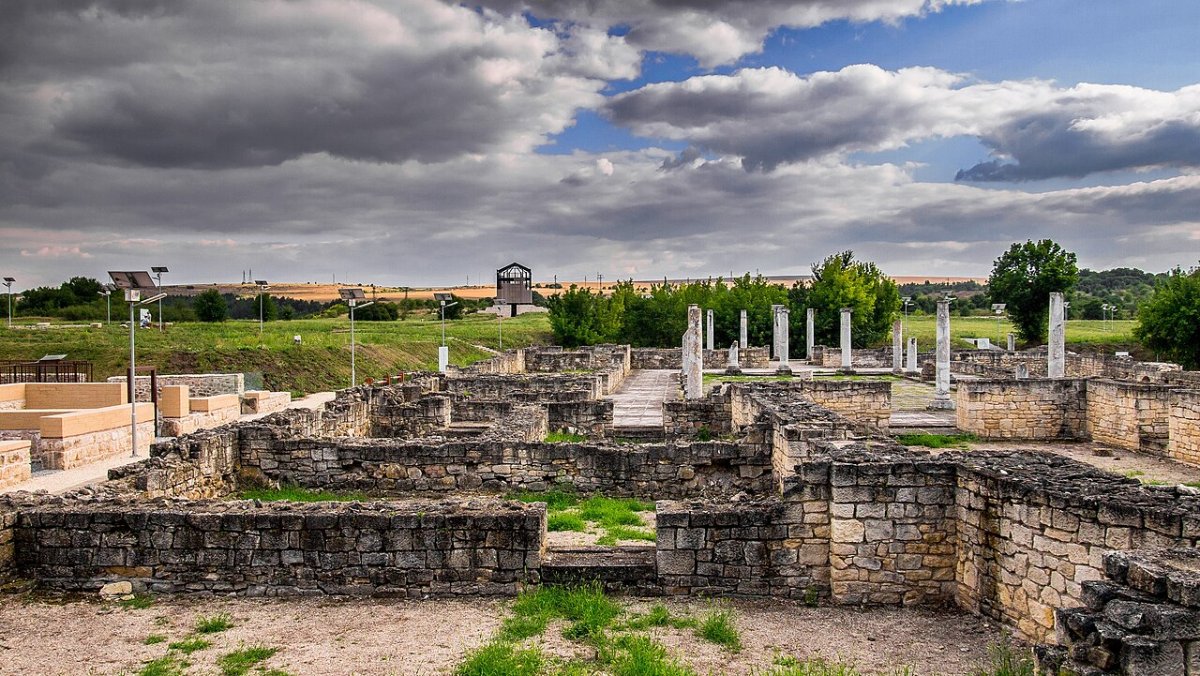
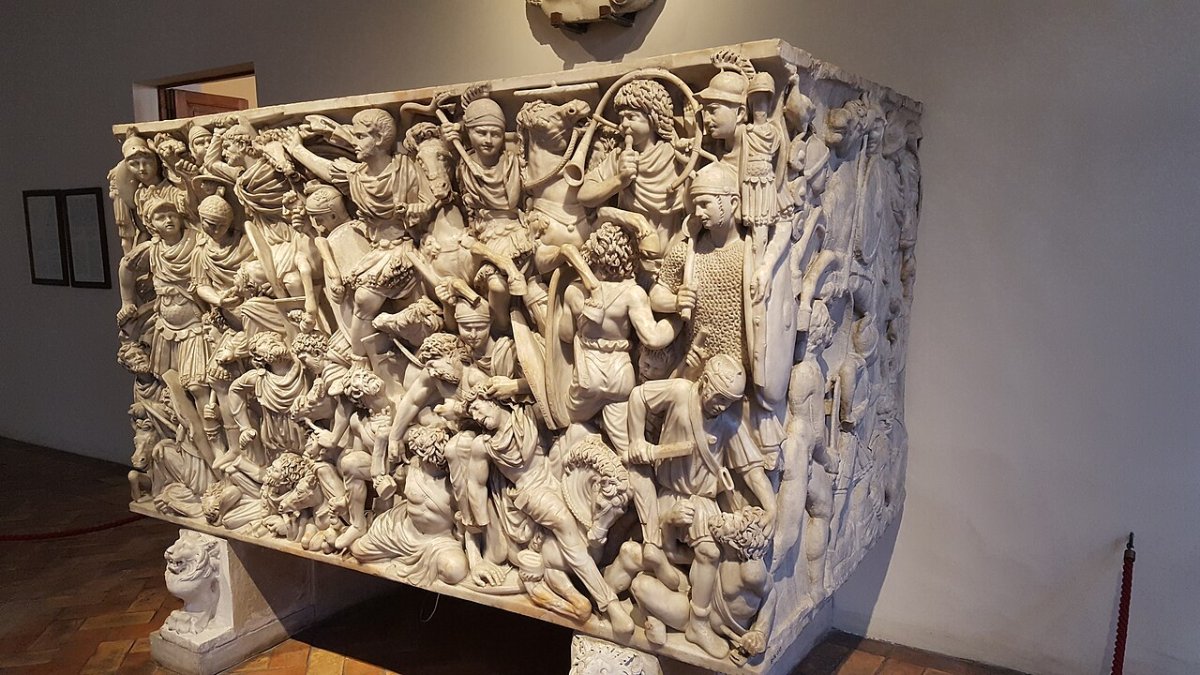
Decius pressed forward, seeking the final blow against the Goths. However, as he and his armies pursued Cniva into the marshes of Abritus, the tide turned. With the same tactical approach as his siege of Philippopolis, Cniva broke his contingent apart to leverage his fighters’ unique abilities in the wetlands.
Where Roman soldiers thrived on firm ground that allowed for symmetrical, organized formations, the uneven terrain and low visibility in the marshes hampered their trained competence.
Cniva’s disparate lines of soldiers pushed forward into direct engagement, though historians have not reached a consensus about whether Cniva’s strategy was a deliberate trap or simply a skillful use of the terrain.
In the battle that followed, Decius’ son (who was also co-emperor) was killed. Most sources cite a wayward projectile as the cause of his death, and his loss served as a severe blow to the army’s morale. But Decius continued the attack, aiming to turn the tide.
Thanks to the terrain, Cniva’s forces were able to spring from multiple angles, and some concealed ambushes were possible. As confusion spread through the Roman ranks, defenses fell, and a large portion of the empire’s soldiers perished at the hands of the Goths.
Decius was among them, though his cause of death remains a mystery. Some accounts suggest he fell while fighting; however, it is important to remember that the only surviving accounts of Cniva are told from the Roman perspective, often hundreds of years after the event. It is possible that Decius’ glorious last stand reflects the opinion of the winning side.
Other accounts offer that he disappeared into the marsh, swallowed by the mud after he fell. Either way, his body could not be located.
Without both Decius and Herennius Etruscus, his son, the Roman army crumbled. Surviving units withdrew if they could find an opening, and Cniva claimed victory.
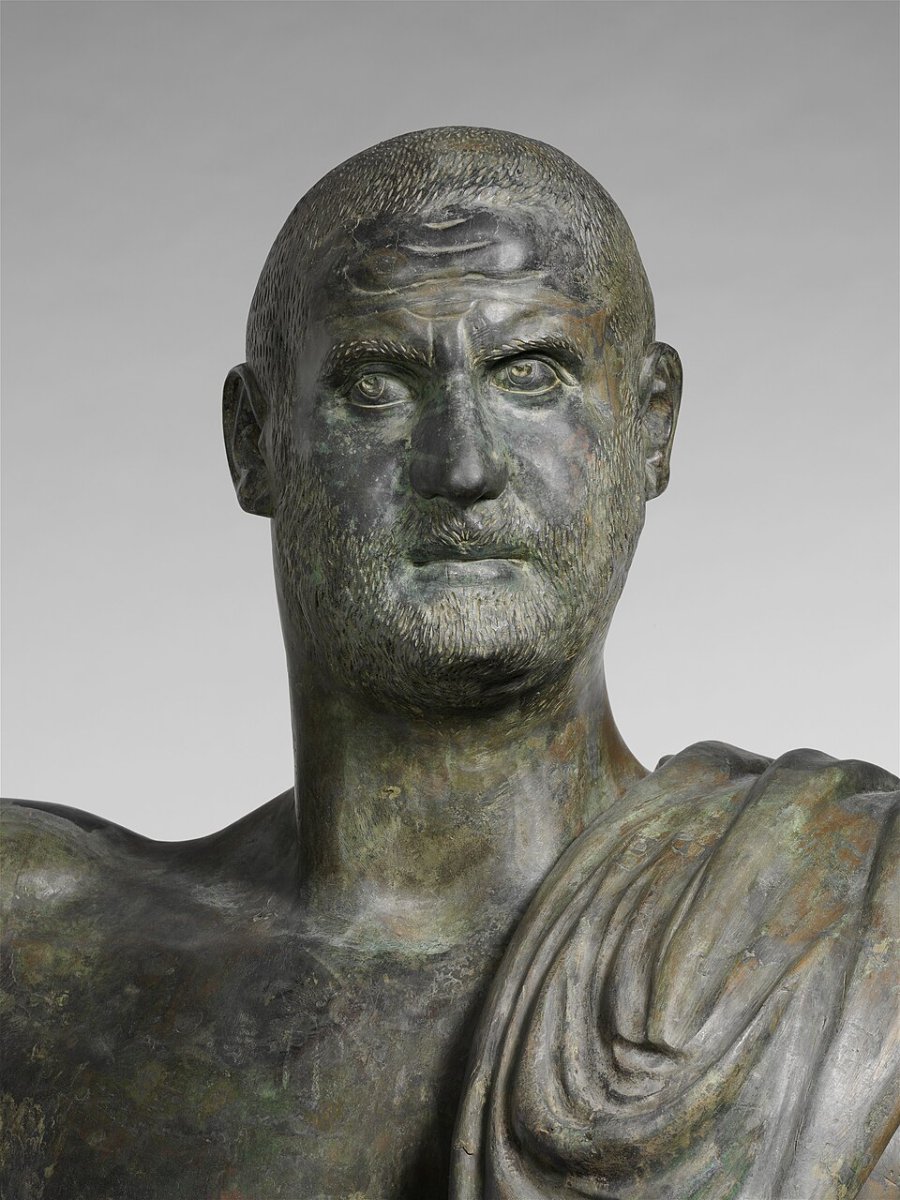
In the immediate aftermath, the survivors proclaimed Trebonianus Gallus, the governor of Moesia who had been with the army, as the new emperor. This mantle came with immense, immediate responsibility, including the completely intact Gothic force within Roman territory, swollen with loot and captives.
Recognizing Cniva’s apparent military acumen, Gallus chose to negotiate. The Goths demanded safe withdrawal across the Danube with their seized spoils and prisoners. Some sources suggest that, at the same time, the subsidy payments to the frontier resumed, likely in an effort to restabilize the region.
As for Philippopolis, the city would take years to recover. Urban rebuilding in the Balkans during the later third century would see the city develop stronger fortifications, reflecting that the shock of the invasion fundamentally altered the architectural and functional priorities of the city.
The major hubs of Roman power also suffered losses. Cniva’s claimed captives represented skilled laborers and artisans whose removal slowed further progress. Families were permanently separated, and it is possible that Cniva’s influence forced the development or intensification of ransom networks.
Evidence in later centuries notes Roman captives and their descendants living among Gothic communities, and while historians are unable to trace those individuals directly to the siege at Philippopolis, the scale of the sack suggests that the claimed population was notable in size.
What Happened to Cniva?
Unfortunately, the account of Cniva ends here. After the Gothic withdrawal in 251 CE following the Battle of Abritus and the negotiated settlement with Gallus, Cniva disappears from any surviving records. It is possible that further details were available centuries ago, now lost to time, or Cniva may simply have been a sudden and unexpected spark that ignited and vanished from the collective awareness just as soon.
Historians have long sought any indication of his death, potential deposition as leader, or later campaigns that he led. However, even in subsequent Gothic operations in the 250s and 260s, Cniva is not present. It is likely that one factor in this dearth of information is the proclivity of Roman record-keeping to focus on emperors.
Leadership outside the immediate imperial hierarchy tended to be of minimal interest, and once the immediate crisis surrounding Philippopolis and Abritus ended, Cniva ceased to be important.
Some historians suggest that Cniva did continue to operate within Gothic leadership, and that Romans thereafter simply wrapped him into overarching references to “the Goths.”
This means that he may have led a more peaceful reign once the subsidies stabilized the region, or he could have lost authority. Gothic politics centered around coalitions, and another could have come into power. Other alternatives include, of course, Cniva’s early death to warfare, disease, internal conflict, or some other cause the Romans may have been unaware of.
Regardless of what happened to Cniva, it is clear that he had a dramatic impact on history. His destabilization of the Roman Empire echoed across the region, forever changing some attributes, such as the cultural makeup of the Gothic territories (to include a greater number of non-Goths, presumably from the captives).
While his disappearance leaves much to the imagination, he may well have continued to have a vital role to play among Gothic politics long after the record loses his thread.