
Who hasn’t dreamed of discovering buried treasure at least once? From tattered pirate maps to legends of lost cities filled with priceless artifacts, humanity has been fascinated with uncovering the riches of the ages.
The search for hidden gold, silver, and precious gems has led to many fascinating treasure discoveries over the years. These hidden hoards of valuables are noteworthy not just for their monetary value, but also for their historical significance.
Every discovery is a window into the past. They shed light on the culture, practices, and lifestyles of those who came before us. It’s hard to resist the pull of buried treasure, so let’s take a look at some of the most astounding treasure discoveries in history.
San José
Every good treasure-hunting story needs a sunken ship, so it’s only fitting to start this list with the “Holy Grail of Shipwrecks.” The San José was a Spanish galleon that sank in 1708, taking its cargo of gold, silver, and emeralds to the ocean floor.
During the Spanish War of Succession at the start of the 18th Century, Spain and France fought against the British, Dutch, and the Holy Roman Empire. The Battle of Barú was a naval clash between the British fleet and the Spanish armada off the coast of Colombia in 1708. The British fleet wanted to capture Spain’s precious cargo, but the fight led to the San José’s decks exploding. The explosion sank the ship, along with its precious cargo and the entire crew except for 11 survivors.
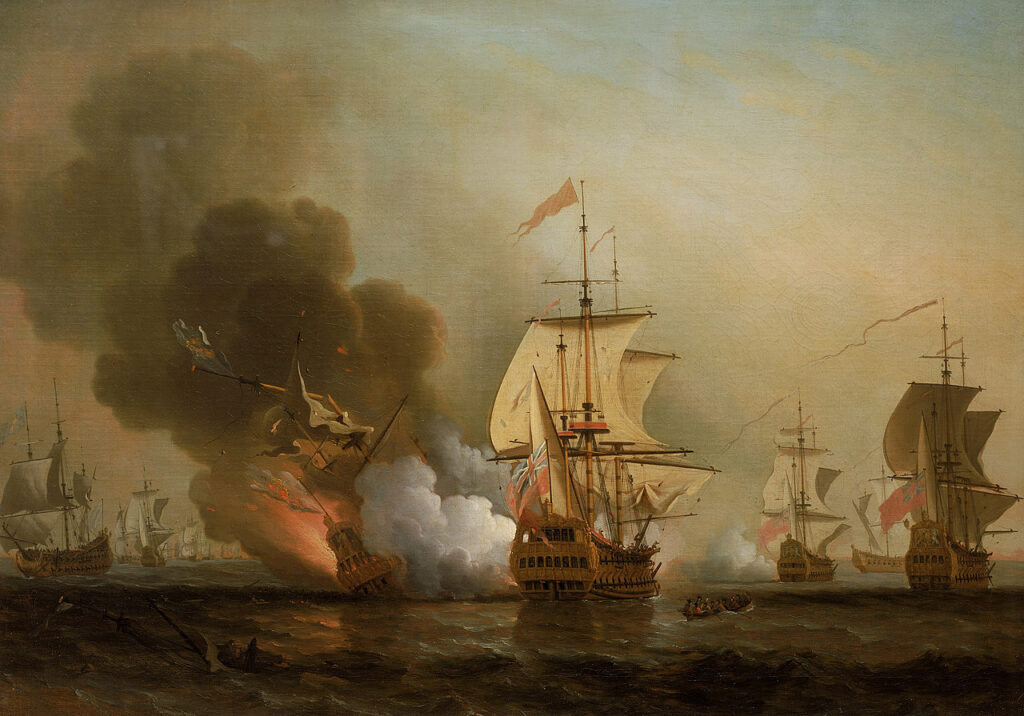
The search for the San José took over 300 years. In 1982, a US salvage company, Sea Search Armada, claimed to have located the shipwreck. This was challenged by the Colombian government in 2015. They declared that the shipwreck’s actual resting place had been discovered by the Colombian Navy in partnership with British maritime archaeologists and the US Woods Hole Oceanographic Institution.
The San José’s cargo was believed to be worth between $17 billion and $20 billion. However, it has not yet been recovered and remains at the seabed along with the shipwreck.
Shree Padmanabhaswamy Temple
The kingdoms that existed in ancient and medieval India were famously wealthy. Most of that wealth was stored in temples and palaces. The Shree Padmanabhaswamy Temple, a place of worship under the stewardship of Travancore’s royal family, shows just how rich the Indian kingdoms were before British colonization.
The true origins of the temple are shrouded in myth. It is mentioned in ancient Hindu texts like the Puranas and Tamil literature from the Sangam period. While the texts are believed to have been written between 300 BC and 300 AD, the temple is supposed to have been erected even before then.
For millennia, devotees have flocked to the temples at Thiruvananthapuram, bearing offerings for the gods. The Shree Padmanabhaswamy Temple’s treasure was the result of accepting centuries’ worth of offerings and sealing them in underground vaults beneath the temple.

There was no need to go looking for the Shree Padmanabhaswamy Temple since Vishnu devotees visit even today. However, the vaults underneath the temple remained closed to all. It was only in 2011, when the Supreme Court of India passed an order to open the vaults, that Vault A was unsealed.
Inside was a treasure of divine proportions. In this ancient vault, there were diamond-encrusted golden idols of Vishnu, a throne made of pure gold, ceremonial attire for the temple’s idol that was also made of gold, sacks full of golden jewelry and precious stones, as well as a hoard of coins from ancient Rome, medieval India, and Napoleonic-era France.
What’s even more interesting is that the temple’s Vault B has remained untouched since at least 1880. The descendants of Travancore’s ruling family have fought against opening it on religious grounds.
The Shree Padmanabhaswamy Temple treasure has been valued at $22 billion. Should Vault B ever be opened, the actual value may even be higher.
Środa Treasure
The Środa treasure is believed to have belonged to the Holy Roman Emperor Charles IV of Luxembourg. As one might expect from an emperor, it contained crown jewels, gold coins, gold rings, gold pendants, and even his wife’s crown. The medieval opulence was unearthed in Poland in 1985.
In 1348, King Charles IV of Luxembourg had yet to claim the throne of the Holy Roman Emperor, and his campaign was proving expensive. To raise funds so he could claim the imperial title, he pawned several precious artifacts to a Jewish banker in Środa named Muscho.
Unfortunately for Charles IV and Muscho, Europe was about to be struck by the Black Death, a bubonic plague that ripped through the continent in the 14th Century. Superstitious medieval villagers and townsfolk wrongfully pointed fingers at the Jews, leading to pogroms against them.
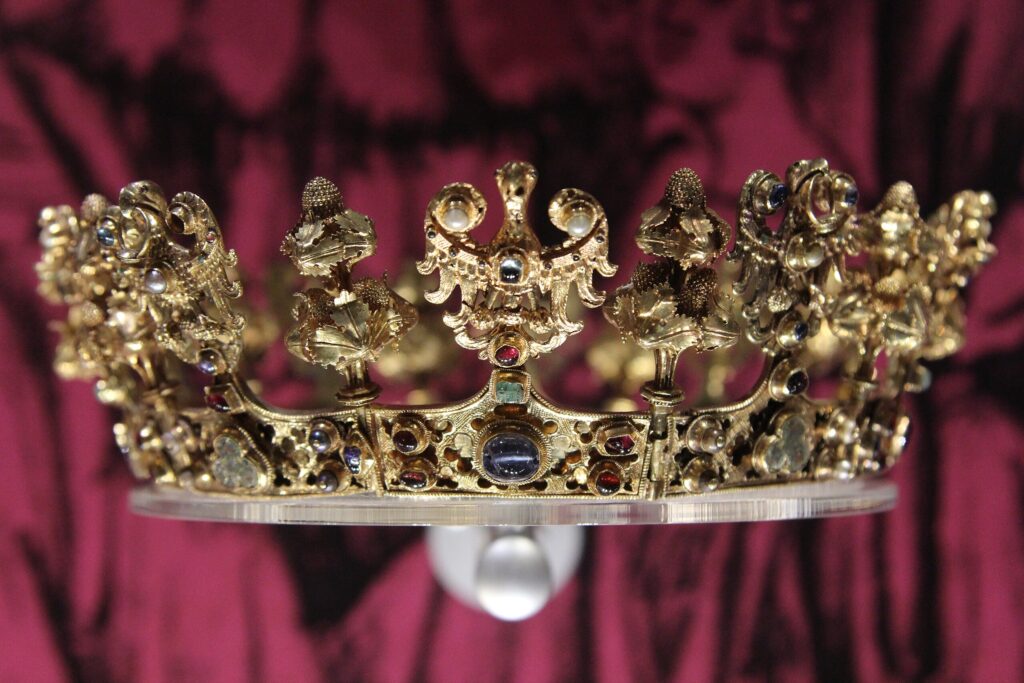
Muscho must have buried Charles IV’s treasure for safekeeping. It is unknown if he succumbed to the plague, was killed in a pogrom, or simply fled Środa to preserve his life, but he took the secret of the treasure with him.
The Środa treasure was believed to be lost for centuries. Nearly 650 years after Charles IV pawned the treasure to Muscho, a vase containing over 3,000 gold coins was discovered in 1985 during the demolition of a telephone exchange office in Środa. While the coins were surrendered to the authorities, no excavation was conducted at the site.
The oversight came to light in 1988. Three years after the initial discovery, another hoard of coins as well as jewelry and crowns were discovered during further construction. The news spread among locals in Środa, who began digging through municipal landfills for debris from the construction sites.
The Polish government announced a plan to buy back these found items, resulting in the discovery of some priceless historical artifacts, including the golden crown of Queen Blanche of Valois, who was Charles IV’s first wife.
Items from the Środa treasure have been preserved and displayed in museums across Poland. After the treasure was discovered, various experts estimated its worth at between $100 million and $120 million.
Le Catillon II
Jersey is a quaint green island dotted with farms off the coast of Britain, but its ancient history is extremely fascinating. Archaeologists discovered the Le Catillon II hoard, also called the Grouville hoard, on a farmer’s land in 2012. It turned out to be the largest discovery of Iron Age Celtic coins in history.
Sometime between 40 BC and 30 BC, a tribe of Curiosilitae Celts landed on Jersey. Historians believe they could have been fleeing France, then known as Gaul, to avoid Roman conquest. Little is known about why the coins were buried, but that’s exactly what happened, after which the hoard lay forgotten for two millennia.
The discovery of the Le Catillon II hoard was the result of 30 years of labor by two amateur metal detectorists, Reg Mead and Richard Miles. Once a year, starting in the early 1980s, they received permission to search for ancient coins on a farmer’s land for 10 to 15 hours on the day after harvest. Finally, in 2012, they uncovered what they had been looking for.
The Le Catillon II hoard was much bigger than Mead and Miles expected so they had to contact local experts. An archaeological excavation revealed a unique find. Nearly 70,000 gold and silver coins were buried there, all fused in a single lump of clay! The dig also uncovered glass beads and golden neck torcs. Extracting the coins from the clay for historical preservation was a painstaking exercise that took years. Today, the restored coins can be viewed at the La Hougue Bie Museum in Jersey.
A single coin from the Le Catillon II hoard could be worth between $130 to $260, putting the total value of the treasure between $7 million and $14 million.
Saddle Ridge Hoard
In 2013, a Californian couple took a walk that would change their lives. While walking their dog on a private trail, they discovered a stash of 1,427 golden dollar coins issued between 1847 and 1894. This discovery came to be known as the Saddle Ridge Hoard and is the most valuable treasure discovery in US history.
What’s peculiar about the Saddle Ridge Hoard is that no one is certain where it came from. Multiple theories abound. Some are mundane, such as a wealthy individual choosing to guard their wealth themselves rather than trusting banks. Others are more fanciful, such as hidden stash belonging to outlaws like Jesse James or Black Bart, or even a war chest for the Knights of the Golden Order who were looking to start a second American Civil War.
One thing is for certain, the US Mint is confident that the coins are not directly connected to any thefts as they confirmed in a 2014 statement.
The Saddle Ridge Hoard was discovered by a couple walking their dog when they spotted a can sticking out of the ground. It contained gold dollar coins in nearly mint condition. Further investigation revealed the entirety of the hoard. The couple who found it are only known as John and Mary. They wisely chose to conceal their identities to protect their privacy.
The Saddle Ridge hoard contains $20 coins, $10 coins, and $5 coins, amounting to a face value of $27,980. However, the coins are in near-perfect or mint condition, barely used in circulation, which raises their value considerably. The valuation of the Saddle Ridge Hoard lies between $10 million and $11 million.
Along with the finds mentioned here, many more discoveries yielded several fascinating insights into history. Even more exciting is the promise of more undiscovered treasure that still lies in the forgotten corners of the world, waiting to share even more secrets with us!