At the outbreak of war with Nazi Germany in September 1939, one of Great Britain’s greatest obstacles to thwarting German advances was a machine known as “Enigma,” an encryption device created by German intelligence to encode secret message transmissions.
As early as 1932, a team of Polish mathematician-cryptanalysts had succeeded in figuring out how “Enigma” worked, and by 1938 devised its counterpart: a code-breaking machine they called the “Bomba,” the Polish word for a type of ice cream.
The “Bomba,” however, was dependent on the Germans continuing to follow specific operational procedures, which in May of 1940, they discontinued, rendering the “Bomba” useless.
With the German war effort now surging ahead, it became necessary for British Intelligence to find a new method of decoding intercepted German transmissions.
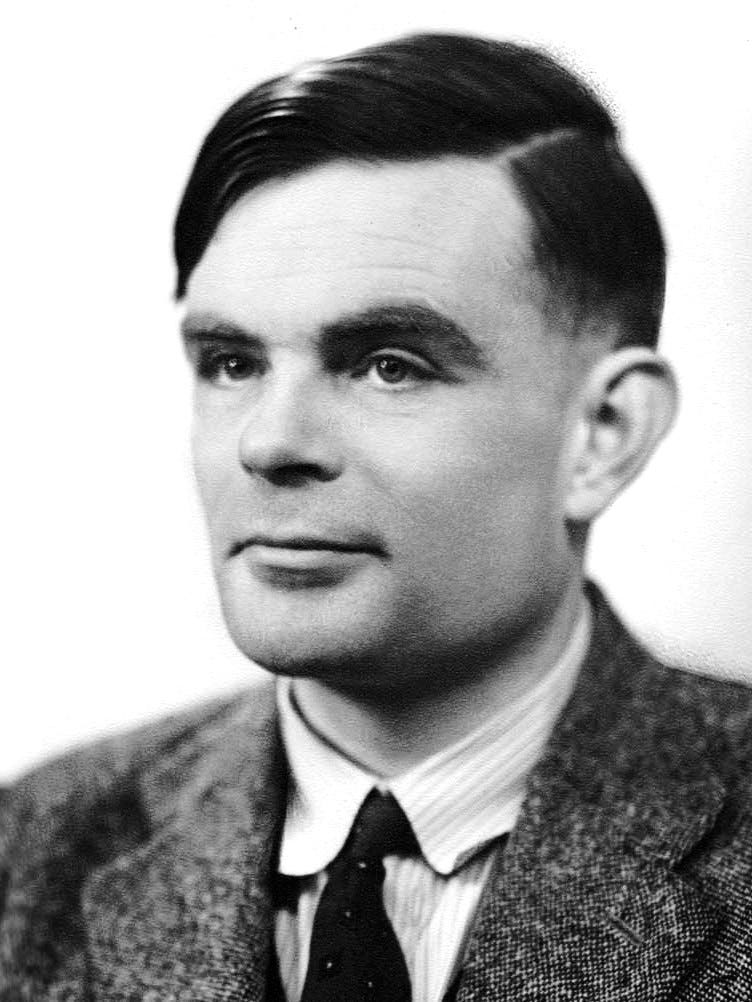
Fortunately for the British Government, in September of 1938, a man named Alan Turing, one of the foremost mathematician-cryptanalysts in the world, had begun working at Bletchley Park, a mansion in the English countryside in Buckinghamshire, that became the principal center of Allied code-breaking during WWII, with the GC&CS (Government Code and Cypher School), and subsequently tasked with building a more efficient German-code-breaking machine.
Reaffirming himself as one of the most brilliant cryptanalysts in the world, Turing and his small group of colleagues successfully redesigned the “Bomba” by March 18, 1940, and had the first infallible decoding device in operation by late 1941.
But Turing’s wartime efforts for Great Britain didn’t stop there.
Early Life
Alan Mathison Turing was born on June 23, 1912, in Maida Vale, London, England, to Julius Mathison Turing, an officer with the Indian Civil Service of the British Raj government at Chatrapur, India, and Ethel Stoney-Sara, daughter of Edward Waller Stoney, chief engineer of Madras Railways in southern India.
Julius and Ethel were married on October 1, 1907, at St. Bartholomew’s Church in Ballsbridge, Dublin, Ireland.
Turing had one brother, John Ferrier, who was one year his senior. He was the father of noted author Sir John Dermot Turing, 12th Baronet of the Turing Baronetcy, in the County of Aberdeen, Scotland.
Turing’s father was still active in the Indian Civil Service of the British Raj government during Turing’s childhood, so he and his wife traveled between Hastings and India; Turning and his brother staying with a retired Army couple while in India; at Baston Lodge, Upper Maze Hill, St. Leonards-on-Sea, while at Hastings.
In 1927, his parents purchased a house in Guildford, Surrey, UK, where Turing lived during holidays from school.
Education
Even as a child, Turing showed signs of the genius he would display throughout his life. The headmistress of St Michael’s, the primary school in St Leonards-on-Sea, East Sussex, England, where Turing attended from age six to nine, said of him, “I have had clever boys and hardworking boys, but Alan is a genius.”
Between January 1922 and 1926, Turing was educated at Hazelhurst Preparatory School, an independent school in the village of Frant (now East Sussex), after which the 13-year-old went to Sherborne School, an independent boarding school in the market town of Sherborne, Dorset, where he boarded at Westcott House.
Turing’s first day at Sherborne School coincided with the 1926 General Strike in Britain, a strike involving railwaymen, transport workers, printers, dock workers, ironworkers, and steelworkers.
Turing was so determined to be present on his first day at the new school that he rode his bicycle, the only transportation available, 60 miles from Southampton to Sherborne, staying overnight at an inn.
Even as a student at Hazelhurst Preparatory, Turing’s natural aptitude for mathematics and science was apparent, which gained him no favor from his teachers at Sherborne, who believed a proper education is grounded in the classics: Greek and Roman literature, language, and philosophy.
Turing’s headmaster wrote to his parents, “I hope he will not fall between two stools. If he is to stay at public school, he must aim at becoming educated. If he is to be solely a Scientific Specialist, he is wasting his time at a public school.”
Driven by his own independent scholarship, by the age of 15, Turing was able to solve advanced problems in calculus, having never formally studied calculus, and by 16, could grasp Newton’s and Einstein’s theories—even Einstein’s challenge of “Newton’s Laws of Motion.”
Uncooperative and essentially unteachable, Turing was more focused on his own methods of solving mathematical problems than considering those taught by his teachers. Despite producing unconventional answers by his unorthodox methods, Turing won almost every mathematics prize Sherborne offered.
University, Alonzo Church, “Turing Machines”
Upon graduating from Sherborne in 1931, Turing was offered an £80 per annum scholarship (approximately $5,500 in 2024 US dollars) to study at King’s College, in Cambridge, England, where, after three years, he graduated with First-Class Honors in Mathematics.
In the spring of 1935, Turing began his Master’s course—completing it in just two years. Shortly after, he published his first scientific paper, a one-page article titled “Equivalence of Left and Right Almost Periodicity,” which was featured in the Journal of the London Mathematical Society.
In the spring of 1937, Turing found himself unintentionally in competition with a 32-year-old American mathematician, computer scientist, logician, philosopher, and Princeton University professor named Alonzo Church, who, like Turing, had been actively challenging long-accepted mathematical theories and had accepted the mathematical challenge known as the Entscheidungsproblem.
Posed by mathematicians David Hilbert and Wilhelm Ackermann in 1928, the Entscheidungsproblem relates to the field of “decidability of problems,” and asks for an algorithm (a finite sequence of mathematically rigorous instructions) that considers, as input, a statement and answers “yes” or “no” according to whether the statement is “universally valid” (i.e., valid in every case).
By May of 1937, Turing had completed and presented for publication a 36-page paper titled “On Computable Numbers, with an Application to the Entscheidungsproblem,” which was published in two parts in the Proceedings of the London Mathematical Society journal.
In it, Turing presents what would henceforth be known as “Turing machines,” universal computing machines capable of performing any conceivable mathematical computation that can be represented as an algorithm. Turing then went on to prove that there was no solution to the Entscheidungsproblem. This paper has been deemed “easily the most influential math paper in history.”
Just before the publication of Turing’s paper, Professor Church published a paper of his own, wherein he presents his own system called “Lambda calculus,” a universal model of computation that can be used to simulate any “Turing machine” (and vice-versa). According to what became known as the “Church–Turing” thesis, “Turing machines” and “Lambda calculus” are both capable of computing anything that is computable.
Note: Although both Turing and Church devised models of computation that can essentially substitute for one another, the majority of mathematicians around the world favor Turing’s as easier to use.
Princeton University and Cryptology
From September 1936 to July 1938, Turing pursued his PhD at Princeton University in Princeton, New Jersey, under the guidance of Professor Alonzo Church.
In addition to his strictly mathematical studies, Turing also began a study of cryptology, subsequently building three of four stages of an electro-mechanical binary multiplier, an electronic circuit used in digital electronics (such as a computer) to multiply two binary numbers.
In June of 1938, Turing achieved his PhD in Mathematics from Princeton; his dissertation, “Systems of Logic Based on Ordinals,” which introduced the concept of “ordinal logic” and the idea of “relative computing,” in which “Turing machines” are augmented with so-called “oracles” which allow the study of problems beyond those solvable by “Turing machines.”
A short time later, Turing returned to the UK.
Bletchley Park
By September 1938, Turing had been enlisted to join the British codebreaking organization GC&CS (Government Code and Cypher School), led by chief cryptographer, classics scholar, and papyrologist (interpreter of ancient documents), Dilly Knox.
Turing and Knox concentrated on cryptanalysis of the so-called “Enigma” cipher machine used by Nazi Germany’s intelligence, using information provided by the Polish Cipher Bureau, as well as the device they’d designed, the “Bomba.” By July of 1939, Turing and Knox had developed a far more dependable version of “Bomba” (spelling it Bombe).
On September 4, 1939 (the day after the UK declared war on Germany), Turing reported to Bletchley Park, the wartime station of the GC&CS, and immediately began work on what would become a series of cryptanalytical advances for the British War Department.
These advances included: deducing the “indicator procedure” used by the Nazi German navy; developing a statistical procedure dubbed “Banburismus” to be used specifically to help break German navel (Kriegsmarine) messages enciphered on “Enigma” machines; developing a manual code-breaking method dubbed “Turingery,” used specifically to decipher messages coded on the German’s SZ40 and SZ42 teleprinter rotor stream cipher machines, and, towards the end of the war, development of a portable voice scrambler at Hanslope Park (home to HMGCC, an organization that provided electronics to support the communication needs of the British Government), code-named, “Delilah.”
Turing’s contributions to the British War effort were so scientifically advanced that the two papers he wrote on the code-breaking process, “The Applications of Probability to Cryptography” and “Paper on Statistics of Repetitions,” were not released to the United Kingdom National Archives until April 2012.
Post-War and Development of the Computer
In 1945, after the war with Germany had ended, Turing was recruited by the National Physical Laboratory (NPL) in London to create an electronic computer, with the goal of being the first in the world to build an electronic stored-program, all-purpose, digital computer.
Although various types of electronic computation devices were already in existence (the Colossus, built in England in 1943, and the ENIAC, built in the US earlier that year), they were purpose-specific, and few had stored-program capacity.
Turing was the logical choice to design an all-purpose digital computer because, at that time, he understood more about building computational machines than anyone else on the planet.
To design his “Turing machine,” Turing had to do more than just conceptualize the functioning of a computer. He had to find a conclusive definition of what a computer is. Having done so, Turing could now work out in great detail the basic concepts of a universal computing machine that could, in theory, do anything a special-purpose computing device could do—but much more.
Turing knew that an all-purpose computer could not be limited to solving just arithmetic problems. Of course, the internal state of the machine could represent numbers. It could also represent “logic values” or letters just as easily. Turing concluded that everything could be represented symbolically, even abstract mental states.
Turing was one of the first proponents of the Artificial-Intelligence (AI) position that computers would one day have the capacity to “think.”
Although Turing’s initial work was entirely abstract and theoretical, he was confident that building a fully functioning machine of the sort he’d envisioned was possible. So he challenged himself to build one.
Turing’s ultimate answer to the task was the Automatic Computing Engine (ACE); essentially, the complete specifications for the first electronic stored-program, all-purpose, digital computer.
His colleagues at NPL, however, thought the engineering of the ACE too difficult to attempt, so they opted for a much smaller machine, which they called the Pilot Model ACE. Had Turing’s original version been built as conceived, it would have had vastly more memory than any of the other early computers produced.
Cambridge, Physiology, Athletics
In 1947, Turing’s interests turned to neurology, physiology, and athletics, so he signed up for classes at Cambridge University for the 1947-1948 academic year.
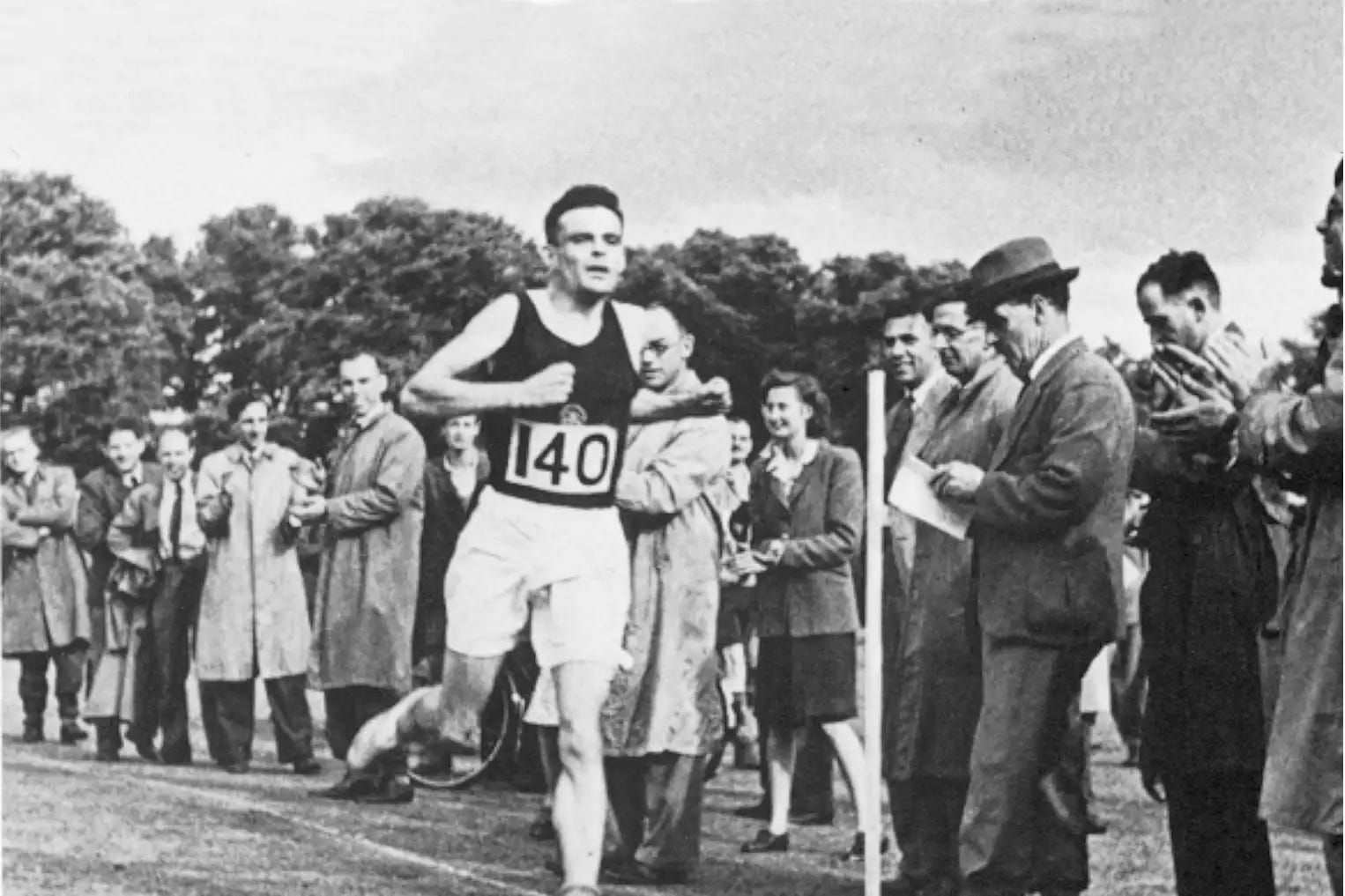
Although he still wrote computer programs and studied intensely, to some surprise, he joined the Walton Athletic Club—breaking their 3-mile and 10-mile time record, and placing fifth in the 1947 26-mile A.A.A. Marathon.
In 1948, Max Newman, professor of mathematics and theoretical computer science at the University of Manchester, Manchester, England, offered Turing a “readership” position there. A university reader provides university-wide leadership, conducts research in their areas of expertise, develops curriculum, and is an essential step in progressing toward holding a “Personal Chair” at the university. Turing resigned from the National Physical Laboratory to accept this prestigious post.
In 1949, Turing was appointed Deputy Director of the Computing Machine Laboratory, where he worked on software for one of the earliest stored-program computers—the Manchester Mark 1.
Having written the first version of the Programmer’s Manual for the Mark I, Turing was recruited by UK electrical engineering and equipment firm, Ferranti International, as a consultant in the development of their commercial computing machine, the Ferranti Mark 1. Turing continued to work for Ferranti for the remainder of his life.
Mathematical Biology
In 1951, at the age of 39, Turing turned to the study of “mathematical biology” and “morphogenesis” (the biological process that gives organisms their physical shape), publishing what members of the scientific and mathematical communities consider his masterpiece, “The Chemical Basis of Morphogenesis,” in January of 1952.
Published before the structure and role of DNA were scientifically understood, Turing’s work on “morphogenesis” remains highly relevant today, and his work is considered the pioneering work in this field.
Beginning of the End
In January of 1952, an incident occurred in Turing’s personal life that would have a profound effect on his future.
Although it was no secret among friends and colleagues that Turing was a homosexual, in that it was a punishable crime in the UK, he never let it be publicly known.
On the night of January 23, however, Turing’s house was burgled, and police traced the missing items to a 19-year-old man named Arnold Murray, who, when confronted, told police he and Turing were personally acquainted. When Turing admitted a sexual relationship with Murray, the two were charged with “gross indecency” under the UK Criminal Law Amendment Act 1885.
Having pleaded guilty to the charges, on March 31, 1952, Turing was convicted and given a choice between imprisonment and probation; probation contingent on agreeing to subjection to “chemical castration.”
Though permitted to keep his university position (symbolically), Turing’s conviction led to the removal of his security clearance, which prevented him from continuing as a cryptographic consultant for the British Government Communications Headquarters.
Late in 1952, Turing was denied entry into the US because of his conviction. But since several other European countries (including Norway) were more tolerant of homosexuals, Turing spent time there, trying to build new relationships–including one with a man named Kjell Carlson. Kjell attempted to visit Turing in the UK, but UK authorities intercepted their correspondence and prevented Kjell from entering the country.
On June 8, 1954, at the age of 41, Alan Mathison Turing was found dead at his Wilmslow home in Cheshire, England, by his housekeeper.
A postmortem held that evening determined that Turing had died the previous day due to cyanide poisoning. An inquest held the following day established the official cause of death as suicide.