
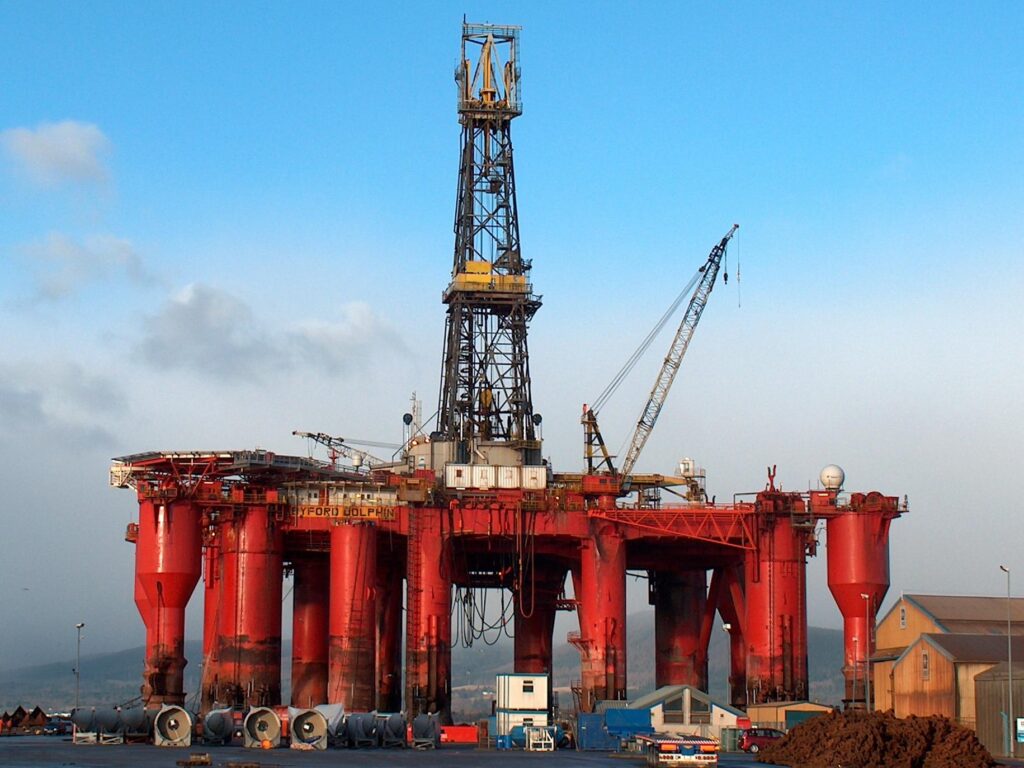
On Nov. 5, 1983, four saturation divers from the Byford Dolphin suffered arguably the most catastrophic and gruesome ends in diving history. A dive tender also lost his life, while another diver survived despite sustaining massive injuries.
The accident occurred in the Frigg Gas Field, situated between Norway and Scotland in the North Sea. The divers, leaving their pressurized living chamber deep underwater after having spent considerable time near the ocean’s surface, saw their dive bells detach prematurely before their chambers were closed.
This caused an explosion in pressure, leading to decompression sickness and a horrifying end. One of the dive tenders was fatally hit by the dive bell.
The failure in the North Sea led to sweeping changes as the 21st century approached as investigations pointed to mechanical failures as the cause of the accident.
Saturation Divers and “The Bends”
Saturation divers make between $30,000 and $50,000 per month, working in a claustrophobic and extremely dangerous pressured environment.
Unlike regular divers, saturation divers go to the deepest parts of the ocean, more than 153 meters (500 feet) below the water’s surface. Their job is extremely dangerous, as they can stay underwater for up to 28 days while performing maintenance, laying pipelines, construction, or inspection.
The diver signs up for the job knowing the dangers involved, particularly decompression sickness. As the diver descends deep to the bottom, the water’s weight applies pressure to their entire body. The goal is to keep the pressure stable.
However, when the pressure of the water rapidly decreases and a diver gets brought back too quickly, they get decompression sickness, also referred to as “the bends.” “This causes nitrogen gas dissolved in the blood and tissues to form bubbles, which can affect almost any part of the body.” The bends can happen to any diver where pressure is an issue.
“The bends” are excruciatingly painful and potentially fatal with the ability to cause delirium, paralysis, heart attacks, and strokes.
The Byford Dolphin Accident
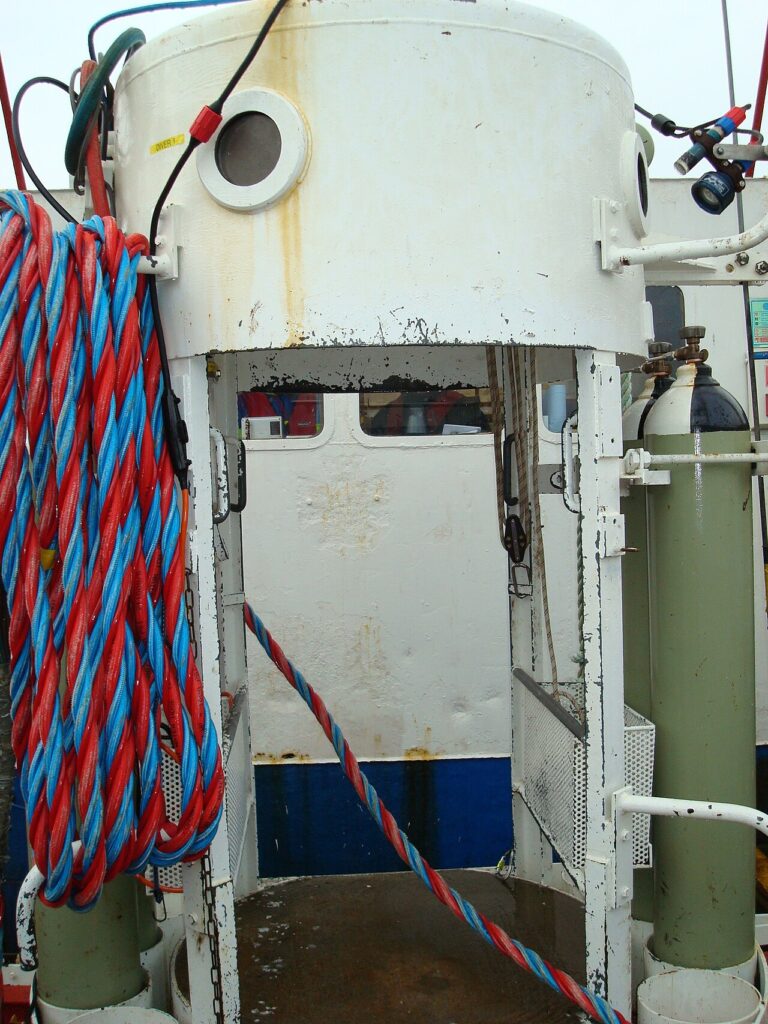
On Saturday, Nov. 5, 1983, four divers had just completed their work deep underwater and were climbing into their dive bells, which were transportation devices taking divers from the ocean’s depth to the water’s surface.
There were two separate pressurized living chambers the men were coming from. Edwin Coward and Ray Lucas were leaving chamber one while Bjorn Bergesen and Truls Hellevik were coming from the second chamber. Bergesen and Hellevik’s chamber was connected to the diving bell by a trunk. There were also two diving tenders, William Crammond and Martin Saunders, who were there to assist them with coming up to the surface.
Because these men were working at such extreme depths for long durations, the group needed to breathe pressurized air to dissolve any nitrogen that had dissolved in their bloodstream.
“By staying compressed, they can work out there for as long as they need to, and when you bring them back up, you don’t need to worry about decompression,” Phillip Newsum, an experienced commercial diver and executive director of the Association of Diving Contractors International, said.
It’s important that the living chambers are supposed to be completely shut before the dive bell detaches. If the dive bell detaches while the chambers are still open, it can create an “explosive decompression.”
“It’s a death sentence,” says Newsum. “You won’t survive.”
Unfortunately, this is exactly the problem that the men ran into. The diving bell was released before the doors were detached. This caused a dramatic pressure drop in both living chambers, causing incredible decompression one can’t fathom to imagine.
The pressure dropped from 9 atmospheres to 1 atmosphere in 0.1 seconds, which meant they were experiencing normal surface air pressure but deep underwater. The men experienced “the bends.”
Three of the men suffered a gruesome end. Coward, Lucas, and Bergesen were instantly “boiled” from the inside as the nitrogen located in their blood vigorously erupted into gas bubbles.
Hevelik, unfortunately, suffered the worst fate. Hellevik was standing right in front of the slightly ajar door to the living chamber at the same time the pressure was released. Hevelik’s body was sucked through such a tiny opening, a 60cm gap, tearing him open and releasing his internal organs onto the deck. Some parts of his body were also found 10 meters away.
Crammond would be the fifth man to die when the dive bell hit him and instantly killed him. Saunders was also hit by the bell but only suffered severe injuries.
The Byford Dolphin incident was attributed to outdated systems and engineering failures, with the final investigation citing faulty equipment, not human error as the cause.
This tragic accident, along with close to 60 other diving fatalities in the North Sea between the 1960s and early 2000s, led to changes in the whole process. Unfortunately, the Norwegian government refused to take responsibility for the incident for a long time and didn’t compensate the victims’ families until 2009.
“The Byford Dolphin was one of the worst oil field disasters in history,” says Newsum, “and it led to sweeping changes in the North Sea and in commercial diving safety worldwide.”
Today, all diving operations are required to make extensive risk assessment and hazard analyses. There has been a significant upgrade to equipment and technology with the most stringent safety precautions now put in place. Redundancies are built into every procedure to remove human error or faulty equipment.
Most oil rigs are now equipped with special hyperbaric lifeboats that can transport saturation divers away from a natural disaster or fire without having to bring them back to surface pressure first.
In 2016, the Byford Dolphin was officially put to rest. Still, the ghost of it lingers as a reminder of the most catastrophic diving accident the North Sea has ever experienced.