
Siege warfare has been an effective strategy for military success for thousands of years, and the introduction of modern weaponry did not change such tactics; it only refined them. However, while political and military leadership address concepts such as blockades and sieges on paper, it is the citizens who live through the reality of those decisions.
One such notorious siege, which took place in Stalingrad during World War II, forever changed the lives of millions. From those who perished and left loved ones behind to those who survived with the struggles of the siege etched into their bodies and minds, this historical event still lingers into the present.
Setting the Stage on Stalingrad
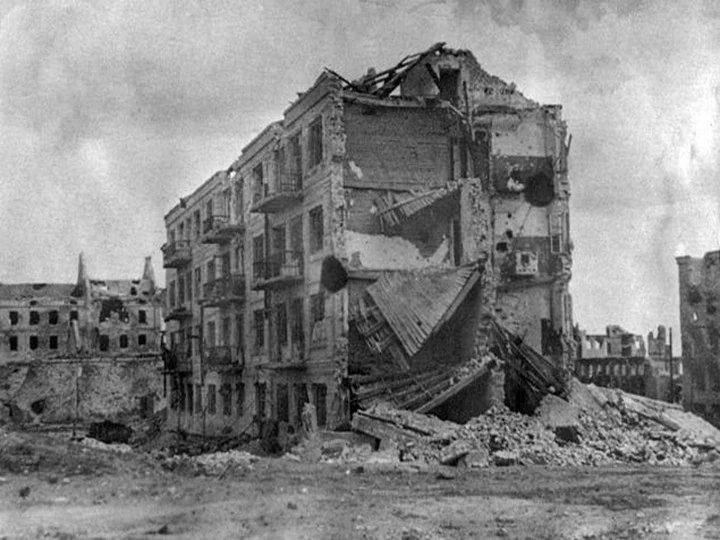
Looking at a map today will not reveal any city called Stalingrad; on November 10, 1961, the city’s name was changed to Volgograd, which it remains to this day. But during World War II, Stalingrad thrived as a major industrial hub named after Soviet leader Joseph Stalin, who facilitated its growth.
Stalin himself rose to power in 1924 following the death of Lenin. His focus on collectivizing agriculture and rapid industrialization led Stalingrad to become what it was, which bolstered the Soviet view outside the country.
Stalingrad was a model industrial city, thriving with huge, successful factories. Located on the bank of the Volga River, Stalingrad was both producing and transporting materials essential to the war effort in 1942, such as tanks and artillery.
Because of this, Stalingrad became an appealing target for the German leadership. Claiming the city offered both a literal and symbolic prize: the industrial products and the morale hit to the Soviets should their beloved city, named after their leader, fall.
Additionally, Stalingrad stood as a monolith before the Caucasus Mountains, shielding the area’s rich oil fields from outside hands. As the war progressed and Germany required such oil to fuel their military might, Stalin’s oil fields grew in appeal.
However, the very industrialized nature of the city also contributed to its difficulty during the siege. Its success, built on a strained foundation, left its infrastructure primed to collapse with little redundancy in the event of a catastrophe like the one coming from the German side.
Stalingrad Before the Siege
Before the siege, around 500,000 people lived in Stalingrad. The bustling interior of the city expanded outwards, often quickly, drawing more workers and leaving the city crowded and lively.
However, the population swelled to its near-maximum, around 800,000, in the face of refugees pushed into the city by advancing German forces.
The city itself was largely multi-ethnic, and while the majority were Russian or Slavic, many minorities also made Stalingrad home. Cossacks and numerous minorities from Central Asia could be found in the city, and despite state-level atheism, both practicing Jews and Eastern Orthodox Christians were not uncommon.
The Siege Begins
By mid-1942, Germany had plunged deep into Soviet territory via Operation Barbarossa, which the Germans launched in 1941. The Wehrmacht (the German armed forces) faced significant trouble while attempting to move toward Moscow. Noting that forces were stalling in their efforts, Adolf Hitler adjusted his plans and turned his attention toward Stalingrad.
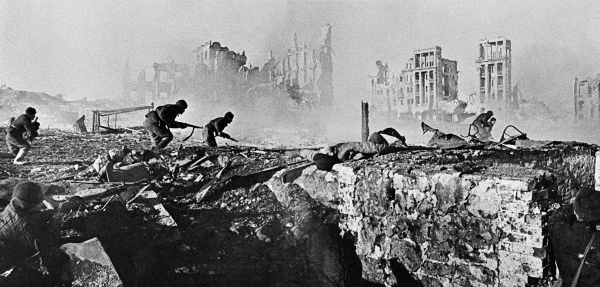
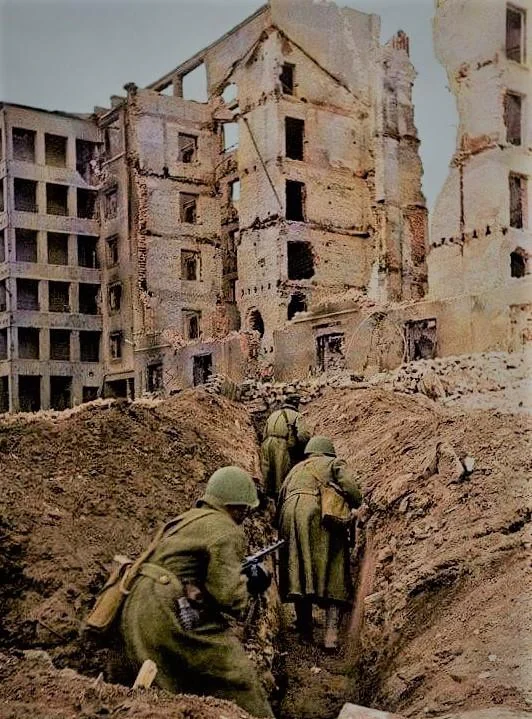
The Battle of Stalingrad began in August of 1942. The Germans descended into the city, fighting in close quarters and subjecting the city to bombing that leveled large portions of its infrastructure.
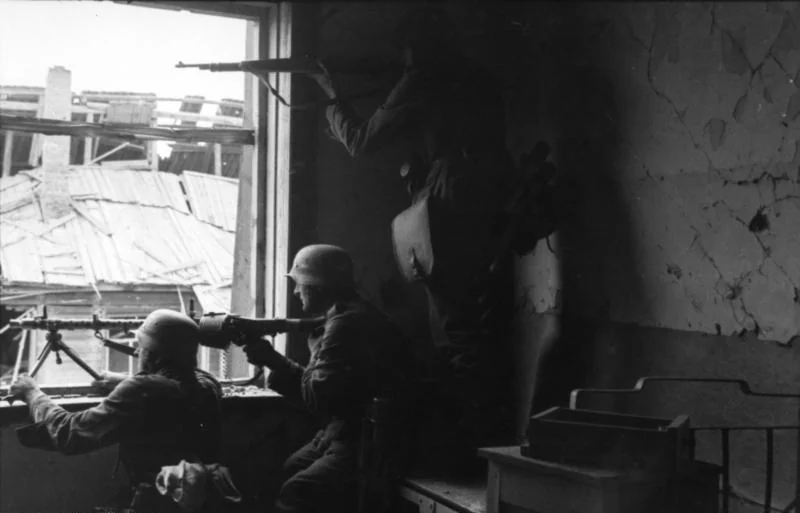
Under General Friedrich Paulus, the Sixth Army pushed into Stalingrad on Hitler’s orders while Soviet forces pushed back, complying with Stalin’s Order 227, “Not a step back,” leaving the fighting in a deadlock.
But what of the civilians during this time? Already, the city’s population had begun to swell as people fled the oncoming German army, and no evacuations occurred in preparation. In part, this resistance came from propaganda: that the German threat was minimal compared to the might of the Soviets.
However, Stalin simultaneously acknowledged the logistical challenge of evacuation and refused to enact it.
As a result, civilians endured constant German bombardment that tore down the city around them. However, this was only the beginning of their long life amid the siege.
Daily Life Under Siege
As vital infrastructure collapsed and people were left without food or water in inclement conditions, life under siege quickly devolved into struggle. Propaganda was strong on each side; the Soviets emphasized their heroic resistance and unity, both among the citizenry and soldiers, while downplaying any hardship. Conversely, German propaganda portrayed the battles as glorious conquest, supporting the German “myth of invincibility”: that Germany would never (or could never) lose.
For many people, food quickly became an issue. Food scarcity arose from cut-off supply lines, especially from traffic on the Volga. The bombing destroyed warehouses and other invaluable infrastructure for the supply of food, and in many cases, fighting within the city itself precluded going to get food oneself.
In recounting her lived experience of Stalingrad, kitchen-hand Agrafena Pozdnyakova notes that she and her six children had to hide in a ditch after their home was destroyed and her husband killed.
While accounts of her exact wording vary, she said that when the Germans were surrounded, they ate horse meat. Often, the Germans left the less desirable pieces, such as the legs, head, and offal, but by the end, they kept everything to themselves except for the hooves.
However, water was an even more pressing concern. With water mains compromised, many people (especially children) resorted to gathering and boiling water from the Volga itself. However, this sometimes required trekking miles through active combat zones.
Survivors report that even when they could secure water, it often tasted of gunpowder, and one young woman recalls being told by her mother to simply move corpses aside in order to boil the water their family needed.
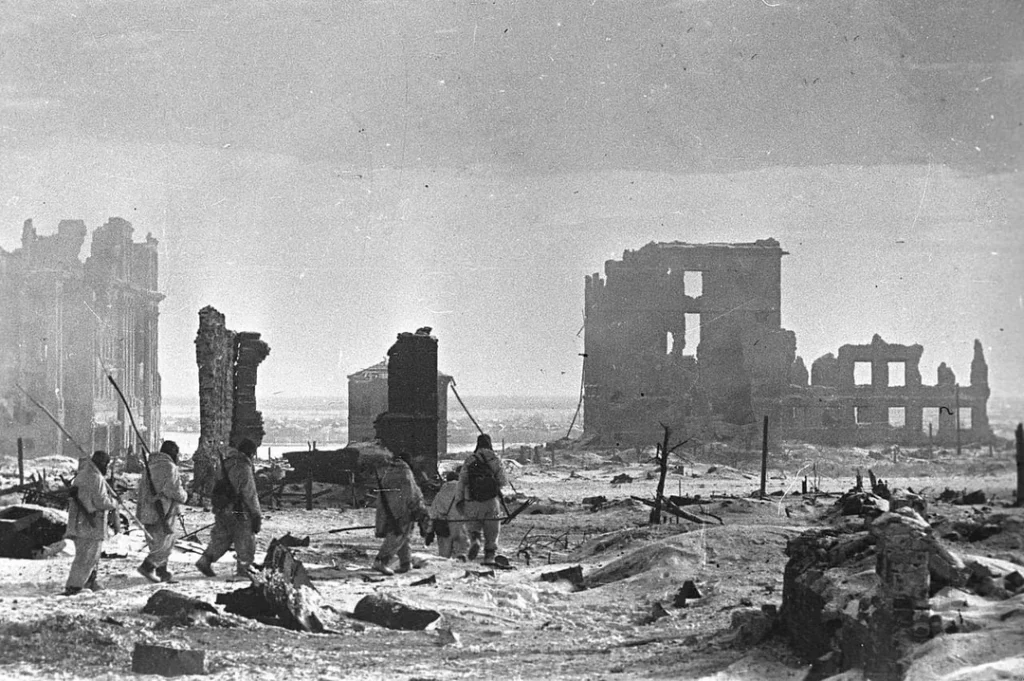
During the siege, housing became nearly a moot point. So much destruction left families displaced throughout the city, often in active fire zones; Agrafena Pozdnyakova, mentioned previously, took care of her six children in a ditch.
During the active combat portion of the siege, the distinction between civilian and military work blurred. Many of the survivors either volunteered to perform auxiliary roles or were forced into their positions, which included clearing rubble, acting as messengers, removing corpses, and standing lookout to report on German positions. In particular, some accounts note that children proved invaluable, as they could often reach locations (such as building wreckage) that adults could not safely reach or fit.
Perhaps one of the most notoriously dangerous but invaluable roles was the messenger. As normal postal services collapsed and transportation stalled, preventing the spread of information, only these individuals kept people in contact. Due to Stalin’s “Not a step back,” both Soviet and German forces shot anyone traveling in the open between them, unwilling to allow a potential infiltrator. Thus, the people who carried messages became especially valued among fragmented communities.
Despite Stalin’s commitment to propagandized heroism and duty, eyewitness accounts suggest that both civilians and soldiers spoke often of hopelessness and psychological exhaustion.
Thanks to expanded studies into mental health within the last 20 years, survivors of the Stalingrad siege were able to share their lingering experiences, which included nightmares, PTSD, and prolonged emotional distress, even long after the siege ended. Chronicles of these experiences can be found within, among other places, the National World War II Museum in New Orleans, Louisiana.
Unfortunately, a disproportionate number of Soviet civilians did not live to see the end of the siege. Surviving aerial bombing, artillery fire, starvation, malnutrition, disease (e.g., dysentery from collapsed sanitation services), and the brutal cold of winter offered increasingly small odds; some sources cite as many as 40,000 lost to air raids alone. However, one often-overlooked source of mortality came from violent confrontations among those still surviving during the siege. Fighting over food, blankets, and other scarce resources further thinned numbers.
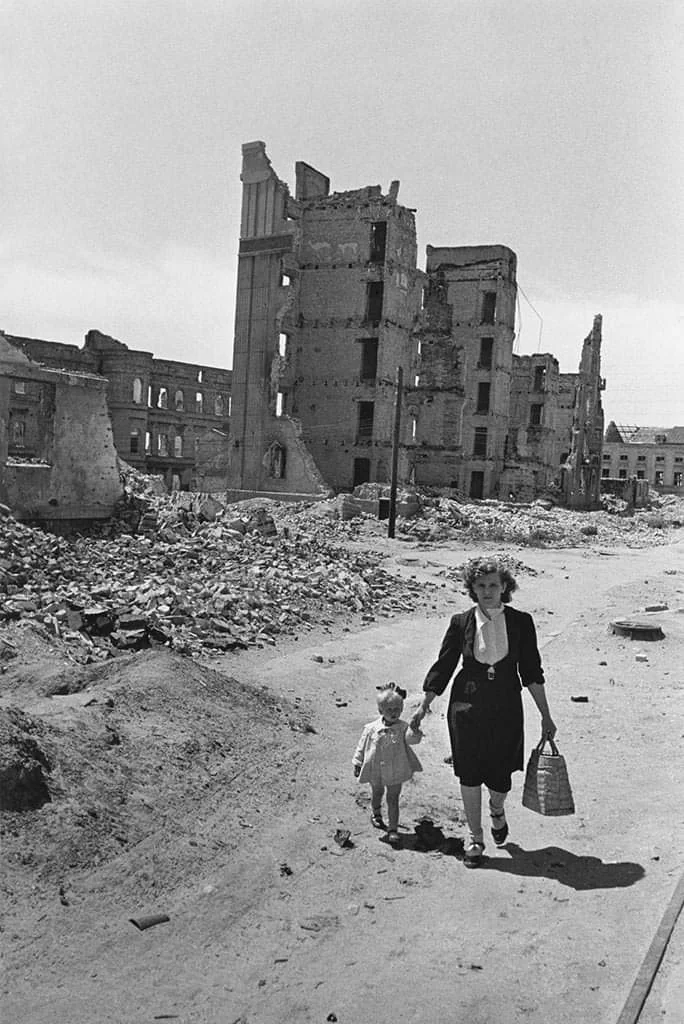
One child’s diary kept a record of her family’s gradually thinning numbers. “Grandma died on the 25th of January at 3 o’clock. 1942. Leka died on the 17th of March at 5 in the morning. 1942. Uncle Vasya died on the 13th of April at 2 in the afternoon. 1942. Uncle Lyusha died on the 10th of May at 4 in the afternoon. 1942. Mom died on the 13th of March at 7:30 in the morning. 1942. Everyone died. Only Tanya is left.”
The Winter of Starvation
The primary siege of Stalingrad, which took place in the early to middle months of the year, is the period most commonly referenced when discussing this historical event. However, as the end of the year approached, survivors faced another challenge: winter.
The winter of 1942 and ‘43 was especially cold, reaching lows in excess of -30°C (-22°F) according to some accounts. Hypothermia and frostbite claimed many lives, especially of civilians who were making homes on the frozen ground for lack of proper infrastructure.
With any residual food stores depleted, survivors turned to whatever they could find: shoe leather, tree bark, and anything they deemed potentially edible.
The Aftermath
In November of 1942, the Soviet army began Operation Uranus, avoiding conflict with the Germans inside the city in favor of hitting the Axis forces guarding the German flanks. Within just a few days, the Soviets had entirely encircled hundreds of thousands of enemy troops.
Compelled to maintain the myth of German invincibility, Hitler demanded that the Germans stand and fight. Incoming supply drops proved too infrequent, and gradually, numbers dwindled. Morale reached an all-time low, and finally, the perception of Germany as an untouchable military force crumbled.
Accounts of despair in the German ranks at this time are prevalent, including a statement from Senior Lance Corporal Joseph Tzimach, no. 27800, who recounts his experience with the Soviet struggle as a whole. “[If] we lose this war, they’ll take revenge on us for everything we did. We killed thousands of Russians and Jews with wives and children.” This statement, written on November 20, 1942, is just one example of the deteriorating resolve among German troops.
While the siege of Stalingrad ended with the defeat of the Germans, survivors remained to struggle long after the combat in the streets concluded. By some estimates, fewer than 10,000 civilians remained in the entire city by the time Friedrich Paulus surrendered on January 31.
This major turning point on the eastern front did not see the Germans retreat back to safer ground, however; of the nearly 100,000 troops who surrendered, only 5,000 to 6,000 made it back to Germany. The rest succumbed to conditions on the march leading away from their surrender point, and those who made it all the way to Soviet POW camps fared no better than civilians in matters of food and shelter.
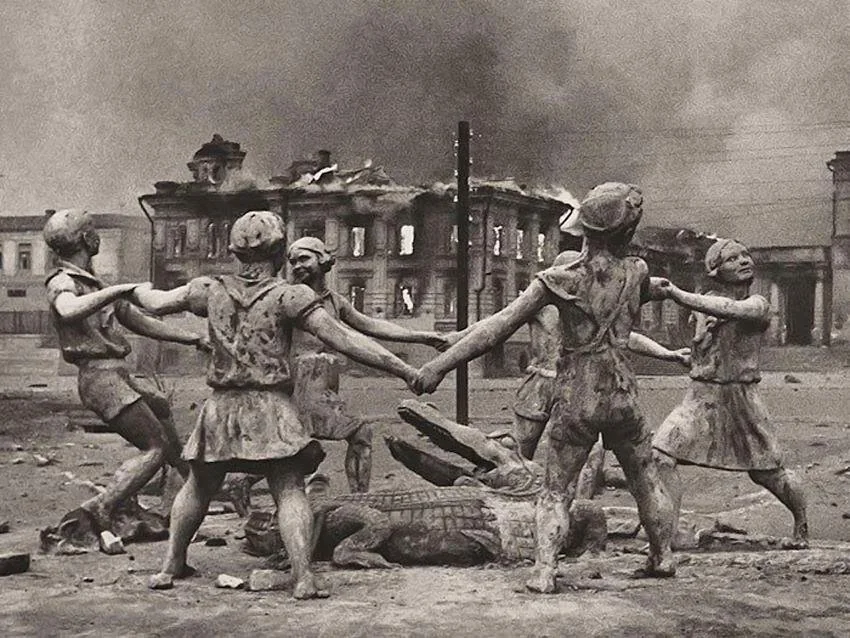
As of the end of 2025, 18 individuals who survived the siege at Stalingrad are known to still be alive. Most still live in what is now Volgograd more than 80 years later, though how much longer their stories will continue to be present, no one can know.
As for Stalin himself, for whom the siege’s notorious city was named, his leadership continued until 1953. At the age of 74, Stalin suffered a stroke, and because of the culture of fear he created throughout his regime, many stories state that his staff became too afraid to check on him when they feared something was wrong. Thus, it is commonly believed that Stalin experienced prolonged decline from his stroke before he was discovered and assisted, dying a few days later. However, no clear historical data exists to prove this claim beyond doubt.